
If you are a homeschooling mama of little ones, how long do you spend reading either God’s Word or a devotional every day? (No condemnation or judgment… you may answer freely)
Homeschool Bible Reading
Galatians Bible Study with Teens
A commentary with a difference!
Letters to Brian and Daniel is written as letters to two young teenage friends of the author. It is a walk-through commentary on the New Testament book of Galatians. The book is twenty-four studies and it will guide through the book, highlighting the major points that the Apostle Paul was making in his letter to the Christians in Galatia.

There are discussion questions at the end of each chapter to keep focussed on the major points. There are extra Bible references to reinforce the teaching and may help the reader learn about cross referencing.
How We Used It
I used this book with my two boys, aged 14 and 16. It can be used for younger children or for older people who have never read through the book of Galatians, or for new believers. Especially helpful for those parents who are not fully acquainted with Galatians.
The book contains 24 lessons and they can be read through in any manner. They could be read one chapter per day or one chapter per week. We did about 3 chapters per week. There is minimal teacher preparation.
Our Lesson Format
Introduce
Each day I would ask the boys the main points from the earlier lesson. Most times, I simply looked back to the previous lesson’s questions as they emphasise the main points of each passage. Then we would read the passages aloud. The boys took turns in reading aloud from their own Bible.
Digging Deeper
I would read through the chapter in Letters to Brian & Daniel. I emphasised the areas where the author did. Some words or sentences are bold whilst others are in italics. It’s all quite self-explanatory. Not at all cumbersome or confusing.
Examine & Expand
The boys would write a selection of the passage for copywork. I would simply select a key verse or small section from the reading. Often we would just write out the memory verse. This further reinforces their learning. Using the verses or chapter as oratory practice/ recitation would also be helpful.
Apply
We concluded with a short time of prayer.
Phrases & Concepts
Focussing on one book of the Bible at a time is an excellent way to learn. The Holy Spirit revealed a lot to us throughout our study of Galatians. The boys also became familiar with various Christian phrases. Not Christianese but terms and phrases that are constantly referred to in the Bible, especially by the Apostle Paul. I don’t necessarily want my children to be well versed in Christianese but I do want them to understand Paul and the other books of the Bible.
This book is not devotional in nature. The concepts it deals with are meaty. But it is written in a way that even children can understand. There’s no reason not to learn doctrine when there are truth-filled, helpful books such as this. Letters to Brian & Daniel will clearly impart wisdom on the nature of God, the nature of man, the sovereignty of God, salvation, grace, faith, law and freedom.
This handy guide already has discussion questions revolving around the central points of the passage! But don’t be fooled by its simplicity for the concepts examined are heavy. I was quite surprised at the understanding level that my boys displayed, thanks to the Holy Spirit and John Dunn’s book.
This is a fantastic resource for teens, families, small groups, pastors, parents… anyone and everyone who wants to dig into God’s Word.
It may be purchased through Koorong for $5.00 but the publisher offers it as a free download.
I thoroughly recommend this book and a study through Galatians. If you don’t know what to do next for Bible study, why don’t you grab a copy of this book and do it? It’s free. And meaty. Filled with practical nuggets of essential truths. Please let me know if you use it with your family for I’d love to hear your thoughts on it.
What have you been studying with your family?
Learn The Bible In 24 Hours – fantastic overview!
Learn the Bible in 24 Hours is presented by Dr. Chuck Missler of Koinonia House. The series consists of 24 one-hour videos. This would make an excellent semester series for a middle – high schooler. I have read the book and it’s worth reading… but these videos will give you an audio/visual review of the entire Bible and its design. I recommend it!

Hour 1 – Introduction
Hour 2 – Creation And The Fall Of Man
Hour 3 – The Pre-Historical Period
Hour 4 – The Patriarchs
Hour 5 – The Birth Of The Nation
Hour 6 – In The Land
Hour 7 – The Monarchy
Hour 8 – The Poetical Books
Hour 9 – The Book Of Daniel
Hour 10 – Post-Exile History
Hour 11 – The Major Prophets
Hour 12 – The Minor Prophets
Hour 13 – How Sure Can We Be
Hour 14 – The New Testament
Hour 15 – The Gospels
Hour 16 – The Last Week
Hour 17 – The Book Of Acts
Hour 18 – Romans
Hour 19 – The Church Epistles
Hour 20 – The Hebrew Christian Epistles
Hour 21 – Eschatologicial Summary
Hour 22 – Revelation 1-3
Hour 23 – Revelation 4-22
Hour 24 – Conclusion
If you were using this for your middle/high schooler, you could add in some living books, the Bible readings and you would have a full course for an entire semester!
If you added English lessons (copywork, dictation, grammar, etc) as well as historical fiction you could use this as a full year course.
Fantastic free resource! Do consider adding this to your family bible study.
Bible overview 4 (Week 13-16)
Kerugma Family Bible reading guide for use with young children. This guide is a no-fuss, easy to implement, overview of the Bible for the whole family.
To see previous months, please use the menu to the right. I will post a new 4 week plan every Sunday.
* Bible references are in the ESV. You may, of course, use the version of your choice.
Benefits:
- for use with the family
- 52 weeks of the year
- 6 days a week
- short time needed each day
 weekly memory verse

Week Thirteen
~1Kings 8:61
- 1 Kings 4:29-34 Solomon’s Wisdom
- 1 Kings 6 Building the Temple **
- 1 Kings 8: 1-21 Bringing in the Ark
- 1 Kings 8:22-24, 54-61 Prayer of Dedication
- 1 Kings 9:1-9 The Lord appears to Solomon
- 1 Kings 12:1-17 Israel rebels
**Note: Younger children may benefit from limiting the text to 1 Kings 6:1-6 and 1 Kings 6: 37,38
Week Fourteen
~2 Kings 17:38-39
- 1 Kings 17 Elijah, Prophet of Israel
- 1 Kings 18:1-16 Elijah and Obadiah
- 1 Kings 18:17-46 Elijah on Mount Carmel
- 2 Kings 2:1-15 Elijah taken up to heaven
- 2 Kings 5: 1-14 Elisha’s Miracle
- 2 Kings 17: 1-23 The Last King of Israel
Week Fifteen
~1 Chronicles 16:34
- 2 Kings 22:1-13 The Book of the Law is found
- 2 Kings 22:14 — 23:3 Josiah renews the Covenant
- 1 Chronicles 17:1-15 God’s Promise to David
- 1 Chronicles 17:16-27 David’s Prayer
- 2 Chronicles 20:1-12 King Jehoshaphat’s Prayer
- 2 Chronicles 20:13-30 Jehoshaphat defeats Moab and Ammon **See note**
**Note: Younger children may benefit from limiting the text to 2 Chronicles 20:13-17 and verses 26-30
Week Sixteen
~Ezra 3:11
- 2 Chronicles 30:1-9 Invitation to the Passover
- 2 Chronicles 30:10-27 The Passover Celebration
- 2 Chronicles 32:1-23 Sennacherib threatens Jerusalem **See note**
- 2 Chronicles 32:24-33 Hezekiah’s Life
- 2 Chronicles 36:15-23 The Fall of Jerusalem
- Ezra 1 The Exiles Return
**Note: Younger children may benefit from limiting the text to 2 Chronicles 32:1-8 and 2 Chronicles 32:1-23
To learn more about how we did Bible study you can read through our 4 step process page using the anagram IDEA: Introduce, Dig Deeper, Elaborate and Application.
Here are five sample lessons of the Kerugma Family Bible Study Guide.
Bible Overview 3 (Week 9-12)
Kerugma Family Bible reading guide for use with young children. This guide is a no-fuss, easy to implement, overview of the Bible for the whole family.
This week we start our tour through the HISTORY books of the Bible:
Joshua, Judges, Ruth, 1 Samuel, 2 Samuel, 1 Kings, 2 Kings, 1 Chronicles, 2 Chronicles, Ezra, Nehemiah, and Esther.
Week 1-4 of the family Bible reading plan
Week 5-8 of the family Bible reading plan
This is part three week 9-12.
* Bible references are in the ESV. You may, of course, use the version of your choice.
Benefits:
- for use with the family
- 52 weeks of the year
- 6 days a week
- short time needed each day
 weekly memory verse

Week Nine
~Joshua 24:14
- Joshua 1:1-11 – Be Strong & Courageous
- Joshua 2 Rahab and the Spies
- Joshua 5:13 — 6:27 Jericho
- Joshua 7 Achan’s Sin
- Joshua 9 The Israelite’s are Tricked
- Joshua 24:14-33 The Covenant Renewed
Week Ten
- Judges 6:1-13 God Calls Gideon
- Judges 6:14-40 Gideon’s Sign
- Judges 7 Gideon’s Victory
- Judges 16:1-22 Samson and Delilah
- Judges 16:23-31 Samson’s Death
- Ruth 1 Naomi and Ruth
Week Eleven
~1Samuel 12:22
- 1Samuel 3 God Calls Samuel
- 1Samuel 16:1-13 Samuel Anoints David
- 1Samuel 16:14-23 David Serves Saul
- 1Samuel 17:1-37 David and Goliath
- 1Samuel 17:38-58 The Battle
- 1Samuel 20 David and Jonathon
Week Twelve
He made my feet like the feet of a deer and set me secure on the heights.~ 2 Samuel 22:33-34
- 2 Samuel 5:1-10 Israel’s New King
- 2 Samuel 5:17-25 David Defeats the Philistines
- 2 Samuel 6:1-5 The Ark of God
- 2 Samuel 12:1-10 Nathan Confronts David
- 1 Kings 1:28-40 Solomon is King
- 1 Kings 3:1-15 Solomon asks for Wisdom
Week 1-4 of the family Bible reading plan
Week 5-8 of the family Bible reading plan
This is part three week 9-12.
To learn more about how we did Bible study you can read through our 4 step process page using the anagram IDEA: Introduce, Dig Deeper, Elaborate and Application.
Here are five sample lessons of the Kerugma Family Bible Study Guide.
Which Bible?
Which Bible do we use?
Quite a few! Some are better than others for reading or studying. What am I able to read and understand? What will I actually read, as opposed to leave sitting on the bedside table? The Bible has been translated into over 75 different translations! Many countries don’t have a Bible in their own language. But before we go there, let’s take a quick look at the different types of translations.
Some people are confused by the various translations on offer. In summary, there are two types:
Actual Translations.
These are translated from the Hebrew test of the Old Testament and the Greek text of the New Testament. These are Bible such as, King James Bible, Revised Version, and the Revised Standard Version. Then, there are other translations which were very carefully translated such as, The New English Bible, The Good News Bible, and The New International Version.
Paraphrased Translations
Paraphrased Translations such as the Living Bible, The Message and the Amplified Bible can be beneficial for understanding the richness of God’s Word by using modern vocabulary, but not for study. Don’t use these types for Bible Study.
Types of Bibles:
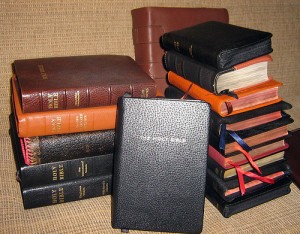
Each translation comes in different formats. There are Study Bibles, Devotional Bibles, and more. A Study Bible has notes and explanations which can be very helpful. Some Bibles have a concordance built in with it. Many Bibles contain historical and geographical maps but these individual reference books can also be purchased separately.
 Want more? Read on…
When translating from the original language (Hebrew/Aramaic/Greek) to the Receptor language (in our case, English) there are three ways in which translators go about it.Translators, theologians, clergy and laymen have been debating for centuries over which approach is most accurate in communicating the message of the gospel. I find it helpful in using more than one translation and in our studies we will often three translations – one from each translation theory group.
Translation Types:
- Dynamic equivalence translation: A “Dynamic Equivalent” attempts to used the original language as a guide in translating, and then “elaborates” to enhance understanding. The aim is to convey the ‘thought’ of a text. (Thought-for-Thought)
- Formal equivalence translation (similar to literal translation: word-for-word) Some translators use the formal correspondence approach, translating word for word. This may sometimes cause a sentence to sound a little awkward but it is a word-for-word translation. A “Word-for-Word” translation attempts to add the fewest number of additional words to the translation, and when they do, the generally place the added words in italics.
- Idiomatic, or Paraphrastic translation. A “Paraphrase” simply attempts to put the meaning of the text into modern day English
Word-for-Word Translations
- The American Standard Version, (ASV) also known as the Standard American Edition, Revised Version, is a revised version of the KJV. It was completed in 1885 and newly edited by the American Revision Committee in 1901.
- The Holman Christian Standard (HCS) is a highly readable, accurate translation written in modern English. It is published by Holman Bible Publishers.
- The English Standard Version Bible (ESV) is a relatively new Bible translation that combines word-for-word precision and accuracy with literary excellence, beauty, and readability.
- The King James Version (KJV) is the first version of Scripture authorized by the Protestant church and commissioned by England’s King James I.
- The New American Standard (NAS) is written in a formal style, but is more readable than the King James Version. It is highly respected as the most literal English translation of the Bible.
- The New King James Version (NKJ) is a modern language update of the original King James Version. It retains much of the traditional interpretation and sentence structure of the KJV.
Thought-for-Thought
- The Good News Translation (GNT) was first published in 1976 by the American Bible Society in a “common language.” The simple, everyday language makes it especially popular for children and those learning English.
- The New Living Translation (NLT) uses modern English. The translators focused on producing clarity in the meaning of the text rather than a word-for-word text. They wanted however, to remain faithful to the original texts.
Combination of Word-for-Word and Thought-for-Thought
- The New International Version (NIV) offers a balance between a word-for-word and thought-for-thought translation and is considered by many as a highly accurate and smooth-reading version of the Bible in modern English.It reads more smoothly than most translations and scholars praise it for its accuracy. It was put together by a large team of well recognized Bible scholars.
- The New Revised Standard (NRS) is a popular translation that follows in the traditions of the King James and Revised Standard Versions. It was written with the goal of preserving the best of the older versions while incorporating modern English.
- The Revised Standard Version (RSV) is a revision of the King James Version, the Revised Version, and American Standard Version. This text is intended for both private reading and public worship.
English Paraphrases
- The Message (MSG) is a paraphrase from the original languages written by Eugene Peterson, a Presbyterian pastor and an excellent writer. It’s great for light reading. Actually, that’s what it id designed for…no verse marks so it’s easy to just pick up and read. However, I believe that Mr. Peterson takes great liberties with words/sentences in his attempt to effectively communicate the thoughts of Scripture(Thought-for-thought, paraphrase)
- The New Testament in Modern English by J.B. Phillips. This is, In my opinion, one of the better paraphrases. This version translates some of the Greek puns and word plays that are sometimes lost in word-for-word translations.especially handy when reading letters written by Paul.
- The Living Bible (LB),is a paraphrase of the American Standard Version. It is easy to read and was my first ever Bible!
:star: The important thing to remember is that the central theme of the Bible is the coming of Jesus Christ, his ministry, death and resurrection. This page is not designed to be authoritative or exhaustive on the subject (far from it) but to give a general idea of the different types of versions/translations available today.
:star: The key is: JUST DO IT! The gospel [the good news of Christ and His work on the cross] is the power of God for salvation. You won’t be saved by which translation you read, so go on…grab a translation or two and read it…today!
Further reading:
Download the ebook, How to Study the Bible, by Rev. Geoffrey Bingham
How the Bible Came to Us by Meryl Doney
The following is a chart comparing the different English translations of the Bible. I hope this helps you in selecting a translation.

Bible Reading Plans
“I am much afraid that the schools will prove to be wide gates to hell unless they diligently labour in explaining the Holy Scriptures, engraving them in the hearts of youth. I advise no one to place his child where the Scriptures do not reign paramount. Every institution in which men are not constantly occupied with the Word of God must become corrupt.”
~Martin Luther
Here are a few different types of Bible reading plans. Most are printable but a few (as marked) are received via email.
- The Bible checklist at Heart of Wisdom is a printable check list to read the Bible chronologically though in a year.
- Daily readings from the Narrated Bible
- Daily reading guides from Back to the Bible
- Here is a reading plan from Coromandel Valley Baptist Church
- Bible Reading Plan from Practical Homeschooling! Read through the Bible in a year with this handy planner in printable pdf format!
- Another valuable reading plan is taken from Eric Liddell’s The Disciplines of the Christian Life. Especially good for older children/teens.
- This chart is another popular chart for printing. It is based on McCheyne’s Daily Bible Readings for daily readings: a concise course whereby one can read through the whole Bible once a year, and the Psalms & the New Testament twice. This link is where you will find the monthly schedules and the Scripture portions for each day.
- The Story of the Bible: Follow along with the story of the Bible in this chronologically arranged daily reading. Add the greatest story ever told to your day!
- Daily Bible reading and daily Bible card in various versions.
- Daily reading Plans from Heartlight
- Here you can choose the default reading plan for your daily Bible reading program.
- Fruits of the Vine have various Bible reading plans and devotionals via email.
- A few different formats and types of Bible reading plans
- Bible reading Plan for Beginners at Learn the Bible.
- A Bible reading chart from journal33
- This chart looks quite good… from bible-reading.com
- ESV Bible Reading Plans can be found at this link.
- BiblePlan has some very helpful plans.
- Professor Grant Horner’s Bible-Reading System which I talk about here. **New**
- Daily Bible Meditation Plan – the aim of this schedule is not to read less, but to meditate more. **New**
Regardless if you use a plan or what type of plan the most important thing is to Read God’s word. Study it. Pray it. Live it.
What would happen if we treated our Bible like our cell phone?
This did the Internet rounds a few years ago and I shared it then… but it’s too good to not share again.

I wonder what would happen if we treated our Bible like we treat our cell Phones?
What if we carried it around in our purses or pockets?
What if we turned back to go get it if we forgot it?
What if we flipped through it several times a day?
What if we used it to receive messages from the text?
What if we treated it like we couldn’t live without it?
What if we gave it to kids as gifts?
What if we used it as we traveled?
What if we used it in case of an emergency?
What if we upgraded it to get the latest version?
This is something to make you go…hmmm…where is my Bible?
Oh, and one more thing. Unlike our cell phone, we don’t ever have to worry about our bible being disconnected because Jesus already paid the bill!
Putting it together

Well, so far in this series I’ve posted a little about us and the beginnings of our homeschooling journey, how I felt something was missing despite my planning and working so hard and how God pulled me up and put me on a clearer path, with Him as pilot. I wrote about developing a family mission statement and today I would like to share just a little of our lifestyle and how it looks, what sort of books we use in this pursuit of a Bible based, Cross-centric lifestyle of learning.
 There is so much curricula available (and I have owned much of it) but we have prefer to study God’s word directly rather than reading commentaries and regurgitated thoughts of man- regardless of how good or noble those thoughts. We desire that our children go directly to God’s word on matters so this means that the primary curriculum on our shelf is the Bible…it’s our main textbook. We also have a good dictionary, Bible handbook and other reference books.
Many modern publications or Bible study books are good but they may have been watered down or they omit teachings on important biblical matters. Bible study is much more than a fill-in-the-blank approach. To be truly authentic and genuine we must teach by living it, modeling it. This is much more effective than any Bible curriculum one can purchase…but be careful, it’s not for the faint hearted- it’s life changing. I have come to see that this homeschooling journey is actually about me. Not in a modern worldly “me” kind of way but by nature of the fact that God wants me to desire Him, to hunger for Him. God does have an agenda behind all this homeschooling business – That it will lead not only the children, but me, to a closer walk with Him.
God’s initial goal for Christian homeschooling families is not the raising of godly children. Instead, God’s wonderful, but subtly hidden agenda is that the homeschooling experience be so challenging for the parents that they feel the need and hunger for a closer walk with their heavenly Father.”
~Wisdom’s Way of Learning by Marilyn Howshall
The Bible is a window into our own soul and heart so that we can understand ourselves, our needs. God spiritually feeds us through the word. The Bible instructs us as to salvation, forgiveness, how to live, how to please God. It isn’t just ‘history’ rather it is His Story! It [the Bible] does more than tell us facts and figures and stories…it tells us why we are here on earth and where we are going. Many other books can point to God but only this one book shows us what God is like. Other books are helpful and beneficial, encouraging, thrilling, informative, entertaining, comforting and beneficial in other ways but only God’s word is life! This book alone can give a glimpse into the mind of God…give us a perspective of eternity. Just as the body needs to be physically nourished by good food, so our heart and mind needs sustenance. It is not simply the words in this book that satisfy the hunger in our soul rather it is God Himself. Just as regular exercise is necessary for a healthy body, so is daily exercising of the mind. What better to nourish the mind on than the message of God?
 Rather than start with a state curriculum or generalised outcome based objectives (that have been decided upon by someone else) and then attempt to use the Bible to fill in any gaps, or cover Bible study as though it is just another subject, we start with the Bible and move forward from there: to learn who God is, what He has done and what He requires. This becomes our world view…and our world view will teach more than any curriculum or textbook. Yes, every subject can be taught through the Bible. After all, what is history if not His Story? What is Science? All scientists must think critically and independently. Geography is really the study of God’s created earth and so on.
We use a variety of resources and methods and they’re all good (CM methods, Classical, notebook, natural-learning, etc) but this approach has been what we have found most successful and achievable in instilling vision, purpose, self motivation in all of us. We believe this will prepare us and our children for vocational, entrepreneurial, career or ministry vision.
I don’t believe it mattered that I’d been homeschooling for a few years already. God is King of New beginnings! I asked Him to give me a vision for our family. Through studying His word I’m learning how to hear Him, how to be guided by him and how to recognise and trust the voice of the Holy Spirit. God knows my teaching style! He knows my children’s learning styles! And He has a purpose for us! He is personally directing and guiding me, as I turn to Him and submit my all to Him. This has accomplished more godly fruit that I’d been able to by my own efforts.
Am I recognising God’s call for our family? Am I seeking Him for direction…for guidance in curriculum choices? Am I resting in Him, submitting everything (academic goals and dreams) to Him? Am I listening to Him and observing my family? Am I putting wholesome, literary books filled with rich ideas before the children? I want to do these things, watch for the spark …then allow the children room and time to dig further.
Write the gospel, a chapter each day…write it by what you say and what you do. Your children read that gospel, whether faithless or true. What is the gospel according to you?
Our Homeschool Journey
Getting the direction – as co-pilot
A Gospel-driven, Cross-centric, Discipleship approach simply means that we’re teaching each child what he needs to know, with a view to his/her God given strengths, weaknesses, interest, passions, and talents… their natural bents. Rather than just getting an education we can receive a balanced education through our lifestyle. We are free to seek God for each child’s purpose. This is how we can disciple our children…and prepare them for an individual, definable life purpose.
Recognising God’s Call
The first thing we had to do was recognise God’s call. This was pretty easy…to recognise that God has put me, the parent, as the responsible authority in the lives of our children. I often remind myself that when God calls, He also enables!
Prayer
Ah, I read it, thought it and said it so often that it went without saying but in reality it was at times, the most neglected facet of my homeschool and personal life. I had to acknowledge my weaknesses in order to lean on His strength. This is a walk of faith. But as I have looked to God, more and more He has taken care of all our homeschool needs. In other words, the less I have planned and struggled, the more He has been in control and provided for us.
Rest in Him, Listen to Him and Rely on Him
Listening is so important. I need to listen more to God. Once I’ve asked for His help and direction, I need to stop and listen so that I can hear.
Recognize and Identify
I watch and observe. I have sensed the prompting of the Holy Spirit (and gained help and direction) just by watching and observing the children. Recognising the individual make-up of each child and who he/she was created to be is an ongoing process. In fact, I’ve become a student…not only of the word but a student of my children!
It’s important to spend time identifying the following in each child:
- Strengths and natural ability and aptitude, also called talents
- Weaknesses
- Interests; what sparks their curiosity or desire to know more
- Their passions (things they would do if left to their own devices)
Once these things have been identified, I’ve prayed and asked God to help me as I’ve devised a plan to develop their strengths and to build up their weaknesses.
Identity
Part of a Biblical or Discipleship based education is based around the child’s identity. Identity Directed education is not child-led. It does not mean that the whim and fancy of each child is indulged. It doesn’t mean only doing what the child is good at and ignoring everything else. While we are free to explore a child’s delights and passions and interests, that isn’t all of it. I’d like to share an analogy with you. It’s my own analogy and so it will show how I think and process information.
An athlete must train the whole body. It would be detrimental to their being to only train the areas of the body that they use most in their sport. A softball pitcher must have strong core muscles, upper body and leg muscles but they risk severe injury if these are the only areas they develop. They must also develop agility and speed, combined with power and explosiveness. They are required to use the muscle which allows them to pitch underarm yet if they don’t develop the muscles that allow them to throw over arm, they risk injury. Athletes use their whole body in a natural way and they never isolate a single muscle group or joint in the competition. In training yes, in order to develop the area but, only with an aim of building a strong whole body, fit for competition. Training with balance in strengths and weaknesses is the key! Just as an athlete has a training routine, so must the education of a child have structure and routine. These things are [natural, God ordained] biblical principles just as day turns to night and autumn comes after summer.
An individual’s strengths and weaknesses and interests are part of their God given make up! By identifying and encouraging their natural bents we will be launching them toward their purpose.
Our Homeschool Journey
Mapping the course- as the pilot
 Yesterday I shared how much I had learned about education and homeschooling. Today I’ll share how God tapped me on the shoulder and straightened me out a bit.
We did Bible study and had memory verses and all those right things, yet something was missing. I knew that I was doing what God wanted- after all, I was doing this for Him, for His glory! Right? Oh boy, God was to show me how wrong I had been. After a few years, in His right time, He stepped in and didn’t leave me to wander for too long.
I had mapped out a course to get to the destination; I knew where I wanted to get to. I had gathered the tools for the journey: knew how I wanted to get there. I loaded the plane, buckled everyone in and took off! I turned to my co-pilot and asked him to bless the journey and to look out for us. After awhile, things got a little bumpy and I turned to my co-pilot and asked Him to help…but He was quite relaxed and had, in fact, been waiting for me to look to Him for help. I came to see that I was trying to take on the role of pilot when instead I am only the co-pilot and God is The Pilot. God knows the destination of each journey for each child. God knows what tools they need for the journey. He knows how to fly that plane better than anyone else: all I had to do was to recognise this and go to Him. I’m so thankful to God that He called me to a process of renewing my mind…to seek His design and not man’s. I had wanted to seek God for His plan for our family, but I got lost in the myriad of information regarding homeschooling.
I experimented on my girls with all these methods I was revising my educational philosophy, my dreams, goals and ideals for the children. In actual fact, my dreams and ideals drifted away from God and more to providing a ‘superior, successful, academic education‘. But deep in my heart I knew that something was missing.
A New Chapter
So began a new chapter in my homeschooling journey: that of putting God first…depending solely upon Him. I wanted Him to show me what to teach and when to each child. I was literally asking ‘What would Jesus do? What would Jesus learn? How would Jesus teach?’ Have you ever asked who is responsible before God for teaching your child? How about searching the Bible to see what God desires us to teach them? Hmmm, how about asking the when question? When to teach them? On the weekend? After school? Next question I asked was how do I teach them this then? I’ve always been one to ask questions (it’s how I learn) and so I wanted to know a few things…things that would impact every aspect of my family and the way I approach the concept of education. I have asked and studied these questions and I’d encourage everyone to do so- it’s a great topic! (I use the 5W’s and a H to learn most things and to teach most things. See my free download here; The Observation Sheet!)
 God has a special plan for our family, for each of us and for our homeschool. This will look different to other families! But it is supposed to… I’ve learned that rather than look at what other’s are doing, I need to look only to the Lord. If I want Him to guide me, then I must seek Him, not man. God placed our children in our family. He wants me to diligently teach them His commands all throughout the day, every day, using ways and means that convey His eternal truths and build solid, loving, healthy relationships between me and them. He knows my abilities and theirs. He knows my strengths and weaknesses and theirs. He also knows my needs. I’ve learned that I can turn to Him, I can rely upon Him, die to self and trust in him for peace and assurance. This isn’t just something that I’ve learned about on Sunday, it is a result of trusting in God for everything, even homeschooling. Tomorrow I’ll share the ‘how’ we developed a Gospel based, discipleship approach to our family life and homeschooling.
Hear, O Israel: The Lord our God, the Lord is one.You shall love the Lord your God with all your heart and with all your soul and with all your might. And these words that I command you today shall be on your heart.You shall teach them diligently to your children, and shall talk of them when you sit in your house, and when you walk by the way, and when you lie down, and when you rise. You shall bind them as a sign on your hand, and they shall be as frontlets between your eyes. You shall write them on the doorposts of your house and on your gates. Deuteronomy 6:4-9
Our Homeschool Journey
Superstitious mumbo-jumbo or Bible Literacy
I’m off again on another rant. It’s in relation to a newspaper article which you can find here.
http://www.news.com.au/story/0,27574,24753674-1248,00.html
A QUEENSLAND father of five has taken action in the Anti-Discrimination Commission after his four-year-old daughter was asked to help make a replica of Noah’s Ark at the local state school.
R** W********, who has five children under the age of 10, is opposed to religious instruction in state schools.
He said he was taking action because he did not believe students should be “exposed to superstitious mumbo-jumbo, presented as fact, in an educational setting”, The Australian reports.
The Bible Literacy report
Can be found in its entirety here: http://tinyurl.com/6xovm4
Almost without exception, English professors we surveyed at major American colleges and universities see knowledge of the Bible as a deeply important part of a good education.
For example, when asked to respond to the question, “Regardless of a person’s faith, an educated person needs to know about the Bible,” no professor disagreed; nine provided additional explanation. When asked, “Some scholars say Western literature is steeped in references to the Bible. How would you respond to that?” 38 of 39 English professors agreed; 24 strongly. When asked, “In your opinion, how important is it for students who take your courses to be familiar with the Bible?” 38 of 39 professors said it was important.
Overwhelmingly, professors in this survey indicated that a lack of basic Bible literacy hampers students’ ability to understand both classics and contemporary work. Arduously “decoding” scripture references detracts from absorbing and responding to great works of art, both ancient and modern. At the same time, a number of professors expressed discomfort or reservations with appearing to “take sides” in favor of the Bible in the contemporary context.
They did not wish to associate themselves with a political movement around the Bible, or to seem to detract from the importance of other aspects of a good education, including the value of becoming knowledgeable about other world religions.
This report concludes that high schools should make basic Bible knowledge part of their curriculum, especially for college preparatory students. Doing so requires developing a variety of educational materials and curricula that simultaneously:
(a) acknowledge the Bible’s status as sacred scripture to millions of Americans,
(b) are fair to students of all faith traditions, and
(c) are of high academic quality.Doing so will be an important part of meeting the next generation’s educational needs in an increasingly diverse population.
The King James version of the Bible has been of major impact in the development of the English language. In terms of the English language, it ranks up there with Shakespeare and the Oxford English Dictionary. It is a rich, literary source which still has cultural meaning today. Many people are probably not even aware of how many common phrases used daily originate from the Bible. If a parent values education, then surely a stance such is akin to their child being led like a ‘lamb to the slaughter‘.(Or another reference) It is my hope that the ‘powers that be‘ will encourage Biblical Literacy in our school thus enabling future generations to go from ‘strength to strength‘.
Free Devotional Journal download
Our Devotional Journal that we used with the girls. I designed this as a simple way that the girls could do their own Bible reading and were prompted to follow the steps in our Kerugma Bible study approach, using the 4 step process with the anagram of IDEA. (Introduce, Digging Deeper, Examine & elaborate, Application to my life)
I show the children how I use this approach in my own day and how it need not take hours each time. It can take 15 min or one and half hours. We need not study one new passage each day…a passage may spread over two days or more! The focus needs to be on process, not outcome. We need to be sensitive to the leading of the Holy Spirit and not be directed by the clock, or the day.
Here is what the various fields mean:
Date: Helpful to record the date
Passage: Record the passage being studied
Key Verse: to be filled in at the end of the study
Pray: asking God to reveal His truths
Introduce
Read the passage– out loud or silently
Reread the passage, possibly in another translation
Digging Deeper
Dictionary words: Use the vocabulary sheets for words not known
Other resources used: Record other books used for reference. eg: Journey Through the Bible, etc.
5W’s and H: Understand as many of these that apply.
Expand and Elaborate
Paraphrase ..write the passage out in your own words or narrate the passage orally
Application
How does this apply to my life?
Is there a promise to believe?
A truth to be believed?
A duty/an action to perform?
Is there a command to obey?
A prayer to echo?
Is there a positive example in this passage that I can follow?
Is there an action in this passage that I need to avoid?
Is there an attitude in this passage that I need to have?
Is there something I need to be thankful for?
Pray: asking God for help to apply truths learned … To give thanks.
Related pages:
- IDEA: 4 step lesson format
Family Bible Study Guide: first 5 lessons

 Yay, I have finally uploaded the first 5 studies, in pdf format, of our Kerugma Family Bible study. Admittedly we completed these lessons over a year ago but nevertheless, as promised, they are now uploaded.
To use the lessons, simply download them at the Download Page…along with the Activity Sheets…the Obvservation Sheet and the IDEA Bookmarks. Don’t forget to read the preamble about how the format of our lessons and all other related bits n pieces.
The first lesson is setting up our Bible Notebook and then there are four lessons after that. Feel free to use the ideas with your family. All I ask is that if you do, please leave some feedback by leaving a comment here or on my site.
Familiarity with Bible Terminology
Biblical terminology, vocabulary or jargon: do your children know it? Do you consider it important for them to know? Why? Why not?
The Bible can be hard to understand. It can seem like a foreign language. In a sense, it is. If you were going to go and live in another country where English isn’t spoken would you try to learn the native language in an effort to understand the people, the culture? Well, the Bible can be likened to that too! Learning the language, the terminology, the use of literary style…It’s hard work. It takes study. It takes time, effort, patience and diligence. It won’t happen in 10 min a day, especially if that 10 minutes a day is spent reading someone else’s thoughts on that country or language. Naturally, you’d be much better off to spend time directly learning that language eh. So I’ve been thinking that I’d like my children to have a better grasp on the Bible and God’s plan and purpose than I did…so how am I going about that? (you can see our approach to Bible study here)
What methods are you using to teach your child to study the Bible?
I’m not talking about curriculum or a book but what methods are you teaching your children to use so that they can continue with a lifelong love and habit of studying God’s word? I’d love to hear from you.
Activity Sheets Narration Freebie
I use a teaching method that I learnt from Heart of Wisdom called the 4mat system. I have modified it slightly to suit the needs of our family. I have found these steps to be very beneficial in not only our Bible study but when approaching all lessons.
I have created the anagram IDEA to help you remember the steps. (see the for a printable bookmark based on ‘IDEA’)
IDEA
- I is for Introduce
- D is for Digging Deeper
- E is for Examine & Elaborate
- A is for Apply to My Life
You can see more about this format of lessons over at the . However, I also wanted to mention the Activity Ideas that go along with steps 3 and 4. These are not all my own original ideas (is there really such a thing?) but I have complied the list. I have spent years gathering the various ideas and then compiled them into the four various activity types.
You’ll find many activities categorised within the following sections: Creative Drawing and Building Activities, Creative Drama Activities, Written Activities and Oral Activities. These Activity Ideas can be used with any learning activity and any subject. They can be as simple or as complex as you like! You might start to notice that your child has a particular bent for one type of activity and I have been asked if one should allow them to only choose the same activity each time. I will share what I have done with my children.
When my children were a little younger, I would encourage them toward choosing a variety of activities. This prevented them from only developing in certain areas an helped them to develop in a few areas. It’s like body building. When a child is young we don’t make them to 100’s of sit up’s each day in order to strengthen their abdominals. Rather we want them to play outside in a variety of activities which will strengthen the whole body.
Later though, as their interests and talents have presented themselves to me, I will allow them to narrow the choices a little. I have found that my older children do strongly desire one type of activity more so than anther and once they are older I believe this is important in allowing them to develop in the ways that God wants them to develop. But in the younger years, I try to aim for variation in order to expose them to more.
You can find the Activity Sheets for download on the (along with a few other freebies). If you use the Activity Sheets in any lessons (including your Bible times) please drop me a line and let me know.
Church History: History Lives series
History Lives series
Peril and Peace: Chronicles of the Ancient Church Volume 1
by Mindy and Brandon Withrow
Isbn: 1845500822
* This series is written from a Protestant perspective
Suggested age: 8-12 but I would easily say a student of 16 would be quite happy to read this book.
I love learning about Church History! But finding a good book that are not way above my head can be tricky, for me. Finding a good book that the children can learn from is also tricky. Not so with the series from ChristianFocus.
 Volume One contains the history of the early and Ancient Church. You will read about Paul, Polycarp, Justin, Origen, Cyprian, Constantine, Athanasius, Ambrose, Augustine, John Chrysostom, Jerome, Patrick, and Benedict. This volume will allow you to discover the roots of Christianity and learn about issues such as worship; creeds and councils and the formation of the Bible.
This series is written in a fairly modern style, so it differs slightly from other books such as “Trial and Triumph“. It isn’t gory so it’s a good read to get an overview of Church History. This 240 page book has longer chapters interspersed with shorter, factual chapters.
If you’ve been wondering how to study Church history with your children, you’ll want these books! They aren’t too brief or dumbed down but they definitely aren’t textbook style, which puts many young people to sleep.
 Volume 2 is Monks and Mystics: Chronicles of the Medieval Church.
by Mindy and Brandon Withrow
Isbn: 1845500830
Ever wanted to learn about Gregory the Great, Boniface, Charlemagne, Constantine Methodius, Vladimir, Anselm of Canterbury, Bernard of Clairvaux, Francis of Assisi, Thomas Aquinas, Catherine of Sienna, John Wyclif and John Hus? Well, you’ll want to get Volume Two in the History Lives series.
The period known as the Middle Ages wasn’t just dark and oppressive. God was spreading the message of Jesus Christ to previously foreign lands. In this book, you’ll learn how the early Church moved on…you’ll learn about the Crusafes and the spread of Islam and the Reformation. You’ll also see how and when the Bible was translated into various languages
Through this book you’ll have opportunity to learn about and discuss with your children, issues like the rise of Islam, The Crusades,Creeds and Councils and the Renaissance.
At present, I don’t have the other volumes but they are:
Volume Three – Courage and Conviction: Chronicles of the Reformation Church
Volume Four – Hearts And Hands: Chronicles of the Awakening Church
Each volume is approximately $10 – $15
Koorong:
Word:
Christian Bookworld:
Find a Christian Bookstore near you:
See more about this series here: http://christianfocus.com/series/show/40/-/d_series
If you read this and decide to read the series, or if you have read the series, drop me a line. I’d love to hear your thoughts.
p.s. [edited to add] How cool. Mindy Withrow, the author, just left a comment. How cool is that? She also left the link to the History Lives website, which you’ll want to visit: http://www.historylivesseries.com./
p.p.s. How cool. Mindy was also homeschooled! 😉
Bible Study Scope and Sequence
HomeGrownKids Scope & Sequence
Our scope and sequence is a similar pattern to what we follow for history. (internal blog link) It is closely linked with my understanding of the Stages of Learning, which you can view here.
Birth to age 9 ( birth -G4)
>> If you have older children that are following the same sequence, it is easy to add simple but beautiful picture books into the junior schedule. Even better if the older children read it and discuss it with the youngers!>> Songs and memory work are of great benefit during this stage. (Colin Buchanan is a classic!!) We also go through the book, Training Hearts Teaching Minds: Family Devotions Based on the Shorter Catechism by Starr Meade.>> We go through the Old Testament – using a children’s Bible such as:
- Day by Day Kids Bible.
- Beginner’s Bible-NIrV ISBN: 0310926378
- Family-Time Bible ISBN: 0842365761
- Egermeier’s Bible Story Book ISBN: 0871622297
- The Childs Story Bible by C. Voss
Devotional type of reading: Books like;
- Little Visits with Jesus ISBN: 0570058074 might come in handy.
- Little Visits with God ISBN: 0570058090
A few links(more to come)
http://gardenofpraise.com/bibleles.htm
Age 10-13 or (G5 – G8)
>> Review the same chronological cycle, if desired, but in greater depth. Pay attention to biographical stories and Christian fiction.
>> This is the time to develop or use a Bible timeline.
>> Songs and memory work are of great benefit during this stage. We also go through the book, Training Hearts Teaching Minds: Family Devotions Based on the Shorter Catechism by Starr Meade.
Bible reading:
-
- Archeological Study Bible
- Greenleaf Guide to the Old Testament
Studies:
-
- How the Bible Came to Us by Meryle Dooney
- Genesis, Finding Our Roots by Ruth Beechick
Books:
- Ben Hur
- The Bronze Bow
- Adam and His Kin: The Lost History of Their Lives and Times
- Discover Jesus in Genesis: An Illustrated Biblical Theology for All Ages
- God King – A Story in the Days of King Hezekiah by Joanne Williamson Timeline: 700 B.C., Egypt/Judea
- Hittite Warrior by Joanne Williamson Timeline: 1200 B.C., Judea
- Victory on the Walls- A Story of Nehemiah by Frieda Clark Hyman Timeline: 445 B.C., Israel
- Jotham’s Journey A Storybook for Advent By Arnold Ytreeide as well as Tabitha’s Travels and Bartholemew’s Passage
- The Great Dinosaur Mystery and the Bible
- Life in the Great Ice Age and others like this
- Twice Freed by Patricia St John
- Runaway and others by Patricia St John
- Lots of Bethlehem books
Age 14 through 17-18 or (G9 – 12)
>> Time to tie things all together using a chronological and narrative approach.
>> Doing a survey of the Old and New Testaments is good, as is doing a study on the Life of the Messiah.
>> Consider biographies, historical fiction and unabridged Bible readings.
>> Pay particular attention to discussing thoughts and ideas, updating the time-line or Book of Centuries.
>> Tie all studies in with a Book of Centuries (Timeline), good living books, and a Bible Encyclopedia and other study tools.
>> You may also consider learning a little about Church history as the students get older. Biographies are great for this, and there are too many good books for me to even begin to mention.
Bibles:
- Narrated Bible in Chronological Order – Chronological accuracy, easy-to-read format. Includes: Moses’ laws by subject; Proverbs presented topically; Psalms arranged by sentiment; Paul’s teachings integrated into Acts.
- Archeological Study Bible
- Serendipity Bible for Study Groups
Studies:
- How to Read the Bible for All its Worth
- Wisdom Unit Study
- Messiah Unit
- Learn the Bible in 24 Hours by Chuck Missler (Literary narrative style. Great read aloud for older students)
- 30 Days to Understanding the Bible by Max Anders (this is more visual than the one by Chuck Missler)
- For the Layman- Survey of the Old Testament by Kenneth Levy. This survey is a non-denominational, historical overview filled with foundational information every student of the Bible should have. Using a workbook, Ken Levy guides students on a chronological tour through every book of the Old Testament. Students study how the Old Testament was put together, its major divisions, and what makes it unique using the workbook and cassette tapes.
- For the Layman- Survey of the New Testament by Kenneth Levy. Life and ministry of Jesus, the growth of the early church, the letters of Paul, and more in this workbook with cassette tapes.
- 100 Most Important Events in Christian History
Tools:
- Proverbial Wisdom and Common Sense
- Evidence That Demands a Verdict
- The Complete Book of Who’s Who in the Bible – provides readers with a complete listing of people in the Bible with descriptions of their lives and accomplishments.
- Manners and Customs in the Bible.
- Student Bible Atlas (Here is a great study guide to go with the Holman Bible Atlas.)
- The Kregel Pictorial Guide to Bible History (and others) ISBN: 0825424623
- Victor Journey Through the Bible is our favourite
- The Case for Christ and Case for Easter by Lee Strobel
Books:
- The Cross and the Switchblade by David Wilkerson
- A Voice in the Wind by Francine Rivers (good series)
- Listen to Her Voice: Women of the Hebrew Bible by Miki Raver
- Vinegar Boy by Alberta Hawse. This is the gripping story of a boy’s dramatic encounter with Christ on the Cross.
- Lots of Bethlehem books
- The Priest, The Warrior, and The Prince. Novella’s by Francine Rivers.
Church History resources
Bible Study Guides Bible Study Guide for all ages
Family Bible study!Positive Actions
Teaching a child’s heart and his head. Kindy, Junior High and High School. Teacher Manual and Student Book including memory verses and worksheets. Able to be used twice a week or 4-5 times a week.
Explorer’s Bible Study
Daily lessons from Preschool to Adult level, including activities, questions and maps. Apparently families are able to study the Bible together but using the different books for each level.
Deeper Roots
Has studies from grade 7-12. Inductive study.
Firm Foundations – From Creation to Christ
This curriculum is set up to chronologically teach through the Bible, from Creation to Christ! Extremely thorough.
My students will be completing a Survey of the Old and New Testaments and a great resource is the For the Layman series.
For the Layman: A Survey of the Old Testament and
For the Layman: A Survey of the New Testament
by Ken Levy
These are a set of cassette’s and a workbook where Ken Levy takes you through the Bible. Full of information and ties events and people together!
An excellent study! Study guide for the Holman Bible Atlas! This is a 69-page pdf download file.
HOW Bible Lessons with Little Ones
 Families who have an older child using a HoW approach seem to find it easier to know what to do with the younger siblings. A few people seem to need further help with instituting a HoW approach with a young family. I wonder if this confusion arises because people are trying to use a HoW unit study without understanding the thoughts that make up the approach. A few other methods have a similar difficulty in that they are foremost a method or an approach. AmblesideOnline is one that I have seen other people struggle with until they understand the *why* of it. Without understanding the principles behind the approach, AO is just another booklist; dry and long. But, when that booklist is combined with the methods espoused by Charlotte Mason, the booklist becomes so much more. It is the method or the principles that are the binding glue. So it is with HoW. The units are great! But, they are only a small part of the greater work. The Heart of Wisdom Teaching Approach is an approach that is based upon biblical principles- it isn’t simply sprinkling a few key Scriptures throughout the pages of a book nor is it reading only Christian books with no regard to methods used in teaching. It is an entire method or approach that can be used from birth through to adulthood. In my own life, I use a HoW approach!
So, onto the daily practicality of using HoW with a young family. What could such a day look like? Firstly, a principle of the HoW approach is Bible First- regardless of the ages or number of children in the family. You will study the Bible and use Bible study tools relevant to your children?s ages and development level. Then, you can study thematic unit studies, using living books and the Internet. Through this study is where you will develop the little ones language skills and start to focus on building good habits essential for further study: habits like attentiveness and producing one’s best effort, and the art of narration. You’ll need to do some phonics instruction and maths with your child.
read more...
Bible Study using Heart of Wisdom
HOW has been a great launching pad for our family and has put some wonderful ideas before myself and the children. Here I’ll share how we use the unit studies.
For a few weeks before we start, I look at the books in my shelf and get the appropriate ones out. I put some of the commonly used resources out on the table or desk. In fact, they are always within easy reach and readily available for perusing. eg; ‘Amazing Expedition Bible‘ and ‘Who’s Who in the Bible‘ and a ‘Bible Encyclopedia‘.
Firstly I look at the objectives of each lesson on pages which is in the front of the unit study and I briefly tell the children what we will be focusing on that day. If we don’t do a lesson a day (and we often take more than one day) I use these objectives to go over what we did do the day before ? sort of a revision.
So, I’ll describe lesson one for you;
I will tell the children some things that I’d like them to focus on…to listen for…to consider…In this, I would say something like,
?After this lesson I’d like John and ‘Master C’ to tell me the Creation story. I’d like ‘Miss A’ and ‘Miss R’ to know two Hebrew names for God. I’d like you to think about why God created us or to think about how Creation reveals God. So, you guys think you can do that?”
We start by reading the ‘excite passage‘ or a CMish way of putting it is to Prepare the Lesson. Sometimes I will be organised and have the timeline figures ready, other times I won’t and will just quickly do it on pieces of paper. So, after we muck around a bit we will arrange the cards into chronological order.
Then, after we’ve done this, which doesn’t take long, we move on to the next step which is titled ‘Examine‘. I will read straight from the HOW lesson (page 25). I will ask the children if any of them would like to make a mind-map of what I just read. We may or may not read the first 11 chapters of Genesis as we have done this numerous times.
Then, I’ll grab some of the books from the shelf that we have ? Amazing Expedition Bible and Who’s Who in the Bible, the Victor Journey through the Bible and a Bible Encyclopedia. We might look over the relevant pages all together although sometimes I’ll give ‘Miss A’ a book and tell her to look at it for herself. Often, we will look at the Internet links that HoW provides and they can be very good. Many times, while doing this part in HoW, I will pair the children up: ‘Miss A’ will work with ‘Master C’ and ‘Miss R’ will work with John.
Then, I tell the children that I want them to do something with this information. I give them all of the choices in Step 3 (Expand). My artistic child will often go for a hands-on project and in this lesson she chose the mind-mapping activity whereas my dd who likes to write might choose activity 2 ? writing summaries. They will refer to the books we have, although I usually like to find the internet sites for ‘Miss A’ , as she is older and likes to research on the PC.
Now, this is most often where we get stuck or stop! Everyone goes off and does their own thing and it’s hard to get them back. Sometimes, we can move on that very day, but other times it has to wait until the next day when we will move to the next step, (Excel) where I wrap it up. We will review a little by putting our figures or pieces of paper into chronological order or in our timeline book. We aren’t very diligent with our timeline book though.
We often show Dad everything that we’ve done that night or the next night. There is always some time when we get to share or to show what we have been learning.
The thing is we could easily make one lesson spread out for one whole week! But, then I fear, we’d never get out of Genesis. So, I try to move them on a bit- in my own mind allowing 2 days per lesson but I’d like to make it one lesson per day.
We do things a bit different in that we have a separate English program and vocabulary program so while I make mention of new vocabulary words we don’t keep the notebooks like HoW suggests. We ‘ll also have our current read aloud that ties in with the unit. It might be ‘Adam and His Kin‘ by R.Beechick or “The God King” by Joanne Williamson or one of the new books like ‘The Priest‘ by F. Rivers for the older girls.
The thing that I really appreciate is that the objectives are laid out and this enables me to quickly see the point of the lesson, which is especially good if I want to move on at a moderate pace. If I’m happy to go at a snail’s pace and chase bunny trails, then I ignore the objectives. However, the other thing is that it teaches how to Prepare the Lesson. So often I think, this is ignored. Charlotte Mason expected her teachers to Prepare the Lesson yet often in CM circles we aren’t told that, let alone shown how to do it.
The HoW unit studies and teaching approach Prepares the Lesson, Gives the Lesson, Asks for a Response to the lesson and then gets student to Relate that knowledge. How cool is that?
I hope that gives you a little insight into how we use HoW. I also like the philosophy of HoW and the methods of excite, examine, expand and excel. Even when we don’t use HoW units, we use this 4 step method because it is easy for me to remember and to work with. Hebrew roots is also a personal and individual study that I have taken on…not always for my children. The Hebraic roots of our Christian faith is a constant interest of mine – one that I pursue for myself.
Family Worship
“Hear, Yisra’el: the LORD is our God; the LORD is one: and you shall love the LORD your God with all your heart, and with all your soul, and with all your might.
These words, which I command you this day, shall be on your heart; and you shall teach them diligently to your children, and shall talk of them when you sit in your house, and when you walk by the way, and when you lie down, and when you rise up.
You shall bind them for a sign on your hand, and they shall be for symbols between your eyes.
You shall write them on the door-posts of your house, and on your gates.”Deuteronomy 6: 4-9
From this, it is my understanding that we, as parents are to seek first the kingdom of God and His righteousness…and then to teach and lead our children in that too.
The Hebrews didn’t separate knowledge into divisions of spiritual and then secular. Rather, they saw that the main aim of education was to train the whole person for service unto God. It is because of this that our family has the aims that it does- that we use the methods that we do.
We aim to do a few things each day. The most important one is to read God’s Word. And to pray- to talk and listen with God. Ultimately, to become hearers AND doers of the Word.
Along with this, we have some other goals for our family although we recognise that these don’t need to be accomplished in one year!
-
- Read through the Bible twice.
- To learn how how to use resource tools-to use study materials such as, concordances, lexicons, and dictionaries.
- To learn the flow of biblical history and geography.
- Learn of Proverbs and practical wisdom
- Learn about the life of Christ and develop a relationship with Him.
- To learn about the story of God’s kingdom on earth- the history of the church.
- To learn correct doctrine (teachings).
- Become hears and doers of the Word!
read more...
Do We Do Bible Study Every Day?
Do we do Bible Study every day?
I think we have tried every approach that is bantered about in homeschooling and family circles. We have tried starting our day with Bible study. We have tried doing Bible study after lunch when the main academics are finished. We have done Bible study every day. We have done it three or four times a week. I’ve had issues or problems with them all!
So how often do we do Bible study? That might be so much easier to answer if we had a regular lifestyle with no interruptions. But we have many interruptions. Just a few weeks back, I had a particularly harrowing day and I took 16 phone calls. Now some would say that I shouldn’t answer the phone. But you know what? I was screening the calls. Those 16 calls were all from my family: my father, my husband, ‘Miss A’ or ‘Miss R’. Now how’s a gal supposed to fit in meal preparation, laundry, lessons, Bible study and stay sane? The only way that I know how to do all those things and stay sane is to not stress over the minor things…to understand that every day brings its own opportunities to minister, to serve, to love, to read and to pray.
read more...
Some Bible Based Freebies
My family has been laid down with a horrid flu-like virus/bug. It is nasty. Fever, nausea, body aches and vice-like gripping headaches have saw us all have a quiet, lethargic week. Just when I was starting to get back into the swing of things! I have found some goodies on the ‘net for those that like handy dandy tools and gizmo’s. Check out some of these:
INSTAVerse
Do you visit Christian web sites or receive daily devotional emails? Ever want to look up a scripture fast? InstaVerse? by WORDsearch will let you instantly see the actual Bible text for scripture references like John 3:16 ? just point your mouse at it, and the text pops up in your preferred translation! The best part is that InstaVerse with the KJV Bible is free!

Power Point Bible Maps
In cooperation with eBibleTeacher.com, SearchGodsWord.org is pleased to offer 41 FREE Powerpoint Bible Maps. Ideal for teachers and pastors, each map comes in three different sizes (640, 800, 1024) to suit your needs. Also available is the original PowerPoint file used in the creation of the image files.
Daily Wallpaper for your computer
Heartlight has joined together with Paperquote.com to bring you an exciting feature: Daily Heartlight Wallpaper! Now you can have a new Heartlight image appear on your desktop each morning when you log onto the internet. By simply downloading the free software, you will be downloading new wallpaper for your desktop in no time!
That’s about it from me for this week. I’m off to do some much needed grocery shopping to stock up on some fruit and veg as well as get some party food for tonight is a special celebration! Our youngest, ‘Master C’ , turns from single digits into double digits!!!! Double digits is a pretty big event in our home. Double digits is when one goes from being a boy to a MIT: a Man In Training. It’s special. 🙂
Genesis, A Commentary for Children
Genesis, A Commentary for Children is part of the Herein is Love series by Nancy E. Ganz. And I really like it! 🙂
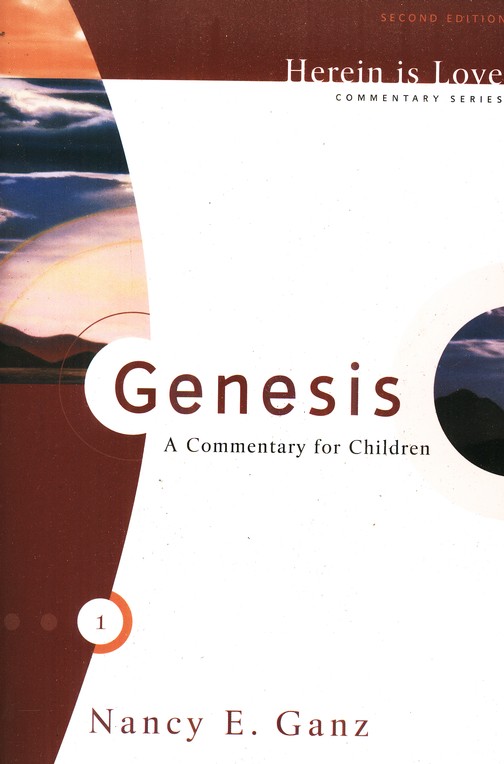
Yes, this is a Bible commentary on the whole book of Genesis, From Paradise to Promised Land – Genesis to Joshua, written to children but it isn’t dumbed down in the slightest. Even adults will learn valuable lessons and gain valuable gems from this book. I nearly cried as I read the Introduction as the author tells why and for whom she wrote this book. Even from reading the introduction I knew that this was a book that I needed to read and needed to share with my children.
This mammoth 545 page book includes 68 lessons and includes a teacher’s study guide to correspond with each lesson. The teacher guide is very similar to what I already do as she suggests the use of visual aids, memory work, craft, review questions, prayer, psalms to sing and a field trip.
This book is one part of a 4 book series that covers the four books of the Old Testament. You can see more about this series at ChristianBooks.com. Simply Click here. The promises of God, His promise of a Saviour, His wonderful grace, mercy and love are delightfully and truthfully told while also telling the stories of history with wonderful accuracy. Cultural and historical insight is offered throughout this doctrinally correct yet warmly written and captivating storehouse of God’s truths. It would be able to be used as part of family worship or it could be read daily by an individual student who is accustomed to reading independently.
I cannot wait to finish Genesis so we can start the next book. If you have children from 6 years and older, love the Scriptures and love to teach your children about the Scriptures, then will will want this book. Aussies can purchas at Light Educational Ministries. Or you can buy the Herein is Love Series at ChristianBook.com
Bless you as you strive to teach the ways of God to your children.
Bible Study This Week…
We’ve been so busy house-hunting for a rental house that there hasn’t been much time for anything else. Anything else except AFL (Aussie Rules football, of course!). We drove to the Gold Coast on Saturday night to the watch the Adelaide Crows beat North Melbourne. It was a good night out.
I find it hard living in ‘limbo‘, not knowing what my week will hold. We could pack and move this week, next week or in two months time. Then there is the open inspections that we have to attend in order to see if a house is suitable. All this meant that we didn’t do any lessons last week- and it wore me out!
While this week may be similar, I really desire to at least do Bible study with the children. If nothing more is done, then that is fine…but at least I want the most important things tended to. I don’t need to do large, overwhelming lessons rather ‘here a little, there a little‘ lessons will enable me to reach the target.
I will be working with ‘Miss A’ this week, through a book called Help Me to Grow and it is by Rev. John Annells, who is a local Baptist minister in South Australia. He is also a lecturer at the Baptist Theological College and Tabor College. This study has been designed for the new Christian and while ‘Miss A’ has been raised in the ways and knowledge of God, this study will still be beneficial for her, as she slowly starts to make her way into the world. She will benefit in also learning to articulate her thoughts. She has a lot of knowledge and wisdom when it comes to being a believer but she often has difficulty in communicating her thoughts.
Anyway, this fabulous little book is available FREE online (as is most books from New Creation Teaching Ministries) so you can view the page here or download the pdf here. It is only 345 kb.
The boys and I will continue to go through ‘Training Hearts, Training Minds’, as we read the Scriptures. After finishing book 3 in the Kingdom series, we will go on to read Bridge to Terabitha. We are waiting for the next books in Kingdom Series to arrive from the US. Once we finish Bridge to Terabitha, we might go to the cinema to watch the movie. That will be a real treat- just the boys and I. Leonie posted the links to the movie site and a study guide that I will glean some tips from. Thanks Leonie!
What Bible study are you doing with your teens? I’d love to hear about it.
Christian Biographies
Christian Biographies
A few years ago, I felt strongly impressed of God to read more biographies of believers to my children. We have read some of the book published by YWAM and the Trailblazer books by Dave and Neta Jackson
New Creation Teaching Ministries is an excellent teaching ministry that John sat under for years.
John Bunyan
http://www.newcreation.org.au/books/covers/297.html
George Muller
http://www.newcreation.org.au/books/covers/326.html
John Newton
http://www.newcreation.org.au/books/covers/285.html
Charles Spurgeon
http://www.newcreation.org.au/books/covers/278.html
George Whitefield
http://www.newcreation.org.au/books/covers/288.html
John Knox
http://www.newcreation.org.au/studies/pdf/johnknox.pdf
all by Rev. Dean Carter
Great for adults and high school aged students.
And some more links from my bookmarks:
Christian Heroes
http://www.christianheroes.com/
Christian Biography Resources
http://www.wholesomewords.org/biography/bio.html
List of carefully chosen biographies for purchase at Grace and Truth
http://www.graceandtruthbooks.com/biographies/default.asp
Biographies of Baptised Believers
http://www.21tnt.com/biographies.htm
Sword of the Lord Biographies
http://www.swordofthelord.com/biographies.htm
Fire and Ice: History & Biography
http://puritansermons.com/hist.htm
James Kiefer’s Christian Biographies
http://elvis.rowan.edu/~kilroy/JEK/home.html
Awake and Go! Biographies
http://www.watchword.org//index.php?option=com_content&task=view&id=3&Itemid=4
Biographical Sketches at DesiringGod
http://www.desiringgod.org/ResourceLibrary/Biographies/
Spiritual Journeys of Great Christians at In Touch Ministries
http://www.intouch.org/myintouch/mighty/portraits/index_77957.html
Christian Biographies, Biographical Sketches, Puritan Biographies
http://www.graceonlinelibrary.org/articles/default.asp?id=38
A few biographies at BibleBelievers
http://www.biblebelievers.com/biographies.html
Sir Wilferd Grenfell – To show the need to beware of FRAUD in “Christian” biographies
http://christianbeliefs.org/biographies/grenfell.html
Annie Johnson Flint
http://christianbeliefs.org/biographies/a-j-flint.html
These links are listed for your convenience and their inclusion does not necessarily signify that I agree with everything written on each site. The best policy is to “Examine everything carefully. Hold fast to that which is good. Abstain from every form of evil.”
1Th 5:21, 22,cf Acts17:11
The Archaeological Study Bible
 Those of you who know me will probably have gathered that we place great importance upon the Bible. I love the Narrated Chronological Bible with its running commentary.A few weeks ago, when DH and I were in Word he showed me a new Bible but I gasped at the price. I thought I’d come home and do an online search to find out if I could source it cheaper. I couldn’t. By the time I’d gotten back to Word, they had completely sold out. So, I ordered one and I received last week.
It’s great! It’s called the Archaeological Study Bible– an illustrated walk through Biblical History and Culture.For those that like a Bible-First approach to home-based-learning, this looks like a great study tool. It will provide a wonderful and rich resource, especially when used in conjunction with other study tools, like the Victory Journey through the Bible.
It is a NIV with full colour illustrations, a bonus CD-Rom, study notes, articles, and much more.
I won’t rave on about it anymore. You can go to the website and download a free 90 page sample for yourself!
Practising the Presence of God…
I’m starting to read this little book called, “The Practice of the Presence of GOD” by brother Lawrence. I’d like to read it slowly and try to absorb as much as I can. I’m using an abridged version for now and maybe later I’ll read the unabridged version.
The unabridged version says, “That we should establish ourselves in a sense of GOD?s Presence, by continually conversing with Him. That it was a shameful thing to quit His conversation, to think of trifles and fooleries.That we should feed and nourish our souls with high notions of GOD; which would yield us great joy in being devoted to Him.”
My more modernised version says, “Brother Lawrence insisted? that it is necessary to always be aware of God’s presence by talking to Him throughout each day. To think that you must abandon conversation with Him in order to deal with the world is erroneous.”
~*~*~*~*~*~*~*~*~*~*~*
“That we ought to give ourselves up to GOD, with regard both to things temporal and spiritual, and seek our satisfaction only in the fulfilling His will, whether He lead us by suffering or by consolation, for all would be equal to a soul truly resigned.”
“Our only happiness? should come from God’s will, whether it brings us some pain or great pleasure. After all, if we’re devoted to doing God’s will, pain and pleasure won’t make any difference to us.”
~*~*~*~*~*~*~*~*~*~*~*
“That there needed fidelity in those drynesses, or insensibilities and irksomenesses in prayer, by which GOD tries our love to Him; that then was the time for us to make good and effectual acts of resignation, whereof one alone would oftentimes very much promote our spiritual advancement.”
“We also need to be faithful, even in dry periods. It is during those dry spells that God tests our love for Him. We should take advantage of those times to practice our determination and our surrender to Him. This will often bring us to maturity further on in our walk with God.”
~*~*~*~*~*~*~*~*~*~*~*
I’m intrigued about what it might mean to practise the presence of God. I want to know more…I want to experience this but I get so caught up in the day to day things that make up my life. I want to be closer to Jesus…to feel His presence more closely…to feel Him nearer.
During my early morning time on the pooter, I came across a site with sermons on it. One, in particular, caught my eye and has been on my mind all day. I’ve decided to act upon it. Some of these things I already do but I want to do them with more awareness…with more joy. These things are such as,
- Waking to the Lord- giving Him my first thoughts.
- Early prayer and quiet time before family prayers.
- Plan my day with HOLINESS TO THE LORD at the forefront.
- To work diligently at my calling…of being a child of God, wife, mother, homeschooler, friend, etc.
- Guard my heart and mind throughout the whole day- being on watch for things that tempt me.
- Make a conscious decision to talk to myself and the children of the everyday things of God- to see God in everything.
- Be quick to confess my sins.
- Strive to do my best in my relationships and duties of them…as unto the Lord.
- Pray and give thanks before I go to sleep.
As well as modeling this, I want to share this with my children.
Bible Study resources
‘A’ has been using a wonderful book to enhance her understanding of New Testament readings. She currently uses “The Narrated Bible” and this is a chronological Bible with a small commentary at the beginning of each section. This is good and ‘A’ is enjoying it. However, I finally got around to working out the schedule to combine her Bible reading with a great book called, “The Victor Journey Through the Bible“, by V. Gilbert Veers. This book goes through the Bible story by story! It is really connecting the dots for my daughter. This book goes story by story through the Bible from Genesis through to Revelation. It has many good pictures, maps and background information.
If you want to read through the Bible in a chronological order but don’t have a Bible that is arranged that way, you can download this plan, from Heart of Wisdom, and print it to use.
To see more about the many uses for the Narrated Bible you can visit the HOW site:
You can see more of the “Victor Journey through the Bible” book here:
Click Here For Information on the Victor Journey through the Bible
And no, I don’t work for HOW…just really like the philosophy and products 🙂
Bible Study Toolbar
Have I mentioned before that I love the Internet??? I am constantly amazed at the generosity of people. There is so much information and products available for FREE these days.
I love to study the Bible…and I often use the Internet and online Bibles to do so. I usually use bible.crosswalk.com as it’s easy to type in but now there is a new feature available. It is a toolbar (for use with Bible Gateway)? that you download and install for Firefox (and if you’re still using IE, then you need to stop and get a decent browser!).
This easy to install toolbar has a groovy number of options, letting you change versions and languages, restrict your search to certain parts of the Bible, and more.
See here for more info: News at Bible Gateway
Go here to download the toolbar.
I hope you enjoy it and are as blessed by it as I am!
?
How Many Hours in Bible Study?
John Stott used the following time allocations dedicated to Bible study:
* One hour a day
* One 3 hour period a week
* One day every month
* One week every year
I think this is a good and worthwhile goal to aim for. What do you think?
How to Schedule with Heart of Wisdom
Following my review of the Heart of Wisdom Teaching Approach, a reader, Jamie asked me the following question, and so I will write my response here as she doesn’t seem to be a HSB member and might not find her way back to read my comment.
Question:
I’m so glad I found your blog! I have never used HOW before, but have looked longingly at it for the last year. I have three teens (8th/9th grade equivalent, and one in 10th and 11th this fall) and am wondering if HOW would be something I could implement with some measure of success for the remainder of my eldests homeschooling? Since it is a four year program (and cycling at that) what could you suggest for me?
Hi Jamie,
Thanks for your comment on my blog! I too, looked longingly at HoW for years before taking the plunge and buying the book and a unit study. Yet, I don’t know why I took so long. I always knew that one day I would use HoW, but the timing just didn’t seem right. I think it is because God knows all and He knew that I still had things that I had to get out of my system and let go of before wholeheartedly accepting something new (new to me- or different to my worldly goals).
What many people don’t realise is that HOWTA is not just a curriculum, it is an entire method- a way of doing things that lines up with a Biblical worldview. It isn’t just a curriculum with some Bible study tacked on for good measure…it is basically Bible study!
I think that at the ages of your children, you may not want to completely change everything and offer them a whole new scope and sequence of study. Section Three of HOWTA tells us how we can change methods and use different ones that encompass a Biblical worldview.If I were to undertake this with my older students, this is what I would do. It isn’t so much about book A or book c as much as the WHY we study certain subjects and how we learn about them.
I would suggest that pick up in the history rotation right where you are now! What era are you about to start on this new year? (It is a new school year for you shortly, isn’t it? I’m Australian and our school year runs differently) Incorporate a Bible-First educational philosophy into your home and work…even consider having your older students read through selected chapters of HOWTA for themselves!
I think that a HOWTA is suitable for anyone and everyone…but I’m biased because HOWTA espouses a Bible-First education and that is my passion. Not only did it put forth a Bible-First education but it gave me some tools to achieve that and put it nto practice.
So, in a nutshell I would suggest that you purchase the Heart of Wisdom Teaching Approach book and then commit your home and coming year to God, seeking Him for direction, for each child. If God directs you to use a HOW unit study then you can purchase one but if He directs you to devise your own curriculum, with a Bible-First education then you can do that. Either way, I don’t think your money would be wasted in the HOW Teaching Approach.
The Heart of Wisdom Teaching Approach
Click here to learn more or purchase
Heart of Wisdom Teaching Approach
written by Robin Sampson
The Heart of Wisdom Publishing Company is a family owned and operated business that publishes a variety of homeschool resources useful for Christian families in the training of their children. This approach uses the Bible as the centre of all education. Those who are interested in a Bible based, Delight-Directed, Note-Booking, or Charlotte Mason approaches may like these products as the author has taken the best from each approach and blended them to make the Heart of Wisdom Teaching Approach.
I have used some of the Heart of Wisdom units for a few years now but I have been most influenced by Robin’s book, ‘The Heart of Wisdom Teaching Approach‘. I have learnt that the Bible outlines how we should teach our children and that study is a form of worship. The goal of this approach is to train children to read, to study, to understand, to love to learn and, most importantly, to desire and seek true wisdom. A benefit to this approach is multi-level teaching and can be used by a mother with children of all ages. I loved ‘Educating the WholeHearted Child’ by Clay and Sally Clarkson and it provided a vision but, for me, it left out many practical how-to’s. The Heart of Wisdom Teaching Approach fully provides this yet with the expectation that each parent is to do what is right for their family.
Click here to learn more or purchase
Section One
The Heart of Wisdom Teaching Approach is divided into several sections. Section 1 tells of the Sampson family journey from school to homeschool- various approaches and methods. The author doesn’t tell the reader how they should approach education based upon her experience, rather she sends the reader to the Scriptures to find the answers.
Section Two
Section 2 is important as it looks at the foundation of Christian education, by exploring the roots of educational methods from the past until modern times. The book also looks at the difference between Christian, Hebraic, Greek and secular worldviews and how this impacts the methods used in modern education. Great reading for new homeschoolers or veterans.
Section Three
Now knowing about why there is a need for change in the way we view education, Section 3 tells us how we can change and use different methods that encompass a Biblical worldview. Learning styles and the Four-Step approach to a lesson plan as well as talking about Charlotte Mason, Unit Studies, Delight-Directed studies and Critical Thinking and Logic are included.
Section Four
Section 4 is a large chapter, full of meaty ideas that will challenge each reader’s thinking and method. A four-year plan that can be rotated to provide a full 12 years worth of study, based upon God’s Word and World is suggested. Scrapbooking or Notebooking is encouraged – assisting children in their learning as they plan, develop, classify, categorise, construct, and organise their work. History is taught chronologically while science is taught in the order of Creation. English skills are integrated into all studies. Scheduling, planning and much more is addressed in this chapter.
Section Five
Once the educational philosophy has been addressed, a change in resources may be required. Robin doesn’t leave us floundering. In Section 5, she writes about using the HOW unit studies or devising your own and where to get the various resources from for years K-12. Science, History, Literature and Life Skill resources can be purchased from the Heart of Wisdom online Store or from your local Christian bookshop.
Click here to learn more or purchase
Not only was I encouraged by this book but informed, refreshed and motivated to run the race. This book, this approach, is like a breath of fresh air. The book is available through a variety of means: electronic download, or bound editions. Regardless of the format, the content is excellent and I wholeheartedly recommend it for any parent, homeschool or otherwise.
Disclosure: I am compensated for purchases made via the referral links in this post.
Using Bible Stories Year After Year
This time of year is always fairly spiritual for me as I meditate and ponder fully the work of the cross, the work of God to redeem His people.
Yesterday I was reminded by my 15yo daughter that this is also an opportunity to learn more about the Lord…and opportunity for our children to develop more of those *mental hooks or pegs* in place or to make some connections. As we were reading the story of the Passover and the Exodus, my daughter and I were having some great discussions…and I tried to ‘enlighten’ the boys (rather unsuccessfully might I add) when ‘Miss A’ said,
“Mum, why don’t you just stick with the story like you did for me at that age?” Well DUH!!!!!!!! (See, I’ve told you more than once that I can be a tad thick-skulled).
When I immediately agreed with her, she went on to remind me that reading and discussing the stories was what I had done with her, and that hearing them year after year enabled her to build upon the mental hooks more and more until she is now at the point of understanding a great deal. Uh? It takes a 15 year old to remind me of things. 
The local Christian school here has done very little in commemorating or teaching about Passover or Easter. I find this sad. I think they had ample opportunity, especially this year. In Victoria, the schools only schooled for 6 weeks and then they had two weeks holiday for the Commonwealth Games…then they returned for 2 weeks of school before breaking again for end of term one holidays. Those 2 weeks back at school could have been a great time for teaching in their Christian Studies period. However, they chose to have the students watch a video…the animated Moses, Prince of Egypt.
Now don’t get me wrong…I’m all for using modern technology (we use tv and dvd’s fairly liberally) and then documenting that as a learning activity or opportunity. However, I was saddened at the lack of teaching on the Centrality of Our Faith. There’s also a time and a place for watching animations…I guess I just expected a little more from a combined Yr 8/9 class at a private Christian school.
On the bright side, if it is acceptable to chart Moses, Prince of Egypt as the Christian Studies subject for the week…then it is certainly acceptable for me, as a homeschooler, to document similar activities as one learning opportunity in a subject – not that I care to compare to a school system, but it can be an interesting exercise.