HOMESCHOOL

Five Necessary Gospel Points to Share

As parents we all want to raise our children in the ways of the Lord, to teach them His ways, to teach them His story. Oh, but there is so much to do, to read, to share. Where do we start? We start with the good news. We end with the good news. But what exactly is this good news? Have you succinctly shared the gospel with your children?

Why succinctly?

Maybe your children go to school which means you really have to maximise every hour spent with the children? Maybe you have teens – we all know how fast and hectic the lives of young people can be – you need to maximise every hour spent with them. There are many reasons why our time is limited but, it is also good for all believers to know the essential message of the gospel – it also helps them to share the message with others.

I am the best curriculum for teaching and showing the gospel to my family. And that is an awesome responsibility. There are many days when we don’t read from ABCXYZ Bible Curriculum [insert any Bible curriculum here], and that is okay.When I am baking, or driving, or gardening, or writing I make it a point to share all the time. Naturally in conversation, as real life affords these opportunities all the time.

What Is It Exactly That I Share?

1. God is holy. God is just. God is righteous and perfect.
2. I am not.
3. At the end of my life I am going to stand before the just and holy God. And I will be judged on either my own righteousness or that of another. I am not justified by my own works or efforts, nor any deeds I could manage but only by faith. By faith alone.
4. Jesus lived: perfect, righteous & obedient. He offered Himself as a perfect sacrifice to satisfy the justice and the righteousness of the Holy God. He has done for me that which I could never ever do for myself.
5. This cost God. It isn’t cheap. The forgiveness we receive cost God His own Son, Jesus Christ. When I put my trust in Him alone, He declares me just. He adopts me into His family, forgives my sin and calls me His beloved.

And When They’re Older:

(a) Jesus is the Messiah predicted by the OT prophecies. His ministry of teaching, his actions, his death, resurrection and ascension all comport with the prophecies, and affirm him to be Messiah.
(b) His death was God’s act to deal with sin. His resurrection attested to the effective power of the Cross, and affirmed Jesus as Lord over life, death, creation.
(c) Men and women must, therefore, believe his Lordship, believe on him, repent of their sins, and receive forgiveness from their Saviour, Jesus.

For more detailed writings on this topic, I thoroughly recommend the excellent teaching at New Creation Teaching Ministries. Download and read True Preaching: The Agony and the Ecstasy by Rev. Geoffrey Bingham

Hmmm…

The modern-day gospel says, ‘God loves you and has a wonderful plan for your life. Therefore, follow these steps, and you can be saved.’ Meanwhile, the biblical gospel says, ‘You are an enemy of God, dead in your sin, & in your present state of rebellion, you are not even able to see that you need life, much less to cause yourself to come to life. Therefore, you are radically dependent on God to do something in your life that you could never do.
~David Platt
What Parenting Recipe Do you Use?

There comes a time in everyone’s life where they start to examine and question the big issues of life:

Why are we here? Who put us here? What happens when we die? Our answer or thoughts to these big questions will dictate our actions.

There is a lot of myth and fear surrounding the teen years, especially amongst home schoolers. We don’t need to stick our heads in the sand and only discuss that which we want to hear- we need to know what is happening.

We want to pass on our beliefs and faith to our children. So we teach them. We homeschool so we can spend more time with our children, building the relationship, instilling values, etc. And then comes that time. That time when our child starts to question those beliefs. And we get are horrified and panic.

However, this process doesn’t need to be terrifying. It can be a necessary and vital step toward maturity and adulthood. This transference of faith is vital for one to grow as a child of God, to take ownership of their faith. After this process, the child or young adult will no longer rely upon their parents for maintaining their relationship with God and others.

What happens if this process does not happen?

The shift may still occur but instead of relying upon the parents, they may rely upon someone else’s: their boyfriend, husband, pastor, friends, magazine, TV, books, etc. (The enemy is vying for the heart of all and is actively working toward gaining it via any means). They either take ownership of the faith they were raised in or they transfer it and take the beliefs or faith of someone else.

So, is there a formula?

Early on in my parenting journey, I thought I had found the recipe!

Simply take 1 child + a godly homeschool and you will = Success

We think that if we homeschool, then our children will turn out okay. Further to that, we have to homeschool a certain way or it won’t ‘work’. We have to avoid this, avoid that, do this, don’t do that… Oh, it’s all so hard – so many rules!

But we make a grave mistake if we attempt to use any kind of formula.

Raising children is a matter of grace.

It isn’t about a formula or a recipe. We need to know and accept that we cannot obtain our child’s salvation! Whether or not a person realizes they’re forgiven and walks in that when they are 15 or 45 doesn’t change the fact that it’s all about grace. Salvation is a work of grace. After all, salvation is what most of us desire for our children more so than simply the appearance of right living.

We can lead our children to Him, lead them in the ways of Him… We can teach them all about Him, and teach them to obey us as parents… but that internal work of the heart – the individual’s response and subsequent obedience to God are not within our control. We are not the Holy Spirit. We are the messenger, the herald who proclaims the message. The onus is on the hearer to hear and obey.

So what can we do?

We can pray! We can proclaim the message unabashedly! We can live by example. We can train in matters of outwardness. And we can hope.

There will come a time in their life when they question what they believe… it might look shaky for awhile but if the foundation is solid (the foundation being the message of the work of the Cross through Christ) then we can be assured that God will indeed graft them into the vine and call them His own. They will start to see this as their faith… their belief and not just that of their parents. This is a most beautiful happening! Truly wondrous!

The Homeschooling Community

We shouldn’t look at a 15yo, who is mulling over the big issues of life and struggling with it (which can be a normal part of maturing into an independent adult), and judge his family.

In the same way, we can’t look at a family who has an obedient and God-fearing 16yo and assume that they have perfected the formula, thereby desiring to emulate their parenting. We don’t know where that person will be when they are 30, once away from the watchful eye of parents and responsible for themselves. So often we overlook the operative word in Proverbs 22:6 “when he is old”; not when he is a teen.

Relationship

Let us not become weary with our modelling and teaching. Let’s keep on teaching our children God’s ways, keep on loving them, laughing with them. We can be firm with our children yet not get too hung up on the minors. We can pray with them and for them. If we homeschool – keep building our relationship with them. If your children goes to school – keep building your relationship with them! And pray.

Prayer

God cares about your children even more than you do. Ask God to reveal Himself to them, that they will see their sin and need for Him. Pray that God will humble them (and us, while we’re praying) and pierce their heart so that they will see their need for great grace. Ask God that He will draw them back to Himself each time they stumble.

We can let our children know that there is nothing they can do to earn our love or God’s love. Pray that the gospel will be the motivation for their growth. Teach them and model that our obedience is a response that overflows from our heart.

Christian Homeschoolers Don’t Cut. Do They?

Ask an average parent about self harm and they will likely look at you with a quizzical look.

Many Christian and/or homeschooling mums simply aren’t aware of self harm or they don’t believe it will be an issue in their family. Self harm is what other kids do. Right? Certainly not kids in Christian families who have been raised on God’s word.

There are many forms of self harm. Even good kids can wind up practicing self harm and self mutilation. Just because you are a Christian who homeschools don’t be fooled into thinking that your child could or would never do something like that.

Self-harm can include, but is not limited to:

  • cutting
  • hitting or burning of oneself
  • binge-eating
  • starving oneself
  • taking medications to induce vomiting or diarrhea
  • playing ‘chicken’ with cars or repeatedly putting oneself in dangerous situations.

Self harm can also involve the abuse of drugs, alcohol or other substances, such as over-the-counter or prescription medication.

Who Self Harms

According to some research, girls are seven times more likely to self harm than boys. The behaviour usually starts in adolescence but is also known amongst younger children.

Self harm is no respecter of age. Self mutilation and the thought processes can start quite young. It may not look the same in each child but but the attitude, the pain, the inability to deal with the guilt, the anger is still present. When strict punishment, resulting from anger rather than restorative action stemming from love is practiced, our children may learn that punishment relieves their guilt. Self harm is often a measure of a person trying to ease their pain, shame, hurt, anxiety, stress, pressure, frustration or guilt.

Why Do Some People Self Harm?

Many people say that self harm brings a momentary sense of relief. It may, for a short time, take their mind off their pain or anxiety. It can brings a sense of calm or a feeling of release. Many people who self harm experience feelings of guilt or further shame once the effects of the self harm dissipate.

But we’re a Christian family!

Yes, even Christians self harm! Even Christian children self harm. Hiding away, denying it, trying to avoid the shame and humiliation from other Christians is not going to help the problem… it simply reinforces to the child that denial of sin is the way to deal with it. Ask for prayer… see your pastor but don’t live with it alone or trying to pretend it can’t be happening.

What Can Parents Do?

Become informed. Learn to recognise possible warning signs. There is a lot of information available on the Internet, but please exercise caution. There is a lot of pop psychology in the Christian arena and secular worldviews pervade worldly magazines, articles and organisations so do line compare everything else alongside the word of God.

Discreetly observe your child. Young teens may often cut or burn themselves on their wrists, arms, thighs, or stomach. Often they will wear long sleeves shirts or trousers in an attempt to cover the marks. If you suspect your teen is self harming, resist the urge to dive straight in with accusations or assumptions. Rather, try a gentle, questioning approach – focussing on how they feel when they self harm and what they believe it does for them. Seek to understand your teen’s behaviour rather than jump in with a band aid to fix it.

We all can observe our children. Study them, learn how they respond to hurt, pain and guilt. When they make a mistake, how do they react, how do they cope? How does my child respond after being corrected?

I was totally clueless as to the concept of self harm. When I realised what was happening, I won’t lie and tell you that I handled it all like a model parent. Sadly, I reacted from ignorance. I found it hard to believe that my child could possibly cut themselves. I was devastated. I felt like a failure. I thought, surely I was the only Christian homeschool parent to experience this. It wasn’t until I risked embarrassment and spoke out, that I saw that not only was I not alone, but that this issue was a lot more common than I ever thought. My child didn’t need my judgment or accusatory tone. They needed me to understand or at least be willing to try to understand. Once my pride had been dealt with I was in a much better place to help my child.

How To Deal With Guilt

We need to teach our children correct Biblical views about guilt, forgiveness, (atonement for sin) and shame. Teach them how to deal with and/or express their anger. Teach them and lead them to the Cross for the forgiveness of their sins. Teach them Scripture. Teach them who they are in Christ and what He has done for us. But more importantly, model these things. Our children are watching us and learning how we deal with anger and guilt. When we’ve done all we can do, we need to pray.

For more information on Self Harm, read the Self Harm fact sheet at the Mayo Clinic.
The Lysamena Project on Self-Injury has a lot of Christian-based self-injury information and resources. Another organisation, To Write Love on Her Arms, is working to raise awareness and get help for those affected.

Top Homeschool Posts

I don’t write much about our homeschooling journey any more. Maybe I just talked myself out. New readers who have only been reading for awhile may not be aware that this site is 7 years old and I used to talk about home based learning and educational philosophy. So, I’ve rummaged through the archives and grabbed what I think are some of the better posts on this topic.

My Articles

Charlotte Mason Part One, Part Two, Part Three.
Our Story– Beginning the Journey
Something missing
Mapping the course- as pilot
Finding direction- as co-pilot
Developing vision
Animal school- a parable
Putting it all together
Tips for Getting Started in Homeschooling

Educational Philosophy

What is the Primary Purpose of Homeschooling?
Our Lifestyle of Learning- Educational Philosophy
Identity Directed Approach
The Animal School Parable
Ages and Stages of Learning
Make the Most of a Book/Curricula Fair
Teaching Character or a Moral Code
Academic Growth Spurts – how children grow
How Do You Learn?
Strewing

General Helps

Some Good Homeschooling Books
Curriculum Planning the HomeGrownKids way – using the Four P’s.
History Scope & Sequence
Course Requirements for History Program Using Living Books
How to Schedule with Heart of Wisdom
Bible Lessons with Little Ones- Using Heart of Wisdom
Homeschooling with Little Ones
Learning with Different Ages & Levels Part OnePart Two
Time Management
Homeschooling Through Sickness
Create Your Family Mission Statement
Our Daily Rhythms or Block Scheduling the Day

General Thoughts

Should You Register for Homeschooling?
Teenage Rebellion in Homeschool Families
The Sacred Cows of Homeschooling
Are Your Children Bored? Boredom Busters
Discerning the Value of Hobbies
Homeschooling is…
Homeschoolig Facilitates…

Homeschooling the HomeGrownKids Way

Our Homeschooling Timeline
Our Family Principles
Composition the HomeGrownKids Way
Teach Your Children to Read Aloud – the why and how to of reading aloud
Bible Study Scope & Sequence
Using the 5W’s and a H in Teaching
English Lessons the HomeGrownKids Way
Learning to Read the HomeGrownKids Way
Record Keeping the HomeGrownKids Way
Shakespeare Study the HomeGrownKids Way
Geography the HomeGrownKids Way
Teaching the Children to Plan & Record Using Index Cards
Appreciating Poetry
Our Sabbath Year – A Year Off of Homeschooling
Using A Voice Recorder with Auditory Learners
Delight Directed Education for Our Girls
Good Books to Read Before They Leave Home
High School L PLates
Grade 7 Schedule
2006 The Year in Review
Reviewing the Year
Setting Up A Schedule
I Think I Am An Unschooler
Opening Doors for our children
Bookwork learning for our 13yo
Learning through Open Access College
Unschooling or School At Home – Which Is It?
Year 9 Daily Schedule

Diary Days

A Tuesday
The Next Day
A Monday
Another Diary Day
An August Monday
The Next Day in August, Tuesday
A Day In the Life of A Teen

Book Reviews

Upgrade: 10 Secrets to the Best Education for Your Child
Upgrade Part Two- Further Thoughts
The Heart of Wisdom Teaching Approach

Personal Thoughts

I Was A Homeschool Phony
Back to Basics Homeschooling
Home Education in Australia over the Last 10 Years – Through My Eyes
Training Children in Innocence or Ignorance

Yr 9 Daily Schedule Term One

Falcon’s Schedule  Term One 2012

A few weeks ago I posted the subjects that both boys were studying – at school and here at home. This is Falcon’s schedule. It looks pretty heavy but he devised this schedule (and tweaks it to suit) pretty much by himself.

Falcon is a stickler for abiding by the schedule… almost down to the last minute. You can imagine that this trait drives me batty. But it’s how he works best.

Download the pdf of his schedule: mon-thur2012yr9

Our schedule this year looks completely different to any other year. But, this is the first year that we have ever had only one child at home! I always knew this child liked learning and liked schedules but it’s not until this year that I see him thriving in his new environment!

I think his workload is quite rigorous. Others may not think so but I do. However, it goes hand in hand with our goals, for this child, for this year. Not bad, considering that he was pretty much unschooled for the most part of his life so far.

First Day Back 2012

Last week was our first week back at school lessons. Rambo started in Yr 11 at the local school and this particular school starts a week after the public schools. So Falcon and I also started back at establishing a whole new routine. This is the first time I have ever homeschooled one child at a time. It’s all a bit new to me. It’s all new to Falcon too as he is the youngest child and has always had his older siblings around to keep him company and provide lots of distractions.

first day school 2012

First Day of School 2012

Yr 11 – Rambo

Even though Rambo isn’t specifically homeschooling this year, we still take great interest in his education so I’d I’d like to share his subject choices.

  • Faith Studies (all students have to do this subject)
  • Maths
  • English
  • Physics
  • PE
  • Outdoor Ed
  • Business & Enterprise
  • Automotive Studies
  • IPP
  • Psychology

In his spare time he keeps fit, is learning to drive, is experimenting with DJing and mixing music, gaming, game mapping, photoshop and is a Corporal in Air Force cadets.

DS isn’t set with his future yet so is keeping his options open as to his interests. He’s going for good grades in Eng, Maths & Science if he wants to apply to ADFA but he’s also doing OE, PE & Psychology in case he decides to become a PT or work in the fitness industry. He’s continuing to work on his IT skills and do Business and IPP in case he wants to work in the IT industry.

Yr 9 – Falcon

Bible:

Personal Development:

Current Events

Maths:

English:

Science:

SOSE:

  • Literature selections, Poetry, Research papers on significant days, and Movies for Australian Studies

Photography:

  • Photography unit from CurrClick
  • Weekly photograph uploaded to blog
  • Process two photographs using LightRoom or Photoshop per week

Art Appreciation:

  • Weekly study

Music Appreciation:

  • Informal weekly study
Falcon may attend the same school as Rambo next year for Yr 10 so we are preparing for that. I am considering adding Skwirk to our program to supplement English and SOSE. Have I overlooked anything? Any thoughts?


A Change of Seasons

I’ve sensed the change coming. I’ve prepared for it. And now the change is here.  A typical season even has a different atmosphere during the beginning, middle and end of that season. And over the last few weeks we have been in the transition between the end of one season and the beginning of another. Whilst I don’t want to hurry these last few moments of this season I also don’t want to cling to it when the change from one season to another is a necessary part of life.

John and I have observed our son, continually prayed about his needs and decided that it is time. Time where his needs will be best met by going to school.

Long time readers may see how we’ve slowly prepared him for this new season. I’ve known this time was approaching. Our homeschooling approach has changed in preparation for it. We went from unschooling to using ACE paces to being enrolled in Open Access College. School seems like a natural progression for this young man. I know he’s ready because, for the first time ever, he is keen to go and is looking forward to it.

I have a great relationship with my sons. And I want that to continue. However, I was finding it more and more difficult to maintain our relationship whist being his primary educator. We both found it difficult to go from school marm who is dishing out consequences for assignments not turned in to the supportive, cheerleader, mum that I am naturally am. Our relationship was suffering because of it. That is the main reason he studied through OAC. I wanted him to learn valuable skills in the area of time and resource management. Skills that I simply was not able to teach him nor impart to him by myself.

The year at OAC was beneficial in a few ways. I saw how much he needed the structure, the one-one-one direct instruction, the consequences and the constant pushing. I can’t facilitate that at this time, nor have I for the last few years. So going to school is a natural progression – it’s what he needs in order for him to grow, develop and mature. He has had s solid foundation through his years of homeschooling and it’s time for him to have even greater exposure to the world in ways that will benefit him.

Maybe if our lifestyle and family circumstances were different, school wouldn’t be necessary to further his growth and development but it isn’t different. We are who we are. We don’t live on a homestead. We aren’t self employed. My husband doesn’t work flexi hours. We cannot employ our son in our own business. Some can and that’s great. It’s not our life. Rambo needs to learn further skills and develop tools that we simply cannot facilitate.

For Whose Sake?

It’s times like this that I have to remind myself of the real reason we homeschool. I ask myself, “For My Sake or For The Children’s Sake?”. Is this whole homeschool thing for them or for me? Having had one child attend school from Yr 8 onwards I know the painful process of dealing with homeschool mama pride. My life experiences have taught me that homeschooling is for our children, our family, for us. As long as I’m seeking the Lord and we are putting the needs of our children first, then there is no need for me to worry what others will think. and to do so is a form of pride. Time is too precious to waste on that. Been there, done that. Not going back!

Our goals haven’t changed over the years. They are still process oriented, not product oriented:

  • Build and maintain relationships
  • Develop the character of his heart
  • Develop needed learning skills and a love for them

Not all homeschoolers have the same goals so I’ll try to expand on how the above points are our goals and how we used academics and curricula as a tool:

1. Build and maintain relationships
By working with the child, we grow in intimacy. Using curricula as the tool, I will demonstrate love, grace and patience, thereby building trust. Academics are not the sole priority here but I want him to see that he is much more important to me than forging through a workbook.

2. Develop the character of his heart
Through this time I hope to help my child recognise any wrong attitudes and learn how to deal with them, leading him to submission to Christ.

3. Develop needed learning skills and a love for them
I don’t adhere to any standards of school or state. I don’t follow a syllabus that dictates to me when or how I need to proceed with new disciplines or subjects. Rather, the Holy Spirit reveals my child’s needs to me and I trust that He will shape the approach and requirements for each child. I desire that Jesus Christ become Lord over our education, approach, methodology and processes of learning. Academics and education are secondary to that.

The Freshness of Every New Season

And so he is enrolled, has new uniforms and stationary and is excited to start in year 11 at King Grammar Baptist School. Even though I’m not the one going to school I am giddy with excitement too. We had a tour of the school and I had to wipe the drool from John’s mouth when we were in the Design & Technology rooms! Ah, all that guy stuff – the power, the tools, the equipment! It is a new learning experience for all of us but it was our decision to do what we believe is best for our son at this stage in his life. I am excited that I will be able to support him, guide him, have fun with him and all those great parent type activities (including the discipline, at times. I mean he IS a teen boy. Can you imagine the state of his bedroom?) without being his school marm. Yay!

I also have a fresh vision for Falcon’s education for 2012. I am excited to be able to do lots of one-on-one work with him. I’ll share more of that in future posts. Just imagine, going from a full family of 5 children at home to now having one child at home. Whatever will I do with myself?


The Lamb: Fantastic Freebie Presenting the Gospel

I have linked extensively to GoodSeed in the past but they have an extra special freebie which is perfect for this time of the year. Plus I like GoodSeed and wanted to highlight them today. 🙂

The Lamb image

TheLamb

by John R. Cross.
This beautifully illustrated book will take them on a remarkable journey from Creation to the Cross, explaining the true significance of the baby in a manger.

By laying a foundation starting with creation, a clear identification is made between Jesus and the sacrificed lamb for forgiveness of sins. Issues like death are dealt with in an honest, straight-forward manner, but never is the child left hanging. Hope is always introduced. With a review at the beginning of each chapter and questions at the end, the concepts presented are reinforced many times and give you tools to check how much your child is understanding. Included with the book is a 60 minute CD, providing a word for word narration woven together with a specially written song tying in with the story.

Read the first three sections of the book in PDF format or register and access the entire FREE eBook. These guys are not spammy, they don’t send you dozens of emails- I highly recommend registering on their site.

If you have children or grandchildren and want to present the gospel to them in a way that is easily understandable yet full of truths you want to RUN over to GoodSeed right now and grab this amazing freebie. Whilse you’re there, check out the amazing free resources they have. Have I mentioned how much I really like and appreciate the ministry of Good Seed? And if you really like them, consider a donation or love gift… check out their financial policy here.

About GoodSeed

The ministry of GoodSeed believe that Christians need to be clear on the Bible’s primary message – the gospel – so that we can pass it on to others in a way that makes sense. Their materials are geared toward those who have little-to-no Bible background, which may be due to age (children), a remote location (tribal) or because a dominant religion hinders a clear explanation of the Scriptures.

Go check them out: http://www.goodseed.com/

Advent Reading

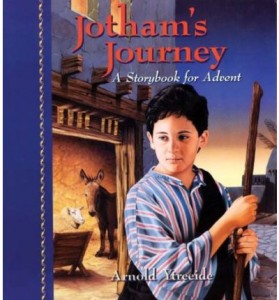
Jotham’s Journey, Tabitha’s Travels, and Bartholomew’s Passage are written for ages 9years and upwards. It all begins with Jotham and it continues in Bartholemew’s Passage culminating in a wondrous story called Tabitha’s Travels. This series of books has mystery, suspense, humour, victory and more. Not just a fictional story, it also contains a short, devotional reading for each day in the build up to Christmas.

jothams journey

Over the years we have thoroughly enjoyed the whole series of books by Arnold Ytreeide. If you haven’t heard of these book syet, please look into them and make reading one per year a new family tradition.

The stories are to be read each day in the lead up to Christmas. They tell stories that are filled with adventure and are rich in history. They have been woven together and include psalms, stories from the Old Testament and culture to paint a vivid and thought provoking series. The series is full of great explanations about how Jesus is the promised Messiah, and what that means for us today. Almost every chapter ends in a cliff hanger and the kids were just dying to read more. They were very excited when they made connections from Jotham’s story and Bible stories they are familiar with.

Our family didn’t have an issue with the somewhat graphic violence in the stories but I know of some families who have not been able to continue with the books because of it.

Arnold Ytreeide is married with two grown and married children. He has worked as a youth pastor, policeman and televaision producer. He has a degree in theology and he actually wrote Jotham’s Journey for his own children when they were young.

Ytreeide trilogy

Links

Best prices

Amazon

Series on Kindle: $9.99
Jotham’s Journey$11.19 US
Tabitha’s Travels $11.19 US
Bartholomew’s Passage $11.19 US

ChristianBook– free shipping!

Jotham’s Journey: A Storybook for Advent $7.99US
Tabitha’s Travels $7.99US
Bartholomew’s Passage: A Family Story for Advent $7.99US
Ytreeide Advent Stories, 3 Volumes $22.99US

Book Depository US

Jotham’s Journey $13.20AU
Tabitha’s Travels $13.20AU
Bartholomew’s Passage $13.20AU

Fishpond – free shipping!

Jotham’s Journey: A Storybook for Advent $15.41AU
Tabitha’s Travels: A Family Story for Advent $13.13AU
Bartholomew’s Passage: A Family Story for Advent $14.39 AU

Affiliate links are used and I may receive a commission if you purchase through these links.

Creativity Takes Time…

Two minutes and 7 seconds. Go on, you’ve got time to watch this. If you are a mum, dad or a teacher, you need to watch this.

http://www.youtube.com/watch?v=LQhSXcyDHLA

Thanks to Louise, who originally posted this on Facebook.

National Homeschool Week Park Meet-Up Tomorrow. Are You Coming?

As part of the National Homeschool Week Park Meet Ups, I will be hosting a park meet in the northern suburbs of Adelaide, South Australia, tomorrow (Wednesday 23rd November, 2011).

Family Picnic

A Park Meet is an opportunity for homeschoolers With Experience to share with enquiring or new homeschoolers. It’s a great opportunity to meet new people and demonstrate to an often sceptical mainstream how great the homeschool lifestyle can be.

I will be at the park from Noon onwards so feel free to bring s picnic lunch and join me! If you live in the northern suburbs of Adelaide and want to know what park we are meeting at, please contact me for details. I will send you the location and my mobile phone number.

Strangely enough, I’ll be the lady without any children! I only have 2 children at home now and they will both be tending to the online lessons so can’t attend.

I hope to see you there!

Use a Voice Recorder for Auditory Learners


I’ve been using a nifty little tool which has helped me organise my ideas for writing and website work. It’s such a simple idea, I can’t believe I haven’t used a voice recorder before now.

mental clutter image

Courtesy of lauraneff

I was complaining (Yes, I know you might find that very hard to believe but on a rare occasion I have been known to grumble and bemoan) about my lack of focus, how I am so easily distracted and mentally vague due to ideas buzzing in my brain. Unless I transfer those ideas from my head to something more tangible they shoot around my head like a little ball in a pinball machine. I’ve got to do this immediately else the ideas will be lost. Know what I mean?

I’ve tried writing little sticky notes but they just got lost. I tried having a notebook but I never had it on me when I needed it. So then I tried taking notes on my phone but found it too hard, too slow, too laborious with my one finger typing on the phone keyboard. Plus my mind ticks a lot quicker than I can type on the phone. I’d lose my train of thought to easily and be right back where I started- distracted.

voice recorder phone

The free voice recorder app is a convenient tool for taking notes, creating audio reminders or recording narrations.

And then my husband-who-is-very-smart, suggested I use the voice recorder on my phone. What a brilliant idea! (It’s so clever I nearly considered leaving this part out of the blog post and claiming the idea as my own.)

Yes, I am one of ‘those’ mama’s. You know, the ones who have a phone glued to their hip at all times. No, it’s not for facebook or email (Well, not ALL the time) but because I can always be contacted by Mr. Smart-Hubby and the children. However I am meandering again. Back to the point. (See, you’d never have any idea that I struggle staying focused if I didn’t tell you, right?)

I created a shortcut on my phone desktop and within 2 seconds I have my voice recorder open and ready. I can spill, albeit in my jumbled fashion, my scattered thoughts into the recorder and it’s done! No longer are the ideas roaming around in my head. They’re tucked away on my phone, ready for me to deal with at an appropriate time. Once the initial idea is out of my head I can then begin to fine tune those thoughts and / or focus on the activity I was engaged in before the light bulb moment.

I am rarely at a loss for ideas… it’s in capturing and storing those ideas that I need help. If I’m having difficulty with a website design or site issue, sometimes I’ll have an idea of how to solve the problem while I’m doing something completely unrelated; like showering or watching softball or cleaning the bathroom. Usually that idea will have to stay in my head while I’m doing the activity which causes me to appear vague at times. But not any more! I just record my idea into my phone and it’s gone! My mind is free to enjoy the task that I was doing- I can be in the moment again.

Ideas won’t keep; something must be done about them.
~Alfred North Whitehead

This hack can easily be beneficially adapted and used with children, especially auditory – linguistic learners. Can you imagine the various ways to use this trick in your family? In your homeschool?

  • Try having your auditory-linguistic child narrate a chapter of his book. Have them record their key notes as they are working through a textbook. They can easily record events, dates, proper nouns, etc.
  • Send a child outside to play for 20min and then hand them a voice recorder- think of the possibilities!
  • Come on, brainstorm with me… share an idea or two in the comment section.

What tools and tips help you to be productive and organise your creative ideas?


It’s Not All Up To Me

And I am sure of this, that he who began a good work in you will bring it to completion at the day of Jesus Christ.
~Philippians 1:6

Throughout most of our homeschooling years I have felt ‘behind’. Not being in the school system nor of the school-at-home approach we have never believed that a child is ‘behind’ yet I put this on myself. I often felt that while others were doing ABC curriculum in Yr 8, we were starting it in Yr 9. I doubted myself and my ability and thought I was letting my children down. But I’ve learned that I didn’t let my children down.

They were learning valuable life skills. The less I do, the more they do. I don’t do anything for a child that he is able to do for himself. (Sure, there are extenuating circumstances but that’s not the point of this post.) It is empowering for a child to be able to do much for himself.

Even being left with no scheduled school work for a short time can be good. It allows the parent ascertain the maturity level of the child and the responsibility or ownership level of the child toward his lessons. Rather than see my character trait as a weakness or a flaw (which can enable the child to use it as an excuse for not getting on with things) I see it as an opportunity. The children have an opportunity to put into practice that which they have been taught!

It’s not possible nor reasonable to train or teach every child every thing they need to learn. I don’t need to do it all. Just as God is perfecting in me His work, so He is with the children. I am not perfecting them – He is. God has begun a good work in me and He will continue it until the Day of Christ.

Prayer

Lord, give me the grace and strength to accept that this verse applies to my children as well as to me.

Reflect

Do you doubt your ability to homeschool? Don’t worry… God will give you His grace and His strength when you ask for it and when you need it.

Recommended Reading for Homeschool Mums

I am often asked what my favourite homeschooling books are. It’s impossible for me to be limited to one or two as I have gleaned something of value from every book I’ve read. However, for the sake of brevity which is not my strong suite, I will limit myself to linking to my Top 16 Books. Here they are in no particular order.

Educational Philosophy and Practical


A Biblical Home Education: Building Your Homeschool on the Foundation of God's Word
The Heart of Wisdom Teaching Approach: Bible Based Homeschooling
For the Children's Sake: Foundations of Education for Home and School
Educating the Wholehearted Child

Educational Philosophy and Practical


You Can Teach Your Child Successfully: Grades 4-8
I Saw the Angel in the Marble
Successful Homeschool Family Handbook
100 Top Picks for Homeschool Curriculum: Choosing the Right Educational Philosophy for Your Child's Learning Style

Practical and Encouragement


Trivium Mastery: The Intersection of Three Roads: How to Give Your Child an Authentic Classical Home Education
Easy Homeschooling Curriculum: Grade Level Guide to Literature and 16 Subject Chapters by Guest Authors
When Children Love to Learn: A Practical Application of Charlotte Mason's Philosophy for Today
Easy Homeschooling Companion: Exhortation, Encouragement and More Easy Ideas

Family and Relationships


The Five Love Languages of Children
The Five Love Languages of Teenagers: The Secret to Loving Teens Effectively
The Five Love Languages of Your Family
Things We Wish We'd Known: 50 Veteran Home-schoolers Share

If any of these book are unavailable, you could try searching through the following bookstores:

Search:


Christianbook.com

Fishpond


Music
Movies


www.fishpond.com.au

buy the book from The Book Depository, free delivery

Disclosure: I may be compensated for purchases made via the referral links in this post.

Read Real Books, says Dr. Ben Carson

In February I shared with you how our family watched movie that profoundly affected all of us.

Here’s what I wrote:

Last year we bawled through, er watched the made-for-tv movie, Gifted Hands, the story of Ben Carson. I might be the only adult believer who hasn’t read the book yet… and I am asking myself why this is so. I cannot believe I haven’t read this inspiring biography. If you haven’t watched this movie with your children then please, run out to the video store and hire it. You will not be disappointed. And if you are, well I won’t say anymore.   This movie has affected me so profoundly… but time will tell, won’t it. (Maybe I’ll write how this movie and book has affected our parenting and homeschooling style)

Ben Carson was a difficult student, in his own words. He and his brother, were raised by their mother in poverty. She worked very hard to be a good example and she urged them to get a good education. She believed they could change their circumstances… they need not be destined to a life of poverty. She knew that if they could have a good education then they could have a better life.

No, she didn’t pay exorbitant amounts of money for private tutoring. In fact, she herself could not read! But she did limit their t.v. viewing to three shows per week and insisted that they read two books from the library each week. They also had to write a book report on each one.  As Dr. Carson recalls,

“But, she didn’t dictate what we had to read. And, as I began to read, I discovered one very important thing: Even though we had no money — no money for anything, between the covers of those books, I could go anywhere in the world; I could be anybody; I could do anything. My horizons began to open up.”

Sonya Carson also insisted that Ben memorise his time tables after school, before he could go out to play. She encouraged her sons to persevere… to try harder, to strive for excellence. I got the impression that she wasn’t oppressive… she wasn’t  a Tiger Mom, just incredibly persistent, determined and encouraging.

“Learn to do your best, and God will do the rest.”

~Sonya Carson

The movie, the life story of Ben Carson also challenged my eldest son. All this year he has applied himself diligently to his studies. You see, we have been free-range homeschoolers. Unschoolers, natural learners… whatever you want to call it. Anything but consistent and diligent in formal seatwork learning. I always believed that once a person has the tools of learning, the most necessary ingredient after that is desire or motivation. I’ve always believed that most people will learn what they need when they want to.

I had wondered if my son saw his early learning years as a drawback. He had gone to cadets and quite possibly didn’t relate to the many years of study that all the other cadets had experienced. Watching the Ben Carson story, challenged him to aim high, (something I’ve always told him… but he needed that revelation for himself).  We talked after watching the movie. And he decided to set aside 3-4 hours per day to study. If you are a school-at-homer or insist that you children do this amount of bookwork daily, you probably don’t think that much of his decision. But this type of decision is so much better when it is self directed by a student who has been unschooled his whole life. I can see the influence of Ben Carson’s life upon him.

And, bear in mind that we watched this movie at the beginning of this year (2011). Lots of people write rave reviews after using a resource for a week… but  the influence of this story is still going strong, nearly ten months later.

I could give you a thorough review and tell you so much more… but I don’t want to pre-empt any of it. I don’t want to get between you and the movie. I want you to watch it with your family. If you have not seen the movie Gifted Hands or read Ben Carson’s biography, I encourage you to. It is a fantastic family movie.

There are lots of trailers and excerpts of the movie to view on youtube but here’s something I thought fellow home educators might enjoy. It is an interview with Dr. Ben Carson, American neurosurgeon and the Director of Pediatric Neurosurgery at Johns Hopkins Hospital.

http://vimeo.com/14668795


Inspired?

Galatians Bible Study with Teens

A commentary with a difference!

Letters to Brian and Daniel is written as letters to two young teenage friends of the author. It is a walk-through commentary on the New Testament book of Galatians. The book is twenty-four studies and it will guide through the book, highlighting the major points that the Apostle Paul was making in his letter to the Christians in Galatia.

There are discussion questions at the end of each chapter to keep focussed on the major points. There are extra Bible references to reinforce the teaching and may help the reader learn about cross referencing.

How We Used It

I used this book with my two boys, aged 14 and 16. It can be used for younger children or for older people who have never read through the book of Galatians, or for new believers. Especially helpful for those parents who are not fully acquainted with Galatians.

The book contains 24 lessons and they can be read through in any manner. They could be read one chapter per day or one chapter per week. We did about 3 chapters per week. There is minimal teacher preparation.

Our Lesson Format

Introduce
Each day I would ask the boys the main points from the earlier lesson. Most times, I simply looked back to the previous lesson’s questions as they emphasise the main points of each passage. Then we would read the passages aloud. The boys took turns in reading aloud from their own Bible.

Digging Deeper
I would read through the chapter in Letters to Brian & Daniel. I emphasised the areas where the author did. Some words or sentences are bold whilst others are in italics.  It’s all quite self-explanatory. Not at all cumbersome or confusing.

Examine & Expand
The boys would write a selection of the passage for copywork. I would simply select a key verse or small section from the reading. Often we would just write out the memory verse. This further reinforces their learning. Using the verses or chapter as oratory practice/ recitation would also be helpful.

Apply
We concluded with a short time of prayer.

Phrases & Concepts

Focussing on one book of the Bible at a time is an excellent way to learn. The Holy Spirit revealed a lot to us throughout our study of Galatians. The boys also became familiar with various Christian phrases. Not Christianese but terms and phrases that are constantly referred to in the Bible, especially by the Apostle Paul. I don’t necessarily want my children to be well versed in Christianese but I do want them to understand Paul and the other books of the Bible.

This book is not devotional in nature. The concepts it deals with are meaty. But it is written in a way that even children can understand. There’s no reason not to learn doctrine when there are truth-filled, helpful books such as this. Letters to Brian & Daniel will clearly impart wisdom on the nature of God, the nature of man, the sovereignty of God, salvation, grace, faith, law and freedom.

This handy guide already has discussion questions revolving around the central points of the passage! But don’t be fooled by its simplicity for the concepts examined are heavy. I was quite surprised at the understanding level that my boys displayed, thanks to the Holy Spirit and John Dunn’s book.

This is a fantastic resource for teens, families, small groups, pastors, parents… anyone and everyone who wants to dig into God’s Word.

It may be purchased through Koorong for $5.00 but the publisher offers it as a free download.

I thoroughly recommend this book and a study through Galatians. If you don’t know what to do next for Bible study, why don’t you grab a copy of this book and do it? It’s free. And meaty. Filled with practical nuggets of essential truths. Please let me know if you use it with your family for I’d love to hear your thoughts on it.

What have you been studying with your family?

Fearless Parenting

butterfly_hands

I find myself being very reflective lately. Maybe it’s because my eldest daughter recently got married or maybe it’s because both of my daughters are out in the big, wide world leaving me at home in a houseful of males. Maybe it’s because my youngest is 14 and I see my homeschooling years coming to an end in the near future. (Considering we’ve been learning at home for 14 years I consider only another 3 or 4 years to be in the near future) Regardless, I’ve had lots of time to think and reflect about my earlier years of parenting.

The challenges of raising a child are as much for the sanctification of the parents as they are for the benefit of the child.
~ Bryan Chapell

Parenting From Fear

Looking back I can see how much I parented out of fear. Of course I didn’t think so at the time but in hindsight I know that it was. The journey I’ve been on was not an overnight one: they rarely are, but it’s been a good one. A journey that The Father knows I needed to learn. Hearing it, parroting it and saying it are totally different to *knowing it*.

I’m not scared any more. But I was. It’s not a good place to be. Too often I tried to control er, influence my little ones. I micro-managed them. At one stage, of which I am ashamed to admit, I even thought I could control er, train their thoughts. I thought I knew what they were thinking by observing their body language. While there is some validity in this, I’ve learned to always expect the best, yet not assume, and give them room to grow and not treat them as though I am the omnipresent Holy Spirit. By trying to look at their heart I became judge and jury- deciding what *I* thought their motive or attitude was and metering out appropriate consequences.

I didn’t want my children to learn by their mistakes. Or rather only with the little mistakes. Like accidentally smashing the brand new fish tank after I told them that it was too heavy and awkward for them to carry. That was fairly easy and I got through that one ok. It was only money at stake.

The real pressure came when the heart issues got involved. Modesty, purity, honesty are all virtues that I care about and they mean more to me than money or possessions. This is where my control freak tendencies started to emerge. I was influenced by certain ‘styles of parenting’. Books, blogs, forums were all vehicles for the legalistic messages of parenting. And I devoured their training. I take full responsibility for that, I’m not trying to cop out. But listening to them exacerbated my problem. I wanted to do the right things, live the right way. I wanted to be a good wife and mum. So I read books and devoured websites until I needed glasses. In my enthusiasm and zeal I was listening to every message I could about striving for the narrow way, the hard way, etc. I read article after article about the high calling of motherhood and being a keeper of the home. I’m not saying these ideals are wrong but I gave them more credence than they rightly deserved.

Homeschooling suport groups and literature can be a vehicle for legalism, fear and comparison. Being fallen creatures (man) we listen to ideals, we like to look up to people- we put others on pedestals… this is fallen human nature. And as thus, any movement can be a vehicle. I don’t say this to be discouraging rather to alert people to the dangers of ANY group/banner/movement/gathering. We need to keep our eyes on The Lord and Him only.

Lessons Learned

I am not God. I am not omnipotent nor omnipresent. Duh! Yet sometimes it can take me years to realise such basic, grassroot lessons.

The beauty of God is that He is God. He will save our children because it is or isn’t His plan. We don’t teach them in His ways for them as much as we do for our own sake! Yup, when I realised that it shook me to the core, but it’s a wonderful truth.

God has shown me the most wonderful things from it all – I am only just beginning to grasp a little of how truly sovereign and immense He is. I knew that before. But know I am coming to really KNOW it.

And lest that sound all rather small and insignificant, let me assure you that it isn’t. It is actually the foundation, the character of who God is. And He is revealing it to me, little by little. Wow, I am gobsmacked at how awesome and big and totally in control He really is. And how totally not in control I am.

The lessons God has revealed to me have been the only thing that keep me going at times. Where once I felt it was all hopeless. What’s the point of doing my best if it doesn’t guarantee that my children will be Christians? All the wrong questions- what is the point, why does it matter… and so on. I was not parenting from the right place though- not from freedom, peace or liberty. God wanted to reach me, to teach me. He wanted to blow my mind with Himself! But He had to wait until I got to the place of emptiness… so that I could listen.

And that is right where God wants all of us to be — totally and utterly dependent upon Him.

This is not hopeless as I once thought. It’s glorious! I can now rest in the fact that He has it all under control. I can stop worrying and just be willing to be used by Him. He does much better work than I ever could.

The relationship I have with my children is all the better for these lessons learned. They are free to live their life, free to make mistakes- any mistakes. Sure I don’t condone all their actions and behaviour but I don’t love them any less for it. Just as Christ died for my sin, He died for theirs too. My children are now free to walk the path that is before them with boldness and strength without fear of condemnation or judgement from me.

I’m not scared anymore. And it’s beautiful. Freeing. Relaxed. And joyful. To parent out of freedom and grace is refreshing. It’s totally liberating!

“God’s initial goal for Christian homeschooling families is not the raising of godly children. Instead, God’s wonderful, but subtly hidden agenda is that the homeschooling experience be so challenging for the parents that they feel the need and hunger for a closer walk with their heavenly Father.”
~Wisdom’s Way of Learning by Marilyn Howshall

Homeschooling thru sickness, surgery & trials

This is our 14th year (give or take several months) of learning at home and in that time we’ve lived through births, deaths, job changes, surgeries, interstate moves, chronic and acute illnesses. Many new homeschoolers or interested people often want to know how we have homeschooled through illness.

Having a Vision for Family

I’ve found it vitally important to have a family mission statement. Knowing why we were homeschooling was vital. Knowing that homeschooling, for us, is a lifestyle, a long term venture allowed me to homeschool throughout illness. That isn’t to say that a short term homeschooler cannot homeschool through trials- but it will look different. That’s why it is important to know why we do what we do. The answer to these questions dictated how we homeschooled throughout the various seasons of life.

Homeschooling, as a natural extension of parenting, is a marathon, not a sprint. I’ve learned to ‘make hay while the sun shines‘. There are times when all is sweet and rosy: we step on the accelerator knowing that sooner or later we will encounter a speed hump or pothole. The beauty of homeschooling is that we can be flexible… we can go with the ebb and flow of the family rhythmn – speeding up, slowing down yet knowing that we will get there in the long run.

Our family is a training ground. Being family based, the children have learned how to care for others, how to be compassionate… how to be a patient (Children being children have all suffered broken bones and the usual childhood injuries). Being at home most of the time has provided many opportunities for the children. They have watched me care for others, they have been the one being cared for. They have also had opportunity to be the carer. Not only did they experience being a patient but they grew in knowledge, understanding and application. Now that, is learning!

Opportunities

I don’t see illness or injury as an interruption to our lesson schedule. It’s all part of life. Life affords us so many learning opportunities, if only we learn to see the value in everything. There’s always something to learn. Making the most of every situation is working smarter, not harder. Homeschool efficiency.

Sometimes it isn’t a learning opportunity as such, rather a ‘doing’ opportunity- to serve, to be hospitable, to display empathy and compassion. An opportunity to grow, practice and develop their gifts and character: creativity, team work, work ethic, imagination, cooking skills, card making, cleaning, etc.

Older Children

If it were not the eldest children who were sick, I would have them help out as much as possible. I wouldn’t work them to the bone. I mean, they were children, not my slaves nor were they adults. But as part of training, it was very helpful all round. The girls learned how to cook and clean and look after others. I also found it helpful for each girl to be ‘a charge‘. I paired the eldest girl with the youngest son, and child two and three together. Sounds weird but it worked wonderfully throughout the years. Each girl would be responsible for helping/serving their charge. Naturally, I had to make sure that no one abused their role. When the boys had to do their hygiene, cleaning rooms, chores, etc. their ‘charge’ would help/supervise them. This gave the girls opportunity to lead, in humility and grace. This also gave them opportunity to grow and develop in patience. It was also beneficial for developing family ties.

A Time for Beauty

During times of illness, injury or trial I did not expect the children to concentrate on writing assignments, ACE paces or heavy schoolwork. However, it was the perfect time to gently nourish one’s mind and soul with beautiful things. Reading the Bible, reading and reciting poetry, listening to classical music, gospel music or hymns, watching good movies, listening to an audio book, handicrafts, outside games and activities, baking, playing board games, are all activities that can be enjoyed during these times. I have found activities that have rhythm to be especially beneficial during those times – trampolining, poetry, hopscotch, elastics and jump rope seem to have a very settling and stabilising effect on everyone and the physical aspect releases pent up energy and encourages happy endorphins.

Obviously not all those activities can be done during illness. When we’ve been ill with a flu or other such sickness all we want to do is watch old movies and listen to audio books, while sipping on Lemon & Honey Tea. I would just do what I could manage without adding stress or unnecessary fatigue. Keeping a sense of peace and harmony is important, especially during illness or trials. However when I have had surgery and am incapacitated for several weeks, I can lead up to the more energetic activities. I would sit outside in the sun, sipping a cup of warm tea and supervise the children in running races or playing on the trampoline. I found that if I could manage this for half an hour in the morning the rest of the day would be more peaceful and restful.

Keep Daily Rhythms

During some times of chronic illness or recuperating from surgery I try to keep some normal lifestyle routines puttering along in the background. This gives a sense of stability…normalcy for the children. Keeping our read aloud going, listening to classical music and Bible reading might be things that I would keep up. If none of us were up to reading aloud then I’d pop in an audio book or listen to the Bible on tape. Classical music, hymns and other soothing music are beneficial and soothing.

Getting Back Into It

Eventually, there comes a time when we had to institute lesson time again. I found it hugely beneficial to combine many subjects. Learning history via good, living books. Not only were we learning about history but we were also doing literary studies and English (Language Arts).

From the living book I would choose a passage and have the children copy it, word for word. This is known as copywork. I would also have each of the children take turns in reading parts of the book aloud as well as ask them to tell back the story in their own words, which is known as narration.

Rethink Relearn

We had only been homeschooling a few years when I had major surgery, with several months of  recovery. I’m really grateful for that time as I learned to think outside the box! I was forced to be aware of all the learning opportunities and activities that real life offers. I learned that family, friends, the Internet, books, games, maps, T.V., doctor visits, grocery shopping, dentist appointments and the like are the lesson! Our daily routine, living in this world offers much if I’m willing to be a student.

It’s easy to listen to others- family or friends and even other homeschoolers. But honestly, it doesn’t matter what others say. I learned the hard way not to be swayed by other homeschool families. It’s better to thoroughly talk things out with my husband, decide upon our family mission statement and then be guided by the Holy Spirit.

“Then the king will say to those on his right, ‘Come, you who will receive good things from my Father. Inherit the kingdom that was prepared for you before the world began. I was hungry and you gave me food to eat. I was thirsty and you gave me a drink. I was a stranger and you welcomed me. I was naked and you gave me clothes to wear. I was sick and you took care of me. I was in prison and you visited me.’ “Then those who are righteous will reply to him, ‘Lord, when did we see you hungry and feed you, or thirsty and give you a drink? When did we see you as a stranger and welcome you, or naked and give you clothes to wear? When did we see you sick or in prison and visit you?’ “Then the king will reply to them, ‘I assure you that when you have done it for one of the least of these brothers and sisters of mine, you have done it for me.’

Matthew 25:34-40

Do you have any tips or advice for homeschooling through tough times?

Homeschooling thru sickness, surgery & trials

sick mama image

This is our 14th year (give or take several months) of learning at home and in that time we’ve lived through births, deaths, job changes, surgeries, interstate moves, chronic and acute illnesses. Many new homeschoolers or interested people often want to know how we have homeschooled through illness.

Having a Vision for Family

I’ve found it vitally important to have a family mission statement. Knowing why we were homeschooling was vital. Knowing that homeschooling, for us, is a lifestyle, a long term venture allowed me to homeschool throughout illness. That isn’t to say that a short term homeschooler cannot homeschool through trials- but it will look different. That’s why it is important to know why we do what we do. The answer to these questions dictated how we homeschooled throughout the various seasons of life.

Homeschooling, as a natural extension of parenting, is a marathon, not a sprint. I’ve learned to ‘make hay while the sun shines‘. There are times when all is sweet and rosy: we step on the accelerator knowing that sooner or later we will encounter a speed hump or pothole. The beauty of homeschooling is that we can be flexible… we can go with the ebb and flow of the family rhythm – speeding up, slowing down yet knowing that we will get there in the long run.

Our family is a training ground. Being family based, the children have learned how to care for others, how to be compassionate… how to be a patient (Children being children have all suffered broken bones and the usual childhood injuries). Being at home most of the time has provided many opportunities for the children. They have watched me care for others, they have been the one being cared for. They have also had opportunity to be the carer. Not only did they experience being a patient but they grew in knowledge, understanding and application. Now that, is learning!

Opportunities

I don’t see illness or injury as an interruption to our lesson schedule. It’s all part of life. Life affords us so many learning opportunities, if only we learn to see the value in everything. There’s always something to learn. Making the most of every situation is working smarter, not harder. It’s homeschool efficiency.

Sometimes it isn’t a learning opportunity as such, rather a ‘doing’ opportunity- to serve, to be hospitable, to display empathy and compassion. An opportunity to grow, practice and develop their gifts and character: creativity, team work, work ethic, imagination, cooking skills, card making, cleaning, etc.

Older Children

If it were not the eldest children who were sick, I would have them help out as much as possible. I wouldn’t work them to the bone. I mean, they were children, not my slaves nor were they adults. But as part of training, it was very helpful all round. The girls learned how to cook and clean and look after others. I also found it helpful for each girl to be ‘a charge‘. I paired the eldest girl with the youngest son, and child two and three together. Sounds weird but it worked wonderfully throughout the years. Each girl would be responsible for helping/serving their charge. Naturally, I had to make sure that no one abused their role. When the boys had to do their hygiene, cleaning rooms, chores, etc. their ‘charge’ would help/supervise them. This gave the girls opportunity to lead, in humility and grace. This also gave them opportunity to grow and develop in patience. It was also beneficial for developing family ties.

A Time for Beauty

During times of illness, injury or trial I did not expect the children to concentrate on writing assignments, ACE paces or heavy schoolwork. However, it was the perfect time to gently nourish one’s mind and soul with beautiful things. Reading the Bible, reading and reciting poetry, listening to classical music, gospel music or hymns, watching good movies, listening to an audio book, handicrafts, outside games and activities, baking, playing board games, are all activities that can be enjoyed during these times. I have found activities that have rhythm to be especially beneficial during those times – trampolining, poetry, hopscotch, elastics and jump rope seem to have a very settling and stabilising effect on everyone and the physical aspect releases pent up energy and encourages happy endorphins.

Obviously not all those activities can be done during illness. When we’ve been ill with a flu or other such sickness all we want to do is watch old movies and listen to audio books, while sipping on Lemon & Honey Tea. I would just do what I could manage without adding stress or unnecessary fatigue. Keeping a sense of peace and harmony is important, especially during illness or trials. However when I have had surgery and am incapacitated for several weeks, I can lead up to the more energetic activities. I would sit outside in the sun, sipping a cup of warm tea and supervise the children in running races or playing on the trampoline. I found that if I could manage this for half an hour in the morning the rest of the day would be more peaceful and restful.

Keep Daily Rhythms

During some times of chronic illness or recuperating from surgery I try to keep some normal lifestyle routines puttering along in the background. This gives a sense of stability…normalcy for the children. Keeping our read aloud going, listening to classical music and Bible reading might be things that I would keep up. If none of us were up to reading aloud then I’d pop in an audio book or listen to the Bible on tape. Classical music, hymns and other soothing music are beneficial and soothing.

Getting Back Into It

Eventually, there comes a time when we had to institute lesson time again. I found it hugely beneficial to combine many subjects. Learning history via good, living books. Not only were we learning about history but we were also doing literary studies and English (Language Arts).

From the living book I would choose a passage and have the children copy it, word for word. This is known as copywork. I would also have each of the children take turns in reading parts of the book aloud as well as ask them to tell back the story in their own words, which is known as narration.

Rethink Relearn

We had only been homeschooling a few years when I had major surgery, with several months of  recovery. I’m really grateful for that time as I learned to think outside the box! I was forced to be aware of all the learning opportunities and activities that real life offers. I learned that family, friends, the Internet, books, games, maps, T.V., doctor visits, grocery shopping, dentist appointments and the like are the lesson! Our daily routine, living in this world offers much if I’m willing to be a student.

It’s easy to listen to others- family or friends and even other homeschoolers. But honestly, it doesn’t matter what others say. I learned the hard way not to be swayed by other homeschool families. It’s better to thoroughly talk things out with my husband, decide upon our family mission statement and then be guided by the Holy Spirit.

“Then the king will say to those on his right, ‘Come, you who will receive good things from my Father. Inherit the kingdom that was prepared for you before the world began. I was hungry and you gave me food to eat. I was thirsty and you gave me a drink. I was a stranger and you welcomed me. I was naked and you gave me clothes to wear. I was sick and you took care of me. I was in prison and you visited me.’ “Then those who are righteous will reply to him, ‘Lord, when did we see you hungry and feed you, or thirsty and give you a drink? When did we see you as a stranger and welcome you, or naked and give you clothes to wear? When did we see you sick or in prison and visit you?’ “Then the king will reply to them, ‘I assure you that when you have done it for one of the least of these brothers and sisters of mine, you have done it for me.’

Matthew 25:34-40

Do you have any tips or advice for homeschooling through tough times?

Learn The Bible In 24 Hours – fantastic overview!

Learn the Bible in 24 Hours is presented by Dr. Chuck Missler of Koinonia House. The series consists of 24 one-hour videos. This would make an excellent semester series for a middle – high schooler. I have read the book and it’s worth reading… but these videos will give you an audio/visual review of the entire Bible and its design. I recommend it!

Hour 1 – Introduction
Hour 2 – Creation And The Fall Of Man
Hour 3 – The Pre-Historical Period
Hour 4 – The Patriarchs
Hour 5 – The Birth Of The Nation
Hour 6 – In The Land
Hour 7 – The Monarchy
Hour 8 – The Poetical Books
Hour 9 – The Book Of Daniel
Hour 10 – Post-Exile History
Hour 11 – The Major Prophets
Hour 12 – The Minor Prophets
Hour 13 – How Sure Can We Be
Hour 14 – The New Testament
Hour 15 – The Gospels
Hour 16 – The Last Week
Hour 17 – The Book Of Acts
Hour 18 – Romans
Hour 19 – The Church Epistles
Hour 20 – The Hebrew Christian Epistles
Hour 21 – Eschatologicial Summary
Hour 22 – Revelation 1-3
Hour 23 – Revelation 4-22
Hour 24 – Conclusion

If you were using this for your middle/high schooler, you could add in some living books, the Bible readings and you would have a full course for an entire semester!

If you added English lessons (copywork, dictation, grammar, etc) as well as historical fiction you could use this as a full year course.

Fantastic free resource! Do consider adding this to your family bible study.


Family Bootcamp

Yesterday was the first day of family boot-camp:September. Our lifestyle is very relaxed. We like it that way. But there’s a difference between relaxed and plain lazy. Sometimes, especially after a major event, we need some down time. But invariably there is a time to get up and going again, lest we fall into being plain lazy.

drill sergeant mum

During the lead up to the wedding and wedding week, Jays (16yods)  lessons ambled along as he is enrolled with a DE school however Cee’s (14yods) daily work time depends more upon me. In that I mean that I need to see that he tends to his lessons. If I drop the ball in this area, then he tends to lose motivation. If I don’t inspect his work regularly then he is at the stage where he loses interest and focus.

Before the wedding we took some time off. We took another week off after the wedding as John was home and we really needed the down time. We never really got back into it all. Hasn’t helped that John has been home from work a lot with a bad back. That completely throws any and all routine out of whack.

It’s time to get going again. I needed to put my thoughts onto paper before attempting to commit them to action. I have never found it beneficial to over schedule our day. I prefer to leave room in order to be flexible- see what the day brings!

Blocks of Time Boot Camp style

We usually work well with Blocks of Time and Family Boot-camp is arranged similarly. The main difference is that I become a drill mama, enforcing adherence to the schedule. I feel like it sucks all the fun and joy from the day… but it is Boot-camp! We need it. It’s that kick in the pants we need to get up and going again.

So, I put a few times on paper, printed it out and gave a copy to each of the boys and one goes on the fridge. I explain to the boys the purpose of Family Boot-camp, taking full responsibility for us getting into the mess we’re in. I told them that just because we are free-range homeschoolers doesn’t mean that we don’t need to learn valuable life skills like time management. (I explained this after John quickly pointed out that we are always learning. Ha, trying to beat me at my own game)

So after explaining the purpose of Family Boot-camp, I quickly went over the practical outworking of it. I didn’t labour over it to much as it gives too much room for disagreement and disgruntlement. It’s better to just do it rather than talk about it.

We do this style of Boot-camp at the beginning of each term, or after a holiday period… whenever we need to. But we don’t overdo it, otherwise it becomes burdensome and we lose the speciality of what makes up our family.

The basics of Family Boot-camp in our home are:

  • Early to bed, early to rise.
  • Set times of study and chores.
  • Set time for computer usage.
  • Learning to manage our time wisely.
  • Learning to manage our resources wisely.

Here’s what the daily schedule looks like, although be aware that John follows his own schedule due to his phone/computer lessons being at different times.

Time Breakdown

7.30am – 9.30am

9.30am – 11.30am

11.30am – 1pm

1pm – 3pm

3pm – 4.30pm

4.30pm onwards

Breakfast / Chores / Hygiene

Study period

Lunch / Free time

Study period

Productive free time

Chores / Free time

Family Boot-camp goes from Monday through to Friday. Any work/chores that have not been completed by Friday will be tended to on Saturday or consequences will apply. (That usually gets things tended to promptly)

The hardest aspect of Family Boot-camp is me. I have to be on my game. The success of boot-camp depends upon what I ‘inspect, rather than expect’. No point in setting these things in place and then slacking off and not following through with it. I have such mixed feelings about boot-camp. On one hand I despise how drill sergeant like I become yet on the other hand I really like the results of boot-camp living.

Book camp will look different in each family but I find that having a clear purpose and schedule that suits our lifestyle and goals are the important factors.

How about you? Do you have a boot camp or kick-in-the-pants time? Will you share with me about it?

Why public school?

by orsorama


We have always home educated our children, except for a brief foray into GradeK-1 for our eldest daughter. Having said that, let me state that I am not of the view that says ‘everyone-should-homeschool-because- it- is-the-only-way”. I am not against school, but I do think that it is one of the most important decisions you can ever make in your life… rather in your child’s life.

Over the years I have tried to be patient with every one who has genuinely asked, “Why do you homeschool?” I believe that most of us have been so deeply indoctrinated by the world that we honestly can’t see what is wrong with the public school system. But like I have written elsewhere, I do not have all my ducks in a row– I don’t have it all together.

Our lifestyle is one that we deliberated upon and prayed over and researched together and so I know the ‘why’ of what we do. I’d like to know why you do what you do.  I want to ask you the reader, this question. I don’t ask in anger nor with any malice. I really would like to share in your thoughts.  I promise to be gentle, as I hope you will be too.

Previously I have asked homeschoolers why they chose to homeschool… but now I’d like to hear from public schoolers.

If you are a parent and a Christian and you send your children to a public school then please take a few minutes to leave a comment.

Why do you not home educate your children? Why don’t you homeschool?


Heart of Wisdom Teaching Approach

Click here to learn more or purchase

Heart of Wisdom Teaching Approach

written by Robin Sampson

The Heart of Wisdom Publishing Company is a family owned and operated business that publishes a variety of homeschool resources useful for Christian families in the training of their children. This approach uses the Bible as the centre of all education. Those who are interested in a Bible based, Delight-Directed, Note-Booking, or Charlotte Mason approaches may like these products as the author has taken the best from each approach and blended them to make the Heart of Wisdom Teaching Approach.

I have used some of the Heart of Wisdom units for a few years now but I have been most influenced by Robin’s book, ‘The Heart of Wisdom Teaching Approach‘. I have learnt that the Bible outlines how we should teach our children and that study is a form of worship. The goal of this approach is to train children to read, to study, to understand, to love to learn and, most importantly, to desire and seek true wisdom. A benefit to this approach is multi-level teaching and can be used by a mother with children of all ages. I loved ‘Educating the WholeHearted Child’ by Clay and Sally Clarkson and it provided a vision but, for me, it left out many practical how-to’s. The Heart of Wisdom Teaching Approach fully provides this yet with the expectation that each parent is to do what is right for their family.

Click here to learn more or purchase

Section One

The Heart of Wisdom Teaching Approach is divided into several sections. Section 1 tells of the Sampson family journey from school to homeschool- various approaches and methods. The author doesn’t tell the reader how they should approach education based upon her experience, rather she sends the reader to the Scriptures to find the answers.

Section Two

Section 2 is important as it looks at the foundation of Christian education, by exploring the roots of educational methods from the past until modern times. The book also looks at the difference between Christian, Hebraic, Greek and secular worldviews and how this impacts the methods used in modern education. Great reading for new homeschoolers or veterans.

Section Three

Now knowing about why there is a need for change in the way we view education, Section 3 tells us how we can change and use different methods that encompass a Biblical worldview. Learning styles and the Four-Step approach to a lesson plan as well as talking about Charlotte Mason, Unit Studies, Delight-Directed studies and Critical Thinking and Logic are included.

Section Four

Section 4 is a large chapter, full of meaty ideas that will challenge each reader’s thinking and method. A four-year plan that can be rotated to provide a full 12 years worth of study, based upon God’s Word and World is suggested. Scrapbooking or Notebooking is encouraged – assisting children in their learning as they plan, develop, classify, categorise, construct, and organise their work. History is taught chronologically while science is taught in the order of Creation. English skills are integrated into all studies. Scheduling, planning and much more is addressed in this chapter.

Section Five

Once the educational philosophy has been addressed, a change in resources may be required. Robin doesn’t leave us floundering. In Section 5, she writes about using the HOW unit studies or devising your own and where to get the various resources from for years K-12. Science, History, Literature and Life Skill resources can be purchased from the Heart of Wisdom online Store or from your local Christian bookshop.

Click here to learn more or purchase

Not only was I encouraged by this book but informed, refreshed and motivated to run the race. This book, this approach, is like a breath of fresh air. The book is available through a variety of means: electronic download, or bound editions. Regardless of the format, the content is excellent and I wholeheartedly recommend it for any parent, homeschool or otherwise.

Disclosure: I am compensated for purchases made via the referral links in this post.

Homeschool Smorgasbord

CountON.org
Age Range: 5-18 (Grades K-12, with parental supervision)
You won’t believe the selection of FREE interactive math games and activities designed for students of all ages that are available at this website. This site also provides links to additional math resources for every strand.

Building Kingdom-minded children
The Bible seems to divide the life of people into three phases. Childhood, young adulthood and adulthood, according to my sweet learned husband. Both the Old Testament refers to words that describe such an age as well as the New Testament, as seen here in John.

In our home, we treated our children differently at each phase. Each new level of life came with new training and responsibility in order to give them a heart for our King and for His kingdom. I believe that there are many paths to teach these principles, but no matter what path you take, it all involves very intentional and purposeful training and planning.

Seeking Out Godly Friends For Your Children
People ask me how important friendships are for children. My answer may not be what you would expect from me…homeschool mom who will fight tooth and nail against the concept that homeschool children need a good dose of socialization… But, my answer as to how important friendships outside your family are would have to be…Click to read the whole article

The Center of Science and Industry
Sounds boring, right? Well, it’s not! The site provides free educational activities in science, industry, health, and history in a most engaging way. Do check it out.

Per Square Miles
Wonder what would happen if we put the world’s population in 1 city? Visit this site for a visual representation.

Lifestyle of Learning has a spiffy new website.LOL is a ministry to families bringing a healthy new face and focus to home education.

Homeschool Smorgasbord

Homeschool books

Homeschooling Freebies

Free copywork books

Proverbs 22:6 Academy produces quality copywork books as well as a heap of freebies for you to download and print. A few free titles are:

  • A Copybook of Love
  • A Copybook of the Months of the Year
  • A Copybook of the Days of the Week
  • Words of Wisdom Copywork

Konos Patience Unit Study

Early on in our homeschooling journey we dabbled with KONOS unit studies. Whilst we didn’t end up sticking with KONOS I learned an awful lot about teaching and devising a unit. In the following page you can sample the KONOS Unit Study philosophy with this free mini-unit on patience taken from the curriculum. Subjects covered include Bible, critical thinking, science, health, art, practical math, language arts, geography, and history. Very handy!

Garden of Praise

Garden of Praise is a large site that has been on the ‘net for many years. You’ll find many free online and printable teaching materials.

Practical Pages

Practical Pages freely shares notebook pages, minibooks and lapbook projects, handwriting charts and booklets, organizational tips and ideas

Recordings of Books on the Ambleside List

A list of free audiobooks of those used in the free, online, Charlotte Mason curriculum. DO check it out!
look out for the second list as well. (List found at Librivox)

Planning the new school year

Ebook: The New School Year – Another FREE book for you! Do you need help planning your school year? Download this e-book FREE from The Old Schoolhouse Magazine.

100 Best Blogs for Christian Homeschoolers

Need some more blog reading to add to your day? Find the strength of community across the miles through the technology of blogs. Share with these families to find suggestions for lessons or curriculum, to be inspired by others’ walk with God, learn about homeschool politics and policies, hear from those who have gained the benefit of homeschooling, and more among these blogs.

Church History

Trial and Triumph free ebook. Originally published in 1999 by Canon Press, Trial and Triumph: Stories from Church History by Richard M. Hannula is now available free online, having granted Google books permission to display the title in full. This book is used in AmblesideOnline and it is an excellent resource. Trial and Triumph introduces the reader to church history via a series of short biographies. Starting with the early church and going through to recent times you’ll read captivating and inspiring stories of real people and real events. The short chapters are excellent for narration in its many forms (see my Activity Sheets for more info).

Bible overview 4 (Week 13-16)

Kerugma Family Bible reading guide for use with young children. This guide is a no-fuss, easy to implement, overview of the Bible for the whole family.

To see previous months, please use the menu to the right.  I will post a new 4 week plan every Sunday.
* Bible references are in the ESV. You may, of course, use the version of your choice.

Benefits:

  • for use with the family
  • 52 weeks of the year
  • 6 days a week
  • short time needed each day
  • weekly memory verse

Week Thirteen

  But your hearts must be fully committed to the LORD our God, to live by his descrees and obey his commands, as at this time.
~1Kings 8:61

  1. 1 Kings 4:29-34  Solomon’s Wisdom
  2. 1 Kings 6  Building the Temple **
  3. 1 Kings 8: 1-21  Bringing in the Ark
  4. 1 Kings 8:22-24, 54-61  Prayer of Dedication
  5. 1 Kings 9:1-9  The Lord appears to Solomon
  6. 1 Kings 12:1-17  Israel rebels

**Note: Younger children may benefit from limiting the text to 1 Kings 6:1-6 and 1 Kings 6: 37,38

Week Fourteen

You shall not forget the covenant that I have made with you. You shall not fear other gods, but you shall fear the Lord your God, and he will deliver you out of the hand of all your enemies.
~2 Kings 17:38-39

  1. 1 Kings 17 Elijah, Prophet of Israel
  2. 1 Kings 18:1-16 Elijah and Obadiah
  3. 1 Kings 18:17-46 Elijah on Mount Carmel
  4. 2 Kings 2:1-15 Elijah taken up to heaven
  5. 2 Kings 5: 1-14 Elisha’s Miracle
  6. 2 Kings 17: 1-23 The Last King of Israel

Week Fifteen

Oh give thanks to the Lord, for he is good; for his steadfast love endures forever!
~1 Chronicles 16:34

    1. 2 Kings 22:1-13 The Book of the Law is found
    2. 2 Kings 22:14 — 23:3 Josiah renews the Covenant
    3. 1 Chronicles 17:1-15 God’s Promise to David
    4. 1 Chronicles 17:16-27 David’s Prayer
    5. 2 Chronicles 20:1-12 King Jehoshaphat’s Prayer
    6. 2 Chronicles 20:13-30 Jehoshaphat defeats Moab and Ammon **See note**

**Note: Younger children may benefit from limiting the text to 2 Chronicles 20:13-17 and verses 26-30

Week Sixteen

And they sang responsively, praising and giving thanks to the Lord, “For he is good, for his steadfast love endures forever toward Israel.”
~Ezra 3:11

    1. 2 Chronicles 30:1-9 Invitation to the Passover
    2. 2 Chronicles 30:10-27 The Passover Celebration
    3. 2 Chronicles 32:1-23 Sennacherib threatens Jerusalem **See note**
    4. 2 Chronicles 32:24-33 Hezekiah’s Life
    5. 2 Chronicles 36:15-23 The Fall of Jerusalem
    6. Ezra 1 The Exiles Return

**Note: Younger children may benefit from limiting the text to 2 Chronicles 32:1-8 and 2 Chronicles 32:1-23

To learn more about how we did Bible study you can read through our 4 step process page using the anagram IDEA: Introduce, Dig Deeper, Elaborate and Application.

Here are five sample lessons of the Kerugma Family Bible Study Guide.


Process of learning via the Internet

“Fluency is important because it provides a bridge between word recognition and comprehension.”
Kelly L. Briggs, “Reading in the Classroom” (2003)

I love movies… I enjoy watching tv and videos. There are times when a good documentary or instruction 3 min video is better than reading a book or article. But I see a trend on the Internet that really annoys me. Maybe it just doesn’t gel with my learning style however…

I would rather read the information than watch it.

Using a video where a person articulates the information is really popular today. But I find it stifling, tedious and time-consuming. My time is precious and I can read. There is nothing more annoying than arriving at a website and wanting to know what the site is about and the only way to find out such basic information is to sit through a 5 minute video listening to that information. I could read (scan) for that information in less than 5 minutes, thus getting the information that I want in a shorter time.

I’m a scanner. I skim through articles and books, seeking information that I want so that I can then expand my knowledge in that area. Watching video upon video wastes much of my time and doesn’t allow me to get a quick overview. So if a company or product site has loads of videos for the bulk of their information, they will lose me. However, once I’ve skimmed the site and retrieved the basic information I want, then it is time for me to dig deeper. This is where a video comes in handy.

This is all part of the way we learn about different topics- be it Ancient Egypt or green smoothies.  I’m not talking about learning styles as much as I am about the process of learning. The method in which a person learns can be adjusted to suit. i.e: one can read a book or watch a video depending upon their preferred mode for absorbing information. I’m talking about the building blocks of learning which is cross generational.


I’m not talking about the use of video lectures, documentaries or dvd/cd use for instructional use,  for they are valuable and have a solid bearing upon education. I’m talking about websites that have a video introduction (as an example) in which a computer generated or sometimes a real person’s voice will speak words of welcome and describe the site. I’m talking about a passive process replacing basic reading. What is happening to the world of print? Are we too lazy to even read such basic English? What effect does this have upon a developing mind?

I have learned, both as a homeschooling mother and a lifelong learner, that there are no shortcuts to education! The process of education is hard work. Each student must be a willing participant. No matter how hard we try or what new technologies we use, we simply cannot perform a data dump of information (knowledge) into a student’s brain and call it education.

Reading stimulates the brain and mind where the simple act of watching information is more passive. This is all part of a global change in learning and processing of information but I fear that a lot has been lost as a result.

What do you think? Do you see the popularity of video instruction that replaces reading as a positive, negative or something else?


“Learning is not attained by chance. It must be sought for with ardor and attended to with diligence.”
~Abigail Adams


Homeschool Smorgasboard


  • PowerPoint on Possessive Nouns (5th Grade) PowerPoint on Possessive Nouns (6th Grade). A great resource for writing: http://www.mce.k12tn.net/english/powerpoints.htm
  • This is a teacher created site full of ideas for six trait writing, reading, literature, and many areas of classroom management, including getting organized. http://www.kimskorner4teachertalk.com/writing/menu.html
  • Birds coloring book from birds.cornell.edu – link to pdf download.
    http://www.birds.cornell.edu/bbimages/PDFs/ColoringBook.pdf
  • Very cool aviation math unit complete with videos for grades 5-9. Free from NASA!
    www.smartskies.nasa.gov
  • Free Science curriculum – A homeschool science curriculum where you can combine a multitude of ages, use “living books” and do lots of hands on activities! tha: http://www.guesthollow.com/homeschool/science/otters_science/otters_science_main.html
  • XtraMath – A free web program for students, parents and teachers: https://www.xtramath.org/home
  • California Geological Survey (CGS) staff have scoured the Internet and compiled this linked list of free-to-download, 3D paper models and paper toys that are related to the Earth Sciences. They have listed over 250 paper models that can be cutout and assembled. Some might be suitable for class projects while others are just plain fun to assemble. The difficulty of assembly for each model is highly varied. The text and directions on some cutout sheets for some models are in Japanese, but this seemed to pose little problem in the actual assembly process for those of us who do not understand the language.
    http://www.consrv.ca.gov/cgs/information/pages/3d_papermodels.aspx
  • Find all the classic Amazing Space activities. Get to know our vast universe by exploring its planets, galaxies, comets, black holes, and more. http://amazing-space.stsci.edu/
  • Science With Me! is a free educational science website for elementary age children. Our website offers science movies and songs, free science coloring sheets, free science worksheets, fun science projects for kids and stories to help young children learn scientific principles and science the fun way. http://www.sciencewithme.com/

Education is not the filling of a pail, but the lighting of a fire.
~William Butler Yeats

Bible Overview 3 (Week 9-12)

Kerugma Family Bible reading guide for use with young children. This guide is a no-fuss, easy to implement, overview of the Bible for the whole family.

This week we start our tour through the HISTORY books of the Bible:
Joshua, Judges, Ruth, 1 Samuel, 2 Samuel, 1 Kings, 2 Kings, 1 Chronicles, 2 Chronicles, Ezra, Nehemiah, and Esther.

Week 1-4 of the family Bible reading plan
Week 5-8 of the family Bible reading plan
This is part three week 9-12.

* Bible references are in the ESV. You may, of course, use the version of your choice.

Benefits:

  • for use with the family
  • 52 weeks of the year
  • 6 days a week
  • short time needed each day
  • weekly memory verse

Week Nine

Now therefore fear the Lord and serve him in sincerity and in faithfulness. Put away the gods that your fathers served beyond the River and in Egypt, and serve the Lord.

~Joshua 24:14

  1. Joshua 1:1-11 – Be Strong & Courageous
  2. Joshua 2 Rahab and the Spies
  3. Joshua 5:13 — 6:27 Jericho
  4. Joshua 7 Achan’s Sin
  5. Joshua 9 The Israelite’s are Tricked
  6. Joshua 24:14-33 The Covenant Renewed

Week Ten

But Ruth said, “Do not urge me to leave you or to return from following you. For where you go I will go, and where you lodge I will lodge. Your people shall be my people, and your God my God. ~Ruth 1:16

  1. Judges 6:1-13 God Calls Gideon
  2. Judges 6:14-40 Gideon’s Sign
  3. Judges 7 Gideon’s Victory
  4. Judges 16:1-22 Samson and Delilah
  5. Judges 16:23-31 Samson’s Death
  6. Ruth 1 Naomi and Ruth

Week Eleven

For the Lord will not forsake his people, for his great name’s sake, because it has pleased the Lord to make you a people for himself.

~1Samuel 12:22

  1. 1Samuel 3 God Calls Samuel
  2. 1Samuel 16:1-13 Samuel Anoints David
  3. 1Samuel 16:14-23 David Serves Saul
  4. 1Samuel 17:1-37 David and Goliath
  5. 1Samuel 17:38-58 The Battle
  6. 1Samuel 20 David and Jonathon

Week Twelve

This God is my strong refuge and has made my way blameless.
He made my feet like the feet of a deer and set me secure on the heights.

~ 2 Samuel 22:33-34

  1. 2 Samuel 5:1-10 Israel’s New King
  2. 2 Samuel 5:17-25 David Defeats the Philistines
  3. 2 Samuel 6:1-5 The Ark of God
  4. 2 Samuel 12:1-10 Nathan Confronts David
  5. 1 Kings 1:28-40 Solomon is King
  6. 1 Kings 3:1-15 Solomon asks for Wisdom

Week 1-4 of the family Bible reading plan
Week 5-8 of the family Bible reading plan
This is part three week 9-12.

To learn more about how we did Bible study you can read through our 4 step process page using the anagram IDEA: Introduce, Dig Deeper, Elaborate and Application.

Here are five sample lessons of the Kerugma Family Bible Study Guide.


Through the Bible overview (for families of littlies)

Kerugma Family Bible reading guide for use with young children. This guide is a no-fuss, easy to carry out, overview of the Bible for the whole family.
Here are four weeks in advance. I will post a new 4 week plan every Friday.
* Bible references are in the ESV. You may, of course, use the version of your choice.

Benefits:

  • for use with the family
  • 52 weeks of the year
  • 6 days a week
  • short time needed each day
  • weekly memory verse

Week One

And God saw everything that he had made, and behold, it was very good. And there was evening and there was morning, the sixth day. ~Gen 1:31

  1. Genesis 1:1-24 Story of Creation
  2. Gen 1:25-31 Ruling Creation
  3. Gen 2 Adam & Eve
  4. Gen 3 Sin enters God’s perfect world
  5. Gen 4:1-15 Cain & Abel
  6. Gen 4:16-26 Cain is sent away

Week Two

When Abram was ninety-nine years old the Lord appeared to Abram and said to him, “I am God Almighty;t walk before me, and be blameless ~Gen 17:1

  1. Gen 7:1-10  Story of Noah
  2. Gen 7:11-24 The Flood
  3. Gen 8:1-17 The rain stops
  4. Gen 8:18-22 The Promise
  5. Gen 15 God’s covenant with Abraham
  6. Gen 21:1-21 and Gen 22:17-18

Week Three

Behold, I am with you and will keep you wherever you go, and will bring you back to this land. For I will not leave you until I have done what I have promised you. ~Gen 28:15

  1. Gen 22:1-14 Abraham tested
  2. Gen 22:15-24 Abraham blessed
  3. Gen 27:1-29 Isaac’s blessing
  4. Gen 27:30-46 Esau upset
  5. Gen 28:1-9 Jacob flees
  6. Gen 28:10-22 Jacob’s dream

Week Four

As for you, you meant evil against me, but God meant it for good, to bring it about that many people should be kept alive, as they are today. ~Gen 50:20

  1. Gen 33 Jacob meets Esau
  2. Gen 37:1-11 Joseph’s Dreams
  3. Gen 37:12-36 Joseph sold into slavery
  4. Gen 41: 1-36 Pharaoh’s dream
  5. Gen 41:37-57 Joseph in charge of Egypt
  6. Gen 45 Joseph makes himself known

To learn more about how we did Bible study you can read through our 4 step process page using the anagram IDEA: Introduce, Dig Deeper, Elaborate and Application.

Here are  five sample lessons of the Kerugma Family Bible Study Guide.


Bookwork Learning Through OAC

Master J is enrolled with OAC this year. There were a few reasons for this decision… but it wasn’t one made lightly. I believe we shoulda/coulda/woulda done this last year but, but, but…

For some time now I have wanted to simply be his mum! I have, at times, found it difficult to be stern enough with him to get his academic work done and yet a few moments later be the one to whom he turns for a heart-to-heart chat. Relationships comes first in our home yet the logistics of me being his primary educator were working against that. Now I am free to support him, encourage him, guide him, listen to him without nagging, setting deadlines or being the hard task master (or is that mistress?).

I want him to be accountable to someone else for his academics. This is an important step in him taking responsibility for his own education. Deadlines are set by his class teacher and he has to meet them. There’s no excuses if he doesn’t meet them.  All too often I have let him off the hook because we’ve had an exceptionally busy week or other life happenings. But deadlines are a part of living in this world! Just because I, as a SAHM, don’t have too many deadlines doesn’t mean that he won’t. He isn’t always going to be 15 and at home. He will be a man. In charge of his own own family and life. I don’t want my weakness (lack of consistency) to be his downfall.

I desired to see his horizons broadened without going to school. In a perfect world I’m sure we could have facilitated that without the need for OAC but we don’t live in a perfect world, regardless of how idyllic the homeschooling life appears. For a large part of the time I am without a car or my health hasn’t been good or we’ve been moving…

I had to let go and seriously consider what are the needs of this child. How can I best meet the needs of this young man? As much as I love his company and having him home this is not about me – it’s about him.

So, how does this OAC thing work? We are finally starting to settle into a routine where he knows how to use the online system and the phone system and has all his books in order. Again, it was me who had the most difficulty with this as I have to find activities to do that are quiet while he is on the phone attending his class. Classes are held over the phone. He calls the number and is connected to his classroom where he attends the lesson with the other students. Sometimes a lesson takes 30min and other times it can take an hour. Many/most times he will be on the phone listening and talking whilst also studying from his online textbook. Other times he will attending the lesson on the phone whilst also logged into the virtual classroom. The classroom has a whiteboard and chat facility and is very similar to a real-time classroom setting. Some kids muck up. Some kids talk. Some kids doodle. Some kids work. So far, he is enjoying it.

Classes
Monday – Maths and SOSE
Tuesday – Health/PLP
Wednesday – German and Science and IT
Thursday – English
Friday –

During the rest of the day he works on completing assignments and studying.

Bookwork learning for 13yo

Subject and resources for Master C, who is 13 years old.

ENGLISH
o Copywork and Dictation, Poetry, Writing and Writing Guides.
o Jump In by Sharon Watson
o Basic Skills English Workbook Grade 9
o Shakespeare Stories by Lamb and Garfield. (Reading the story, do activities with mum, then read the play and watching an appropriate movie version)
o Wide range of age appropriate fiction and non fiction
o Cyberguides to be used with selected literature.
o Writer’s Inc.
o Basic Skills- Developing Your Thinking Skills
o Walker Book of Classic Poets and Poetry

MATHS
o Math U See – Epsilon and Zeta
o Mathsonline (for reinforcement and review)
o Life of Fred- Fractions by Stanley F. Schmidt

SOSE
o Living books, TV, Movies, general community, museum trip, art gallery trip, Internet research.
o A Child’s Geography: Explore the Holy Land – by Ann Voskamp & Tonia Peckover
o Australia, The Wide Brown Land for Me! by Linda Maher
o Special days, public holidays, Christian holidays, festivals, community events, etc.

HEALTH & PE
o Discussion
o Appropriate movies and TV with discussion
o Appropriate fiction/non fiction books
o Abeka Health Semester 1
o Home and community
o Air Force Cadets – drill and activities.

DESIGN & TECHNOLOGY
o Fixing computers.
o Caleb maintains a web-log where he records his thoughts and daily activities as well his observations from his hobby, Astronomy.
o Continue proficiency in computer usage and various programs such as MS Word, Excel, WordPress, PowerPoint presentations, etc.
o Photography Unit Study from CurrClick
o Continue with photography, editing and uploading of images.
o Father (John) is a Fitter/Turner Cert IV Mech Engineering and OH&S Rep in the Defence Force.

THE ARTS
o Wide variety of music is listened to in the home where we use narration and discussion to analyse, interpret and simply enjoy the style.
o Various artists are studied each year, where we learn a little about the artist’s life, completing a biographical sketch of their life and view several pieces of their work and learn a little about the techniques used and discuss our thoughts on the piece.

SCHEDULE… on a bookwork day.
o Maths – MUS – daily
o Maths – Life of Fred – once per week
o English – copywork, literature, poetry, and workbook – daily.
o Shakesepare stories – one story per term
o Geography – 1 chapter per 2 weeks
o Logic – Develop Thinking Skills – one page per day
o Science – Basic Science Mysteries – daily
o Science Astronomy books – free time
o Art/Music Appreciation – once per week
o Bible reading – four times per week
o Chores – daily
o Exercise – 4-5 times per week

It all looks rather official, doesn’t it? It sounds like a lot of bookwork but it isn’t really. It is simply part of our life, documented and set out in such a way as to meet any state or legal requirements.

Homeschooling is…

Homeschooling is…

Monotonous. Complicated. Draining. Being loved. Discipline. Curriculum.  Open. Hard. Honest. Real. Brutal.

But

Homeschooling is also…

Life. Meaningful traditions. Radical. Loving. Relationships. Caring. Simplicity. Books. Teaching. Learning. Nurturing. Friendship. Observing. Mentoring. Freedom. Sharing. Memories. Reading. Fun. Cooking… and Eating. Purpose.  Spontaneous. Grassroots. Community. Delightful. Energising. Interests. Discipleship. Beautiful. Privilege. Legal. Responsibility. Laughing. Love. Family.

Homeschooling grows…

Sibling Love

Homeschooling  grows…

Strong family relationships, highly valued home and family life; happy children who love learning; happy adults who love learning!

Delight directed learning and family update

It’s been awhile since I posted a family update and truthfully, so much has happened that I barely know where to start, which is why I haven’t written. You know what it’s like when you leave a job till later on and then it seems like it becomes bigger than Ben Hur and you don’t know where to start? That’s how I’ve been with blogging. But like my husband is fond of saying, “How does one eat an elephant? One bite at a time”.

We had a wonderful break over the Christmas period. Much to my disappointment, we didn’t have our typical softball holiday and I missed it terribly. We have been doing the softball trip for nearly 10 years now to watch Miss A represent the state in the National Softball Tournament but alas, this year she was too old for the U/19s and whilst she does play in the Open Women’s team they go away every month for an extended weekend and it’s just not the same for John and I. So we stayed home this time. However I noticed some good things from staying home. While we love going away for a week or two, we did notice how we felt much more rested. This isn’t a surprise as I often feel like I need a rest after going away on holiday – they’re such hard work 🙂

We also have developed a few new hobbies in the family. John has always loved watching and studying about the stars. He has always wanted a telescope but it’s just never been a priority. Until now. It all started after we watched the very interesting DVD, The Star of Bethlehem. John started researching telescopes, sold a few things on ebay, and then we bought a second hand telescope. It all sounds so easy and uncomplicated but let me assure you it was anything but! John has a tendency to get slightly obsessive with his interests and passions. This hobby is no different. Except for the fact that Master C also started showing an interest. Oh, I neglected to mention that John’s initial interest is in building his own telescope! Not, one is never content to simply purchase one and use it. One must know how and why it works and endeavour to build one’s own! Of course. However, in order to fan the flames of interest with Master C it was thought that we could purchase a ready made telescope for him to use now whilst together they set about building one. This building of one is a work in progress- starting with researching and collecting information.

We had many family get together’s over the holiday break and some of these included the children’s *friends*. Yes, it’s no longer just John, myself and four or five kids but when we all get together there are now ten of us! And it’s great fun. I love having everyone over for a meal. We also had a day trip to Victor Harbor where I got to practice a little of my new hobby. Photography! I have been so inspired by my dear friend, Urban Daisy and her photo blog that I decided to pick up our family camera and start to learn about it. Whilst I’ve been inspired by Urban Daisy’s blog I am motivated by my family. I want to learn how to take good photo’s of my children and one day, my grandchildren, God willing.

Over the past few months our family dynamics have changed quite dramatically (which naturally happens as the children get older anyway) and this has led me to sit back and re-evaluate some of my activities. We have some ‘okay’ photo’s of our family but we don’t have any real lovely ones. I want to change that. So learning about my camera and how to take photo’s is the first step. John wants to save and buy me a groovy camera but I’m quite content with the little one we have for now. It’s a good starter camera (Fujifilm FinePix S8000fd) and I can always upgrade later on down the track. For now I have no idea what I am doing. I am learning- teaching myself something new! And yes, I am having trouble with the technical side of things. I practice a few times per week, whenever I can really. I don’t have that natural knack of being able to naturally ‘frame’ my shots or get the best angles… I’m hoping that will come with practice. I’m also having difficulty in getting clear pictures… I need to learn more about the manual settings rather than the auto function. And lighting- I know it is so important but I need more practice. I’m really enjoying the Digital Photography School articles and getting a lot out of them. You can see some of my recent efforts in our kerugma photo album (2011) .

Regular readers may remember that we have lived in ten homes in the last 10 years, although living in this current home has put a halt to our record. What began as a one year posting has turned into a three year post. And we will be here at least for the next 3 years. So, for the first time in a long time I am beginning to garden again! I have prepared some of the ground in the backyard and will plant some vegetables and herbs and in the coming months I want to rip out the front garden and start from scratch again. Defence homes are so boring. Practical, but dull. I’ve been busy reading through my old gardening books and magazines, refreshing myself with all things mulchy and earthy 🙂

In January, Master J went on a two week promotion course with the Air Force cadets.  He passed well and has now been promoted! He’s also looking for a part time job so is considering not playing football this year.

Academics? Homeschool matters? Oh yes, that. I almost forgot. We are homeschoolers! 🙂 It seemed a shame to stop the delight directed learning that the boys (and John) were involved in just to get back to starting lessons so we didn’t! Once John went back to work, we slowly started a few lessons, easing back into our ‘working rhythm‘. Master J is enrolling in Open Access College as a home based student and once he settles into that I will post updates of what subjects he is doing. Master C is continuing on with his plan, much the same as last year. I didn’t quite get around to setting his schedule up on paper and he rather likes one so he amended the one from last year and set up his own! I’ll post his schedule in a separate post.

Miss R celebrated her 18th birthday in January. She doesn’t live with us at home but it was lovely to have a small gathering of family and friends over for a BBQ.

Miss A is still as busy as ever. No, even more so! She has decided that she doesn’t want to work as a Personal Trainer at the moment. She simply loves being a Barista and doing her Latte Art work. Between work and softball there is hardly any time left but she is managing to find some to spend with a ‘special someone’ in her life.

Well, that’s about it for now. The post that I just had to get out of the way so that I can start blogging again.

Which Bible?

Which Bible do we use?

Quite a few! Some are better than others for reading or studying. What am I able to read and understand? What will I actually read, as opposed to leave sitting on the bedside table?  The Bible has been translated into over 75 different translations! Many countries don’t have a Bible in their own language. But before we go there, let’s take a quick look at the different types of translations.

Some people are confused by the various translations on offer. In summary, there are two types:

Actual Translations.
These are translated from the Hebrew test of the Old Testament and the Greek text of the New Testament. These are Bible such as, King James Bible, Revised Version, and the Revised Standard Version. Then, there are other translations which were very carefully translated such as, The New English Bible, The Good News Bible, and The New International Version.

Paraphrased Translations
Paraphrased Translations such as the Living Bible, The Message and the Amplified Bible can be beneficial for understanding the richness of God’s Word by using modern vocabulary, but not for study. Don’t use these types for Bible Study.

Types of Bibles:
Each translation comes in different formats. There are Study Bibles, Devotional Bibles, and more. A Study Bible has notes and explanations which can be very helpful. Some Bibles have a concordance built in with it. Many Bibles contain historical and geographical maps but these individual reference books can also be purchased separately.

stack_biblesWant more? Read on…

When translating from the original language (Hebrew/Aramaic/Greek) to the Receptor language (in our case, English) there are three ways in which translators go about it.Translators, theologians, clergy and laymen have been debating for centuries over which approach is most accurate in communicating the message of the gospel. I find it helpful in using more than one translation and in our studies we will often three translations – one from each translation theory group.

Translation Types:

  • Dynamic equivalence translation:  A “Dynamic Equivalent” attempts to used the original language as a guide in translating, and then “elaborates” to enhance understanding.  The aim is to convey the ‘thought’ of a text. (Thought-for-Thought)
  • Formal equivalence translation (similar to literal translation: word-for-word) Some translators use the formal correspondence approach, translating word for word. This may sometimes cause a sentence to sound a little awkward but it is a word-for-word translation. A “Word-for-Word” translation attempts to add the fewest number of additional words to the translation, and when they do, the generally place the added words in italics.
  • Idiomatic, or Paraphrastic translation. A “Paraphrase” simply attempts to put the meaning of the text into modern day English

Word-for-Word Translations

  • The American Standard Version, (ASV) also known as the Standard American Edition, Revised Version, is a revised version of the KJV. It was completed in 1885 and newly edited by the American Revision Committee in 1901.
  • The Holman Christian Standard (HCS) is a highly readable, accurate translation written in modern English. It is published by Holman Bible Publishers.
  • The English Standard Version Bible (ESV) is a relatively new Bible translation that combines word-for-word precision and accuracy with literary excellence, beauty, and readability.
  • The King James Version (KJV) is the first version of Scripture authorized by the Protestant church and commissioned by England’s King James I.
  • The New American Standard (NAS)  is written in a formal style, but is more readable than the King James Version. It is highly respected as the most literal English translation of the Bible.
  • The New King James Version (NKJ) is a modern language update of the original King James Version. It retains much of the traditional interpretation and sentence structure of the KJV.

Thought-for-Thought

  • The Good News Translation (GNT)  was first published in 1976 by the American Bible Society in a “common language.” The simple, everyday language makes it especially popular for children and those learning English.
  • The New Living Translation (NLT) uses modern English. The translators focused on producing clarity in the meaning of the text rather than a word-for-word text. They wanted however, to remain faithful to the original texts.

Combination of Word-for-Word and Thought-for-Thought

  • The New International Version (NIV) offers a balance between a word-for-word and thought-for-thought translation and is considered by many as a highly accurate and smooth-reading version of the Bible in modern English.It reads more smoothly than most translations and scholars praise it for its accuracy. It was put together by a large team of well recognized Bible scholars.
  • The New Revised Standard (NRS) is a popular translation that follows in the traditions of the King James and Revised Standard Versions. It was written with the goal of preserving the best of the older versions while incorporating modern English.
  • The Revised Standard Version (RSV) is a revision of the King James Version, the Revised Version, and American Standard Version. This text is intended for both private reading and public worship.

English Paraphrases

  • The Message (MSG)  is a paraphrase from the original languages written by Eugene Peterson, a Presbyterian pastor and an excellent writer. It’s great for light reading. Actually, that’s what it id designed for…no verse marks so it’s easy to just pick up and read. However, I believe that Mr. Peterson takes great liberties with words/sentences in his attempt to effectively communicate the thoughts of Scripture(Thought-for-thought, paraphrase)
  • The New Testament in Modern English by J.B. Phillips. This is, In my opinion, one of the better paraphrases. This version translates some of the Greek puns and word plays that are sometimes lost in word-for-word translations.especially handy when reading letters written by Paul.
  • The Living Bible (LB),is a paraphrase of the American Standard Version. It is easy to read and was my first ever Bible!

:star: The important thing to remember is that the central theme of the Bible is the coming of Jesus Christ, his ministry, death and resurrection. This page is not designed to be authoritative or exhaustive on the subject (far from it) but to give a general idea of the different types of versions/translations available today.

:star: The key is: JUST DO IT! The gospel [the good news of Christ and His work on the cross] is the power of God for salvation. You won’t be saved by which translation you read, so go on…grab a translation or two and read it…today!

Further reading:

Download the ebook, How to Study the Bible, by Rev. Geoffrey Bingham

How the Bible Came to Us by Meryl Doney

The following is a chart comparing the different English translations of the Bible. I hope this helps you in selecting a translation.

Bible Reading Plans

“I am much afraid that the schools will prove to be wide gates to hell unless they diligently labour in explaining the Holy Scriptures, engraving them in the hearts of youth.  I advise no one to place his child where the Scriptures do not reign paramount.  Every institution in which men are not constantly occupied with the Word of God must become corrupt.”
~Martin Luther

Here are a few different types of Bible reading plans. Most are printable but a few (as marked) are received via email.

Regardless if you use a plan or what type of plan the most important thing is to Read God’s word. Study it. Pray it. Live it.

Process of Learning: How Do You Learn?

How do you learn?

Who I am, how I learn, what I believe makes up who I am as a parent, and therefore a homeschooler. There have been occasions where I’ve heard a snippet of an idea about something but I don’t have much interest so I don’t investigate. I may almost tune out to a person if they’re talking to me about it. I just don’t have a base of knowledge from which to hang further knowledge upon. Many months might go by and I’ll hear of that idea again. I might start to ponder it or ask myself, “What on earth are they talking about? Maybe I should find out!” but I may still just put it on the back-burner of my mind until I hear something of it again. Usually by this time, I am curious enough to go and find out a little about it.

I might use the Internet to learn the basic who, why, what, where and when of the idea. This alone doesn’t give me much though. It only gives me information, certainly not knowledge nor understanding. So I start to dig deeper. At some point this will usually involve me getting my hands dirty and actually *doing something* with the information I have gathered. Invariably doing this process I will make mistakes, I will have failures. Then character comes into play. I can either let these failures win and I can quit or I can learn from them and have another go. (Sometimes it is that I want to have another go but higher priorities take precedence but that’s what it’s all about- real life)

young_girls_28485_mdI recall hating Yr 10 at high school. I wanted to know why I just couldn’t study my subjects at home. Mum said, “Because you can’t. You have to go to school.” So I believed that. Then, a few years later I vaguely heard about the notion of NOT attending school and learning at home. I ignored the idea. A few years later, I heard of it again.This time, (after the seeds of idea had been planted in my mind) I started to actually think about it and ask those important questions – why do we go to school? Why do I have to learn between these certain hours? Who said I need to? Who said I have to learn THAT? and so on… It was during this time that I started noticing a lot of things that indirectly related to homeschooling. I was questioning. As the ideas swirled round my mind so did more questions and more seeking of answers.

After my mind was stimulated with these ideas I started to then seek out information. I started to delve deeper into the idea of home-based-learning. Then we made the decision to homeschool. It was during this time that I started to examine and elaborate upon that knowledge. See I couldn’t have expanded upon my knowledge earlier as I didn’t have enough information to draw upon and I hadn’t yet begin to *do* it- I hadn’t yet got my hands dirty. But as I incorporated my learned knowledge with doing I was in fact, learning! It is in APPLYING that learned knowledge that develops and furthers the learning process.

So how on earth does this make any difference to our homeschool? Plenty! My children can read all the good books found in the library…they can do all the worksheets I can print out but unless they have real life experiences in which to *do* (read: apply) then they will be stuck in the first few stages of learning. It is vital that our children learn to apply the knowledge they’re learning. It is vital that we give them real life experiences. Homeschooling affords us that yet do we make the most of it?

To learn we must create an interest. We can use books, real life, movies, hands-on activities- anything to create an interest. Then we have to help our children to investigate. But sometimes we can get in the way. Sometimes we have preconceived ideas of *how* this learning should look. Sometimes we can stifle their learning because it doesn’t look the way we think it should. When we do this, we interfere with their motivation. Yet motivation is essential for continued learning! What comes first in true learning: seeking the knowledge or motivation?

Asking questions is the best motivator for learning! When we use my lesson format (IDEA) I use the first step: Introduce: to introduce a topic and create an interest. Most times, this happens in the form of a question. I’ll ask a question, relating it to something the children may already know a little about. But other times, I won’t be the initiator. Every time a child asks that beautiful question, “WHY?” he has actually started his own lesson!!!!! From here the rest of the learning process can be expanded.

Have you ever put away the workbook or the daily lesson structure just to jump off and explore a topic when your child has asked ‘why‘? If not, I’d encourage you to do so. Just for one day, just try it! If you have, why don’t you share how that went for you? Did you learn anything about your children? Did you have fun? Did the process strengthen your relationship? Did you see any evidence that your child learned anything? Have you experienced how valuable ‘experience’ or doing is in the educational sphere of your child’s life? Please share, I’d love to hear from you.

You might also like to read Stages in the Learning Process.

Looking Ahead

his_steps

It’s the last day… of the year 2010 and this is a re-post from last year with a few updates.

I’ve reviewed the year…various aspects of our life and family. Yes, I’ve taught manners, English, Maths and Science. I’ve taught life skills, domestic skills, health, fitness and Bible study. It’s been a pretty good year for us in terms of academics and growth. But it’s also been a hard year, filled with ups and downs, hurts, disappointments- in general this year has been a hard slog. But there’s little to be gained from bemoaning all that… tis better to look ahead!

Do you love me?

But what of these are my greatest passion to share? Have I shared my greatest passion with my family? What is my passion? I can say it but is it true? Is my greatest passion truly Christ? Do I love Him before all else?

When they had finished breakfast, Jesus said to Simon Peter, “Simon, son of John, do you love me more than these?” He said to him, “Yes, Lord; you know that I love you.” He said to him, “Feed my lambs.”

He said to him a second time, “Simon, son of John, do you love me?” He said to him, “Yes, Lord; you know that I love you.” He said to him, “Tend my sheep.”
John 21:15-16

Feed my lambs

Have I fed the lambs that God has entrusted to my care? Have I fed them Christ Himself? Have I opened up God’s word and shown them Christ… have I taught them to love God, to trust Him and to do His will by way of a living example?

Feed the lambs… tend the sheep. Have I loved the children with a shepherd’s love? Love, protection, guidance and provision of needs is very important but they also need Soul-Food … the pure word of God.

Follow Me (v19)

Evaluation, assessments, outcomes all look for fruit but the truest form of learning in the life of a believer is to follow Christ. Knowledge, even of spiritual matters, may have some value but it does not attain for us that much needed salvation. The outcome of seeing and knowing is living and doing.

All year I have seen Jesus through the gospels. I’ve read His words. Now I need to follow Him. This past year with all its ups and downs cannot be changed. And whilst this past year has been quite a difficult one for our family we are still here, walking the road one step at a time, thanks be to God. I want to learn from my mistakes but I also know that regrets are a waste of time and energy.

However a New Year is upon me. The only way for it to be better is by following Christ more closely – to go where He leads, without questioning or rationalising. I don’t know what 2011 will bring for me or our family. It may be a year of struggles, of trials, of suffering or it may be a year of joy and peace…it may be a year of all! That is not mine to question – my only duty is to obey and follow Him.

As I close this year on my blog I’ll enter a new one – 2011. I want this next year to be fruitful, peaceful and beautiful…not by my circumstances or my surroundings but my walk with Jesus.


Appreciating the value of natural learning

Just a really quick post today. I’m not going to flesh it out or even over-think it but I wonder…

Do we (students and parents) more fully appreciate the value of natural learning once we have experienced the force feeding of academics? In fact, is it a prerequisite to fully appreciating the beauty of natural learning?

When we first started the home based learning journey, we started with a school-at-home approach. That is what I knew so I tried to reproduce it. As is often par for the course, I started studying educational philosophies and learned about unschooling and natural learning. As I learned concepts and heard ideas I shared them with the girls. They embraced the notion of Natural Learning very well and to this day are still self directed, natural learners.

We decided not to use the same approach with the boys, allowing them the freedom to learn naturally, preferring to focus more heavily on training their character and life skills. We knew there would come a time when academics would need to become of greater importance- we weren’t dissing it, rather trying to balance it in a wholistic way. I’ll admit, it wasn’t (or isn’t) an easy task to teach the boys self direction or self discipline. Even at their ages, it is constant. Periodically I raise the bar with regard to their academic requirements. Just recently I have been motivated to raise the bar much higher, to the extent that the workload is quite confronting for them.

They boys grew up with natural learning and unschooling being a part of their lives. This rigorous season of academics is something new to them. You might think they are bucking against it, but they aren’t. Not at all. In fact, Master J and I had a great discussion recently on the human brain and its capabilities. We spoke about how we learn and how revision is so important. Bearing in mind that most young people change their minds about career choices (as they should- it’s all part of learning about new interests and discovering new experiences) he exclaimed that he might want to be a doctor! Previously he has shied away from things requiring so much academic disciplne because he didn’t think he  was able to achieve. But I’ve changed a few things in the home and this change in attitude and thought has been one of the results. (I hope it continues!)

Getting back to my point… Master J has had a lightbulb moment! He says that he can see the value in delight-directed education and the value of academics and trying hard. Prior to this season, he hasn’t really appreciated his [natural learning/unschooling] childhood to this extent… I wonder if it is because he has also experienced the rigors of academic study.

What do you think? What is your experience?

Homeschool Phony

I am a homeschool phony.

Or rather that was how I felt. About five years ago one of my daughters approached me and asked THAT question. You know the one… that one question that can evoke more emotions than I care to count: hurt, fear, anger, sadness, a sense of betrayal…
Boom. Boom. Boom.

How could such a question come from MY child’s mouth? Surely if she understood how much sacrificed, how much I’ve invested into her she wouldn’t be able to ask THAT question. Surely?

But she did. And not once. Not twice. Repeatedly.

You know the question, don’t you? I’m sure I’m not the only one who used to dread it.

“Can I go to school”?

How can those five little words carry so much weight?

[I wouldn’t have minded so much if it were my decision (remember me- the control freak?) but.. but.. but..that’s another story for another time]

So to cut a long story short, this beloved daughter eventually trooped off to school. It’s been a few years now and I’ve had lots of time to ponder why my reaction was so deeply emotive. There is no one reason. It’s not that simple. It is enough to say that along with the fear, anger and hurt were also issues of pride. Oh my, what would people say? Would they be shocked? Surprised? Would they look sideways with that knowing glance that shouts, “I knew it wouldn’t last”? Oh dear, what would other homeschoolers think? Have we let the homeschooling community down?

A few years later and I can honestly say that only some of my initial feelings were valid. Most of them were selfish and sinful. And God has been revealing them to me- showing me the ways in which I tried to camouflage and hide them. But they can’t be hidden from God. And honestly, we do nobody any favours when we try… least of the very parents that we often want to help the most.

Fast forward a few years and here I sit… still homeschooling my younger two children (The eldest has graduated. She is now 19). I am so thankful for the opportunity to be at home with my children and to have contributed to the AussieHomeschool community. I love homeschooling! I believe in it! Can you tell? However, there are so many myths that surround homeschooling. I don’t mean the average, run-of-the-mill myths that society believes. I mean the myths that we (as homeschoolers) buy into. We buy into them because we want what we believe it will deliver. And, like many people who invest greatly into something, we will work hard to justify that investment. But in doing so we can hurt each other by perpetuating the myths. It has to stop. We have to stop. We’re hurting our own.

As a parent with a child who has been to school I have seen all kinds of parents. Most parents I have met all have one thing in common. They all want the best for their children! But school parents have one thing that we (as homeschool parents) do not. One thing that we can learn from. They are not afraid to share the turmoils. They don’t seem to be afraid of other parents. They don’t have an overwhelming sense of judgment and condemnation from their fellow parents. I envy that.

As I have shared about my teen’s rebellion and difficulties I have had many others share with me privately. And let me tell you, there are heaps of Christian, homeschool parents who are going through similar things with their teens but they are scared to speak it out loud. They often thank me for doing so… but they fear the condemnation and sense of judgment and it prevents them from sharing about it! How sad is this? How wrong is this?

Not everyone travels a rocky path with their teen. My 19yo daughter transitioned from childhood to puberty to adulthood with only a few potholes along the way. She has fully accepted Christ as her Lord and Saviour and is a lifelong learner. My two boys? Ask me again in a few years. 😉 However, I know that everyone’s journey is different and that’s the way it should be. There is no one right way to homeschool. There is no one perfect example of a homeschool student. It’s a myth. One of many.

Not everyone wants to share their journey. I get that. But I am a sharer. I love to share. But I have wrestled with sharing my journey as it affects more than just me. It affects the child and all the others in the family as well. I’m not about to start going into graphic details. No one needs details…   I just want to be honest about our ups and down of the homeschooling journey (and the parenting journey). I don’t want to wear a mask or a protective, flame-retardant suit. Then again, I’m not about to be stark naked either- after all, this is a public blog open to all.

So there you have it. For a few years I felt like a homeschool phony. It truly knocked my confidence. But a few things have happened since the beginning but since learning that many of my previous beliefs were ‘homeschool myths’ I don’t feel like a phony anymore. I am free.

Back to basics homeschooling

back to basic homeschool image

I’m so glad that I’m not beginning the homeschool adventure now. When I started it was a tad lonely. All networking (if it could be called that) was done via word-of-mouth and (gasp!) old fashioned letter writing and monthly newsletters! I remember fondly hearing of a family in Adelaide who homeschooled… so I hunted them down. 🙂 The family didn’t mind at all as they also liked getting together with other’s to talk about home education. Can you imagine my delight when I found out that this family also had a homeschool supply business, mainly supplying good living books? Oh my! I was in heaven.

Back then, there wasn’t a load of information available. Various families would share all the scraps of information they had. Homeschooling books would be mailed all over the country, from one family to another as they were simply hard to come by. I was part of a family based newsletter. Once a year it was our turn to write the newsletter – describing activities we had participated in and resources we were using and good books and finds throughout that year. I printed about 34 copies of the newsletter and sent them to each family on the mailing list. It was such a delight to receive a family newsletter once a month. I would eagerly tear open the envelope and sit outside in the sun with a fresh, hot cuppa to devour the newsletter. Now many of you may laugh at how primitive it all may seem but there were some advantages to this simple, basic style of homeschooling.

I didn’t know a lot about ‘learning styles‘. I didn’t know much about scope and sequences or anything else. I had a few workbooks. Ewww yuck! But before you exit the page let me tell you what was so good about those days.

Hear, O Israel! The LORD is our God, the LORD is one!
You shall love the LORD your God with all your heart and with all your soul and with all your might.
These words, which I am commanding you today, shall be on your heart.
You shall teach them diligently to your sons and shall talk of them when you sit in your house and when you walk by the way and when you lie down and when you rise up.
You shall bind them as a sign on your hand and they shall be as frontals on your forehead.
You shall write them on the doorposts of your house and on your gates.

DEUTERONOMY 6:4-9

Not having multiple resources for each topic within a subject meant that I had to use whatever was available to me- regardless of if it suited our learning style, teaching style or even our beliefs! I had to make do. I had to get between the resource and the child. In other words, I learned to naturally adapt the material while teaching each child. I didn’t need to read a book or do a course on learning styles. By interacting with my child I naturally learned how they learned best. It was truly a natural process.

One child preferred a just-the-facts-ma’am style book while another preferred living books. One child narrated back easily while the other struggled. As a parent who is concerned for her children I simply naturally addressed those needs. I was very aware of those needs because of the close, one-on-one interaction I had with each child.

Many teachers in a school setting don’t get to choose their materials and even when they do, they still must use the curriculum as a tool, as they cater to a wide variety of learning styles. I believe that attitude, motivation and teaching the child how to be a self directed and lifelong learner is much more important than learning styles and finding the perfect curriculum or resource.

One thing I taught my children early on is to have an “I Can”, “I Will”, “I Ought” motto. I don’t want to hear any excuses like, ‘it’s too hard’ or ‘can’t I use another resource?’. Adaptability, diligence, perseverance, self control, thankfulness and hard work are just a few character traits that can be learned throughout the process of tending to lessons.

I have learned that my children will do just fine without the latest curriculum or program. They can still thrive even though I’m a far-from-perfect mother… so long as I am *with them*- sharing my life with them. Want more reading on this? Read the article series by Robin Sampson.

Back then, we didn’t ‘do’ homeschooling. We simply learned things together. Homeschooling is a natural extension (continuation) of parenting.

I had very few homeschooling resources. I had less distractions.

Now, I have far too many resources. And many, too many distractions.

I’m quite glad that I’m not a homeschool newbie. It all looks too overwhelming for me.

Composition, the HomeGrownKids way

Originally posted in Jan, 2006

Writing Strands, Write with the Best, Institute of Excellence in Writing…do we need a text or curricula in order to instill a love of writing in our children? Do we need to use it every week, every year? Surely there’s an easier way?

A lot of homeschool curricula available turns writing into a totally separate, and sometimes scary, subject, where one is asked to write on topics such as, “My Summer Holiday” or “A Pencil”. (And I’m not kidding!) When I was in grade school, at the beginning of each new school year, I was supposed to turn in a paper titled, “My Summer Holidays”. Well, I couldn’t even remember or talk about something so broad and vast, let alone write about it. Consequently, I was often told that I ‘couldn’t’ write. Many years later, I have found that this simply isn’t true! I know that now but it has taken me years to realise that I love to write, when I have a topic that I’m interested in. I certainly do not want to burden my children with similar experiences. I write because I want to – I feel I have something to say (whether or not you agree with me, the point still stands eh?) A child has to want to write! A child must have something to write about! Most children love to talk, yet they often dry up when we put a pencil in their hand. My goal is to try and capture some enthusiasm for a topic and help them so that they can taste success and feel a sense of achievement at seeing their own real words in print.

I haven’t taught any formal writing skills in the home yet. I have embraced Charlotte Mason’s philosophy when she says that teachers shouldn’t burden students by drilling or repetitive exercises in writing or composition. Just because a child is in a certain grade or is a particular age has very little to do with ‘readiness’ or development. I don’t expect my children to just ‘be’ great writers. I do want to provide an atmosphere that will nourish their minds with ideas and vocabulary, provide generous exposure to great books and to be a good writing’ model, while offering encouragement to my own children. My goal is to have children who love to write and who are able to communicate their thoughts, feelings, convictions and beliefs so that readers will understand what they are saying. I would like my children to be able to communicate descriptively, persuasively and informatively. Volume One- Home Education by Charlotte Mason has examples of how not to teach composition. (p. 244-247)

I believe that oral narration is the beginning of composition! I don’t require any [creative or individual] writing until a child is somewhere between the ages of 10 and 12, depending on each child’s individual development. Nevertheless, the child is learning the basics of composition through the art of narrating. When they are ‘ready‘ I start the transition from oral to written narration. By this time, they’ve heard copious amounts of quality vocabulary, punctuation, grammar and sentence structure by listening to good books being read aloud- either by a family member or books on tape. They have practiced these skills via copywork and dictation.

Narration is more intellectually powerful than any curricula and it is never too late to start! You can see the narration prompts (now called my Activity Sheets) and use them orally to encourage thinking and verbal skills. Even though we ‘can’ use a book to learn and practice many things, (narration, copywork, grammar, spelling, punctuation, etc) we can still have a holistic approach. I try not to compartmentalise English or Language Arts and composition is a part of this. It needn’t be broken down into indigestible pieces that the child isn’t able to use in his own real world. The effectiveness of this model follows in the literary steps of the great writers.

Language begins with imitation – from infancy onwards… imitating talk and then from good books written by great writers. There is nothing wrong or un-original in studying and copying the ‘greats’. This is the modeling process. It is this process that will give a child a wonderful, rich foundation in which he is free to develop his own literary style. (Karen Andreola talks of this in The Charlotte Mason Companion on p 144). As the budding writer continues this form of imitation, copying from many of the ‘greats’ then his own writing will be influenced and he will begin to develop his own original flair.

I’ve found that the early stage (aged approximately 6-10 years) is a time to focus on oral narration. In the later years is when I spend some time in the transition period from oral to written) and then later again I try to teach some further basic and helpful skills, such as note-taking, outlining, summarising, etc. In the last few years, we’ll be focusing more on essay and report writing. Marilyn Howshall has separated the development stages by calling them the following:

  • Collecting stage
  • Processing stage
  • Communicating stage

chbiblestoriesIn the Collecting Stage, we focus on copywork and oral narration. The children will copy and write thank you and birthday cards, letters to friends and relatives and do selections of copywork from our copywork binder. They start with a basic journal in which they record their chores and lessons completed, daily habits and the weather. They may progress to writings some of their thoughts. I’ve found that a scrapbook or notebook can be a wonderful way to simulate interest in recording and writing but I try to let the individual do this and not force it upon them. We try to do a little something each day that we do lessons. I will have the children give an oral narration from their lesson books which will be either the Bible, history, geography, nature study, science or literature (fables, poems, short stories, etc.) When I am scribing for them, I will have them narrate paragraph by paragraph. This collecting stage is where the child is collecting images, thoughts, ideas, vocabulary and knowledge. Miss Mason writes a section on composition and the younger child here in Volume 6, p.190

chbiblestoriesThe Processing Stage is often an area where some homeschoolers start to look for curricula as they feel a need for ‘structure’. But is it really necessary? I once thought so and went through a spending spree on writing curricula. Now though, I actually find it easier to transition from oral to written narration rather than scheduling in another workbook. I think this is the most exciting stage of all! Here’s how we’ve tried working within the transition stage. (transitioning from oral to written narration)

I explain to the child the what, how and why of what we’re trying to do- telling him that I’d like to see him try to put pen to paper. I might ask him to rewrite in his own words (narrate) a Bible passage, poem or fable. And of course, I try to offer lots of praise and encouragement!

On another day, we might try another way: I’ll have the child narrate to me as I scribe or type and then he will rewrite or copy it out from my copy. We may or may not edit this together. This is the child’s words- their own writing!

I’ll have the child narrate from such books as, Just So Stories, Parables of Jesus, or Aesop’s Fables as these are filled with metaphors (word pictures) which are wonderful for a child’s imagination and stimulating creativity, which in turn, is good for developing writing style.

Then, the child may try to put his thoughts or narration of the story on paper all by himself. It is during this, that I expect narrations to be short and disjointed but I try to be patient. This is comprehension and sequencing (processing, sorting) hard at work!

Also during the Processing Stage I’ve also found it very beneficial to have the children write as much as they can in a non-pressure, informal way – write down shopping lists, birthday cards, letters to friends and relatives. The reason that I have put the birthday cards and thank you’s here is that some of my children have put themselves under immense pressure with writing cards and such, thus ending in tears. In the earlier stage I have them write these things from copywork. I’ll write the appropriate greeting on paper and then copy it onto the card with my help. Also helpful has been a blog. Yes, each of my children have a blog. Receiving comments is a positive encouragement and the children just soak up that positive reinforcement. Again, this comes back to the principle of modeling. Our children will copy what they see as important to us. Do my children see me reading and writing?

After this is where I’ve had my child just write anything…just get the thoughts flowing onto the paper. I try to aim for writing like this three or four times a week. I’ve since learned that Julie from BraveWriter does this and has given it a name. She calls it Freewriting.

Also during this stage, I teach the child to use the various handbooks and guide that we have. This is part of handing their education over to them- it starts to become their education. Here, I also incorporate a few lessons from Write with the Best as well as I teach a basic unit on writing a project – (now called Observation Sheet) Often my children have enjoyed doing their project and having something nice to keep in their binder. I also start to teach basic outlining, project writing and mind-mapping which are a basis for good study skills.

It is also during this time, that I try to select a varied genre for copywork and books to read aloud. Who knows what may stimulate an interest? We may read a genre that we haven’t previously read yet but it will introduce the child to a different style and unusual vocabulary- all of which they can imitate and add to their writing foundation.

I will start dictation toward the latter part of this stage, as I sense the child is ready. We’ll try to do copywork twice a week and then I’ll dictate the same passage twice a week.

Written narration is a skill and it isn’t necessarily an easy one to master although it will come with practice. Sometimes this transition period can be hardest on the parent. Frustration could be an issue for both child and mother! I try to relax and remember that this journey is a marathon, not a sprint. When we’re working through a transition period, I try to scale down requirements in some other areas, allowing them to focus and really apply themselves without getting overwhelmed. Often I’ll require less in a subject that they continually struggle with. This is also an important step for me. I don’t need to be stressing over everything but I do want to be patient and encouraging during this time. I try to remember that a journey of a thousand miles begins with a single step I don’t want to be overly involved and correct every little error as I feel that may have a negative effect on the student. Nevertheless, there are some basics that I ask the children to keep an eye on:

  • Use complete sentences (I also remind them of this before an oral narration)
  • Use of capitals, full-stops, comma’s, etc.
  • Use of descriptive words.

I write these points in the front of their writing book so they can refer to it often and they use this to edit their work before submitting it to me. I also ask the child to read aloud to themselves before submitting their work. Often one of my children will pick up many errors (punctuation, grammar, spelling, word usage, sentence structure) when reading it aloud. They can edit their work before handing it to me. I don’t use a red pen or completely edit their work…it wouldn’t be THEIRS then, it would be mine! (Besides that, it can be pretty scary to throw your heart into something to have someone critique it…that can be difficult for authors and writers and we’re still trying to encourage our young ones at this stage). Sometimes, I will use a pen and often I will go through the most obvious ones (and the ones that they haven’t picked up when proof-reading) orally – teaching and explaining as I go. I have taught the girls to use a handbook for easy reference. (Learning Grammar through Writing by Sandra Bell)

chbiblestoriesThe Communicating Stage is actually where my eldest daughter is at present. What an interesting stage this is! She is fairly comfortable with putting he thoughts on paper. It’s now time for her to learn a few various forms of writing – argument, persuasive and reasoning forms of writing. I believe this can all be done across the curricula (or Key Learning Areas), although history is the subject that she favours writing about. We’re also reading about the History of Literature in our Arthur Mee Children’s Encyclopedia.

By this time, my girls have read and heard a great deal of vocabulary and so they seem to be fairly comfortable with using the medium of writing to convey their thoughts. Hopefully through minimal correction and involvement combined with the exposure to fine literature, writing with good language is not so daunting for my boys also.

At this stage copywork is optional but my eldest daughter has decided to continue with it, although not daily. as she can see how beneficial it is. Dictation is a tool that starts to take the place of copywork to a large degree.

While composition has largely come from the child’s literary readings, the narration/writing prompts are also a way to introduce a type of creative writing.

While a good amount of grammar is learned through this holistic approach, I also use Winston Grammar with my children. This program appeals to a range of learning styles and the reason that I like it is that I don’t have to teach grammar every day, week, month or year! It also doesn’t take a lot of preparation time.

Next on the list to learn is writing a business letter, expository and persuasive essays, speeches, and book reviews. I used to think that book and movie reviews were not difficult thereby being unnecessary to teach but, after reading various reviews at Amazon.com, I’m now convinced that it is a necessary skill. The method that I’ll use is still one of imitation and living books. Presently I require a minimum of one written page per day and 2 pages if it is typed on the computer. I’m also keeping an eye on each child and if I sense a keen interest or ability in language skills, we will be looking for a public speaking or debate group.

I’ve found that journaling has been useful also. At times I’ve had a child journal their thoughts from their Bible reading. This is reflective and shows that the child is growing in many areas. This type of journaling (along with some narration prompts) require the child to think deeply in order to express their thoughts and beliefs, which are being internalised throughout this whole process.

If at any stage I sense my child is not ready in any way I simply back off. I believe that encouragement, time, and exposure to good literature will help them to develop so that we can, one day, move ahead again. If one of my children should display a dislike of writing, possibly because of previous experiences and/or lack of confidence, they may benefit from revising Stage One but with different (higher level) reading matter such as, Parables of Nature, Pilgrim’s Progress, Guerber’s Histories, etc. I would then keep a note in my diary or planner of when we started the revision so that I could see the progress in three month’s time.

This is how composition has been approached in our home. Some days it feels like we’re stuck in Suesville and other days I’m amazed at the quality of writing my children produce. Throughout it all I keep telling myself that this is a process…a little here, a little therethrough copywork, dictation, literature and narration.

Hope you find this helpful.

Narration ~ Discussion ~ Debate


Todays blast from the past was written in Jan, 2006. The daughter that I talk about is now 19 years old.

Narration and discussion have been a cornerstone of our family’s learning style and I just wanted to share something that happened the other day.

Miss A (14 yodd) came to me yesterday as she wanted to ‘discuss and debate’ some lyrics of an album that she wants to purchase. Miss A has learned that lyrics and a performer’s lifestyle are very important to me- I look at more than the genre of music.

As we sat and discussed the lyrics of some songs I asked her if we could read some hymns out loud, to which she happily agreed. The difference that she could see is that the hymns are straight out- one doesn’t have to ‘read between the lines’ in order to grasp what is being sung whereas her songs had a special meaning that could be ambiguous UNLESS you knew the story behind the songs. She then went on to research articles, interviews and quotes from the band, which proved to be very beneficial to both of us. (I can see that some songs are performance based, while others are more directly for worship – participatory, not performance)

Not only could this be documented as an academic lesson (worldview, research, debate, reasoning, etc) it was more a life lesson as well as relational building. It drew us closer together so that she continues to feel free to bring anything to me (her words). Throughout this she is learning how to apply God’s Word to her daily life! I’m seeing that she is allowing God’s Word to shape her worldview. Wahoo! is anything more exciting than that?

I’m convinced that the early years of narration, leading on to discussion has helped keep our lines of communication open and in turn, allowed her to verbalise her thoughts as she goes through a thinking process.

Just wanted to share this little happening with you all and encourage you to keep focusing on narration and discussion with your children.

A sad but historic day for our nation

Oh Australia! What is there left to be said?

Today I am reminded of the biblical story of Deborah… a woman who exercised public office in the Old testament. She judged Israel. But this is not a scenario for us to emulate. Because of Israel’s evil deeds, “The Lord sold them into the hands of Jabin.” Deborah led the nation of Israel which was under God’s judgement.

Then there is Miriam who at one time rebelled against the leadership of Moses and she ended up with leprosy and was awfully humiliated.

God will use women in leadership if He so chooses but what a shame that our new Prime Minister was not elected in… it was back-biting and treacherous activity that sees her hold the position. Can I rejoice and be glad that a woman usurped the Australian leadership?

As a homeschool mum I am teaching my children (the very little) that I know about the situation. How about you?

I know diddly-squat about politics but today, I am saddened.

Home-Based-Learning: Boybarians

A Bible study for teenage boys

Homeschool Boys ~ What is a homeschool? An education… a journey… an adventure… a lifestyle of twists, turns and trails. If your sons are like mine…. they are 4 wheelers and are always heading OFF trail. That is where this site comes in. Find here information and encouragement for moms of boys from a mom of all boys.
I know this ‘mom’ from an online forum. She knows her stuff!

How should we homeschool boys? Anyone who has ever been a parent to a little boy can tell you that they are generally louder, more energetic, and more physical than little girls. So when we homeschool boys, why do we think we can use the same teaching methods that we use for girls?

Homeschooling Boys.com has 3 pages worth of articles that you’ll want to bookmark!

From the above site the blog post, How Boys Learn

Homeschool-Curriclum-For-Life has a page of encouragement

Homeschool-Living.com has a few pages on boys:
http://www.homeschool-living.com/homeschooling-boys.html
http://www.homeschool-living.com/homeschooling-boys-II.html

Suzanne from BlessedAmongMen shares her tips for homeschooling boys

Heart of the Matter Online has a blog post on a day in the life with boys

An insightful discussion took place at Simply Charlotte Mason on homeschooling boys:

Articles by Douglas and Nancy Wilson

Future Men
Hard Work
The Long March
Manners for Boys
Boyish Imagination
Mothers in Proverbs by Nancy Wilson (wife of Douglas Wilson)

No Greater Joy has heaps of posts and articles on raising boys

Books for boys, reluctant readers, and why reading is so important

Homeschooling Boys by Pattie Curran

APlus Homeschooling has a page on boys too

My own few posts on homeschooling our boys

A Few Books

Dangerous Book for Boys
Young Man After God’s Own Heart
Do The Hard Things
Preparing Sons to Provide for a Single-Income Family Steve Maxwell
I Kissed Dating Goodbye Joshua Harris
Raising a Modern Day Knight, Robert Lewis
Future Men, Douglas Wilson
Raising Boys, Steve Biddulph
Wild at Heart, John Eldridge

Do you have any articles, blog posts or worthy books to add to the list?

What Do You Use To Measure

Friday: From the Archives

Each Friday I plan to post a previous post from the archives. Hope you enjoy it!

What’s your measuring stick?

(Originally posted here in Nov, 2005)

What do I use as a yardstick to measure my family’s growth by? I think a lot of us can fall into this trap of listening to others. Sometimes this ‘others’ can be friends or it can just as easily be the local support group, or email group/message board or curricula. I think the key is that peer pressure of the homeschool variety can happen whenever we take our *seeking* eyes away from God and look to others. Ultimately, it isn’t about what everyone else is doing or using or how they home-school as that is all external- it should be about us and the work of God in our hearts.

I think that this homeschool peer pressure is real and it does exist. I think a lot of us have been taken in by peer pressure at some stage or another. Sometimes it takes us to hit the (home-school) pit or rock-bottom (burnout for some???) to realize that we are all individual and need to put our eyes back to God. In this home-school journey where a lot of our results are not directly seen, we look for reassurance as this provides a certain measure of comfort. We do this because we no longer have delegated the responsibility of teaching academics to a school or teacher and that responsibility is ours now and we don’t want to muck it up. However, using the person next to you, or another family is not THE measuring stick we should be using. We need to go to God and allow Him to direct our path.

Lord, draw us to you. Bring our hearts back to you and show us when we are using something else as a yardstick.

No Teens Here

There was a time when I banned the word ‘teen’ from our home. Being that the concept of ‘teenagers’ is a relatively new phenomenon we wanted to avoid the whole drama that seems to be synonymous with those teenage years. But you may have noticed that I have changed. I dont’ avoid the word teen. I use it. What changed?

Thirteen, fourteen, fifteen, sixteen, seventeen, eighteen and nineteen.

Teen is in the word.

We have never embraced the typical teenage stereotype. It is and excuse to avoid maturity and responsibility and we don’t want to enable that. But being a teenager is more than chronological age… it is an attitude! But a true teenage attitude is a far cry from what society tells us it is. Avoiding a word isn’t going to make an awful lot of difference, in my opinion. Rather addressing the modern attitudes that define a ‘typical teenager’ will.

Today’s typical teenager will:

  • rebel against their parents and all authority
  • avoid responsibility
  • forms stronger ties with friends rather than family
  • and more. Much, much more.

And we, society, have come to accept this as normal. When and where did our expectation change? Society has adopted such a ridiculously low expectation of teenagers… this isn’t a word, it’s an attitude! We need to have higher expectations for our children during their ‘teen’ years and teach them that they can indeed rebel. They can rebel against the low expectations set by society!

Rather than tell my teens that they ‘can’t do this and they can’t do that’ I tell them what they can do – and the list is so much bigger!

I’ve had my eldest child join The Rebelution and now my 15yods is reading Do Hard Things: A Teenage Rebellion Against Low Expectations. As my children got older and became teens I’ve tried to spend less time majoring on the words and more time discussing their purpose and possibilties with them. If you want to know more, you can start here with The Myth of Adolescence.

The bottom line for me is to call my children by terms that have high expectations… and after discussing what it truly means to be a ‘teen’ I feel quite comfortable in calling my young adults as ‘teens’. Barb Shelton has an interesting post on this topic. Check it out.

For me, the emphasis is on Concepts, not words. Ideas, not labels. Opportunities not avoidance. Possibilities not fear.

What about you? What terms do you use and why?

Qualities of an Educated Person

Yesterday I posted the 12 Things You Might Not Have Learned in a Classroom by John Taylor Gatto. I was actually looking in my computer for the 20 Qualities but couldn’t find it. But now I’ve found it!

The Twenty Qualities of an Educated Person
by John Taylor Gatto

1.  A broadly knowledgeable mind
2.  Self confidence
3.  A life purpose
4.  A touch of class
5.  Good leadership skills
6.  The ability to work with a team
7.  Patience
8. Good public speaking skills
9.  Good writing skills
10. Resourcefulness
11.  A desire for responsibility
12.  Honesty
13.  A public spirit.
14. The ability to work well alone
15.  An eye for details
16. The ability to focus at will
17. Perseverance
18. The ability to handle pressure
19. Curiosity
20. An attractive personal style

What do you think of this list? Agree? Disagree? Or maybe you have compiled your own list of qualities. if so I’d love to hear more about it.

12 Things You Might Not Have Learned in a Classroom

Many years ago I read something else that John Taylor Gatto wrote… I printed it out and stuck it on the wall. But many house moves later and I have lost it, which is a shame. However, whilst searching for it I came across this post.

Higher Education: 12 Things You Might Not Have Learned in a Classroom

You won’t find “takes honors classes,” “gets good grades,” or “attends only Ivy League schools” on John Taylor Gatto’s list of qualities of an educated person. Gatto taught in New York City schools for 30 years and was named New York State’s Teacher of the Year, but his experiences convinced him that what students need is less time in classrooms and more time out in the world. Building character and community, Gatto argues, is more valuable than learning from tired textbooks and rigid lesson plans.

Really educated people …

  • Establish an individual set of values but recognize those of the surrounding community and of the various cultures of the world.
  • Explore their own ancestry, culture, and place.
  • Are comfortable being alone, yet understand dynamics between people and form healthy relationships.
  • Accept mortality, knowing that every choice affects the generations to come.
  • Create new things and find new experiences.
  • Think for themselves; observe, analyze, and discover truth without relying on the opinions of others.
  • Favor love, curiosity, reverence, and empathy rather than material wealth.
  • Choose a vocation that contributes to the common good.
  • Enjoy a variety of new places and experiences but identify and cherish a place to call home.
  • Express their own voice with confidence.
  • Add value to every encounter and every group of which they are a part.
  • Always ask: “Who am I? Where are my limits? What are my possibilities?”

This list was adapted from John Taylor Gatto latest book, Weapons of Mass Instruction(New Society Publishers, 2009) for Learn as You Go, the Fall 2009 issue of YES! Magazine. Gatto was a New York State Teacher of the Year. An advocate for school reform, his books also include Dumbing Us Down: The Hidden Curriculum of Compulsory Schooling.

And another quote from John Taylor Gatto

“Whatever an education is, it should make you a unique individual, not a conformist; it should furnish you with an original spirit with which to tackle the big challenges; it should allow you to find values which will be your road map through life; it should make you spiritually rich, a person who loves whatever you are doing, wherever you are, whomever you are with; it should teach you what is important, how to live and how to die.”
~John Taylor Gatto

So, what do you think? Agree? Disagree? Something to add?

Finally… a homeschool post!

This is, after all, a blog by a homeschool mum eh? There’s not been much posting about homeschool related matters lately though. Okay, time to update on what the boys are doing for their ‘lessons’ lately. If you’ve known us for awhile, you’ll know that we believe all of life is curriculum and that we fluctuate between some bookwork and natural learning. In other words… a lifestyle of learning! However, sometimes it’s nice to read what others are doing so with that in mind here goes:

Master J is 15 years old

(only just 15)

Maths – Math-U-See

English – Copywork (Copying the book of James) and a Project on ANZAC Day

Vocabulary – List of 10 words per week

Literature – The Book of God by Walter Wangerin

Science – Apologia General Science

History – Story of the Word Vol 2

Health – Abeka 7: A Healthier You

Personal Development – Do the Hard Things by Alex & Brett Harris

  • Football training twice a week
  • Cadet training twice a week plus one weekend a month

Master C is 13 years old

Maths – Lessons from Maths Online

English – He is having a break from copywork

Vocabulary – List of 20 words per week

Literature – Little Britches by Ralph Moody

Science – It Just Couldn’t Happen by Lawrence Richards

History – Just finished Story of the World 1 and has started SOTW 2

These are the subjects that boys do daily and totally independantly from me. If (and that is a big if) we get around to doing other subjects, it is a bonus… but at least they cover those subjects.

Next term they will rotate some subjects or the focus will change slightly. I may add in another subject whilst dropping another… I’ll wait and see how they are going at the time and what I sense they need.

There you go! Formal homeschooling in our house. Is it what you expected? 😀

What would happen if we treated our Bible like our cell phone?

This did the Internet rounds a few years ago and I shared it then… but it’s too good to not share again.

I wonder what would happen if we treated our Bible like we treat our cell Phones?

What if we carried it around in our purses or pockets?

What if we turned back to go get it if we forgot it?

What if we flipped through it several times a day?

What if we used it to receive messages from the text?

What if we treated it like we couldn’t live without it?

What if we gave it to kids as gifts?

What if we used it as we traveled?

What if we used it in case of an emergency?

What if we upgraded it to get the latest version?

This is something to make you go…hmmm…where is my Bible?

Oh, and one more thing. Unlike our cell phone, we don’t ever have to worry about our bible being disconnected because Jesus already paid the bill!

How to eat an elephant

One bite at a time!

Where to begin? It’s been over one month since I last posted! I have heaps to write about but very little time in which to do so. I could have logged on and just written quick snippets but I keep holding out for the time to write that long, descriptive, captivating, interesting, catch-up yet elusive post. So here I am today, not even bothering to attempt to catch up everything but just trying to get this first post out of the way so I can get back to my normal irregular posting.

We went away for Easter! Well most of us did. Miss R stayed here in Adelaide with friends as she had to work. She is an apprentice chef, have I told you that before? John, Miss A, Master C and I left late on the Thursday evening and arrived in Victoria 10 hours later. Yes, you guessed it- we were there for a softball tournament. Miss A played, I coached and John umpired. I think he worked harder than any of us as he did 4 games every day! Anyway, we had to leave Master J at home by himself on the Thursday night as he was leaving the next day on a plane to go to Puckapunyal. He had been selected to be part of a SA Fieldcraft Competition team for Air Force Cadets. Yes, we trusted him to stay by himself and lock the house up totally before leaving. ‘Twas a bit scary from our point of view but upon our return he had done a great job of locking up and doing a quick tidy before he left. He had a great time, learned a lot and his team came 2nd in the whole competition! WhooHoo!

We returned home on Easter Monday and life has been go-go-go ever since! Softball apparently winds down at this time of year but in doing so there are heaps of presentation nights to attend. Miss A received a few awards such as: A Grade Softballer of the Year for the club, MVP for the SA U/19 State team and was selected in the SA Team of the Year as Pitcher! (She was also the Captain for the SA 19 State team and they played in a premiership, although they didn’t win.) All in all a good season for Miss A, despite a dislocated thumb and nasty 6″ x 6″ gravel burn that got infected.

Miss A has been selected in the Invitational Team (U/23) to represent Australia. This isn’t the same as being in the Aussie Squad rather the aim of the event is to develop players at this age group to enhance their skills and give them a greater opportunity of stepping up to the senior state and potentially national level, which is what she is working toward. So, she is training daily and I’m helping her. It’s been a few years since I coached her and whilst I love it, it does take approximately 2 hours per day.

Since then John has been very busy at work, sometimes leaving home at 6am and getting home at 5pm… but I think the most tiring part of it all is the 1 hour drive to and from work. Master J has started his first ever season of football and he’s doing quite well so far. He takes himself off to training twice a week and the rest of us love to watch him play on Sunday afternoons. It’s quite different for us, just sitting, watching and cheering as opposed to being at softball where we’re always working. Master J also celebrated his 15th birthday yesterday and continues to eat us out of house and home. We are very proud of him and it is lovely to watch him maturing into a godly, mature young man.

Last night, over tea we recalled his birth story. He was born early in the morning (as were all my children) and he was pretty big… not my biggest but my second biggest at 10 pound, 7 ounces. From my waters breaking to delivery of that sweet little bundle was about 90 minutes. All went well with him except that I struggled to keep him awake long enough to feed so he was not regaining his birth weight. When he was 10 days old, the doctor was concerned about a possible heart murmur so sent us to the Women’s and Children’s Hospital where he had a load of tests done. All the tests came back fine but he still wouldn’t wake up, feed or gain weight. One experienced nurse listened to me as I shared about his birth and she said that he might very well just ‘wake up‘ on day 14 as she had seen it a few times before with big babies and quick labours. Well, would you believe it but exactly on day 14, my little boy woke up, started screaming for food and hasn’t stopped since!

I’ve been slowly getting better with my knee. I started walking and cycling on the bike but as typical of me I went a bit too gung-ho and set myself back a little… must learn to pace myself.

Other than knee recovery, softball presentations, softball training, homeschooling, football games, website development, enjoying family and home duties I guess that about sums up my happenings!

Now, back to my ever-irregular blog posts…

Unschooling or School At Home. So which is it?

If you’ve read my blog over the years or my forum posts you may be excused for wondering what type of homeschoolers we are! One month we seem to be favouring an unschooling approach and another month we seem to be doing school-at-home! Looking at our homeschooling timeline may not help clear the issue either.

So which is it?

Neither and all!

We have seasons. I don’t like labels as they are too constricting. Rather we go with the flow. So we have had times when we have fully unschooled, but then our life has changed a little and a new season begins so unschooling stops. Because this is following the natural rhythms of our family it is easy for the children to adapt- it is natural.

Therefore I cannot say that we are unschoolers, or natural learners, or anything really… other than home-based-learners. I find it difficult to truthfully answer questions like this. I want to answer but even if I respond by painting a picture of what our homeschooling season looks like now, in a few months it will have changed and that picture will no longer be an accurate portrayal of our life.

I know that doesn’t help new or inquiring homeschoolers much (when they really want a concrete picture) but it is the truth. Over the years we have just done what needed to be done. Sometimes this has meant formal spelling lists and at other times it has meant NO spelling focus at all.

There is a time for everything. Observe your family rhythm. Observe your children. Be decisive in your course of action. Embrace each season. Live together, play together, pray together, love.

What is the Chief End of Homeschooling?

We started the learning-at-home adventure toward the end of 1996, so this is our 13th year. Over that time I have been bamboozled, ferhoodled, and lacking in confidence through to confident, visionary and fulfilled. I have gone through a many seasons, each bringing their own emotions, ups and downs. On the AussieHomeschool forum, a dear lady asked the following questions:

Come on ladies, tell me – who has some secrets for keeping your cool? How do we get a grip on those flaky days? Any overcomers out there?

It’s not often that I get to answer in the positive in things like this… but I’d really have to say that after 13 years of home based learning and raising 4-5 children, I am an overcomer! I am surviving and so are the children!

rp_forgiven.jpg No, it’s not because I am perfect or that I have it together– because nothing could be further from the truth. So, what is my secret? Can others experience this peace too?

Trust. Surrender

Knowing that this journey is also about me. Knowing that this journey is more about relationships than academics.

I have a temper. And a short fuse although, by the grace of God and learning to practice the presence of God, it is lengthening. I also have a potty mouth. I have been known, in the past, to speak in a way that cuts people to the core, leaving them drowning in a pool of blood. I hated myself. I hated my actions and the complete lack of self control I had over my emotions and my tongue. And yes, sadly, my older children do remember my propensity toward uncontrollable, verbal rage. I am thankful for the Cross, and its power to heal. My journey does not end there, That was who I was, not who I am.

  • I have learned that homeschooling is not about perfection or anything closely resembling it, but it is about developing relationships.
  • I’ve learned that homeschooling is an extension of parenting and this is still the same whether or not my child attends public school, private school, homeschool books or unschooling.
  • I’ve learned that homeschooling is not a goal… it is a process. I’ve learned that the children growing up to *look like* a perfect homeschooler is just nowhere near good enough.
  • I’ve learned that this homeschooling journey isn’t about academics, nor is it even about character, for character will not get anyone into heaven!

The goal of this homeschooling business is that I should become so dependent upon God that I fall onto my knees daily, seeking His face, hungering after a touch from Him. Parenting should drive me to my knees!

What does this practically mean when I’m knee deep in laundry and eating cereal or toast for tea? It means that there is an eternal reason for all this mess, untidiness, and constant training. That reason is that God wants ALL of us- our entire life. Our goal is to love God and glorify Him forever – in the midst of spilled Weetbix and poopy nappies and children that can’t spell.

I know this isn’t the most practical advice you’ve ever heard but in all honesty, it is truth and reality for me. I’ve tried everything over the years. I’ve tried great schedules, quiet times, days off, and all those other things but for me, they are all temporary reprieves. Seeking after the heart of God in earnest, before ALL other things is the only way I have been able to flourish, not just survive.
The only practical thing I can offer is that this too shall pass. Things do get easier. As the children get older, as they invariably do, things will get easier. I promise. Of course, the developing ages bring their own unique set of curve balls but again, it’s back to the beginning…

What is the chief end of man?

Man’s chief end is to glorify God, and to enjoy him forever.

Photo credit: Forgiven by Greg Olsen Art

Michal: first wife of King David

Knowing I was going to be laid up recently I had been on the lookout for a new fiction book. I don’t remember how I came to find out about this new series but I’m glad that I did. I have been wondering if I’d find a series to enjoy as much as I loved Gods and Kings… and this is looking promising.

The series is The Wives of King David by Jill Eileen Smith. The first book is Michal and whilst it is fiction I did gain a deeper insight into the life, times and culture of this era. I still don’t understand how David had many wives but this book gave me some thoughts to ponder.

The author’s research for The Wives of King David series was broad and in-depth, spanning Bible commentaries, Bible encyclopedias, Bible dictionaries, archaeological magazines, books on manners, customs, and life and times of the Old Testament eras. She searched websites for Bible places, Hebrew words, and interesting tidbits, studied maps and photos of Israel, made idea boards where she “cast” models and actors into the novel’s starring roles to help her “see” her characters, read books on women of the Bible, Bible cookbooks, and tried some of the recipes. As a final research tool, she traveled with her husband to Israel, giving her a final hands-on feel for the place.

I don’t know about you but that sounds like a *living book* to me!

I’d not read much about Michal before (unlike my studies of Abigail) but this book has gotten me into the word again. Funny, isn’t it… how facts when placed in a novel can really make a story come alive.

Interested in reading the first chapter? Head to the books website: Michal and download Chapter 1.

Suffice to say that I’m reading through the books of Samuel whilst I wait for the next book, (Abigail) to arrive.

Avatar Movie…an interesting teaching tool

Ah, well I offered my thoughts (in the form of a comment) on a Jeanne’s blog post so thought I might as well as post it here as well. Why not, it is my blog after all.

Regular readers of my blog will know that we’re a Sci-Fi lovin’ family. We get to explore all sorts of concepts without the bias that often comes from a real world scenario. So suffice to say that I couldn’t wait to watch this movie. Now, my disclaimer is that we watched the film at the drive-in… not in a 3D at the cinema. I’ve heard that the movie *must* be watched in 3 D so maybe my opinion is coloured by that…

It just didn’t deliver!

Maybe I’m getting old, I don’t know but it just didn’t cut it for me.

Sure the graphics were amazing but I want more story, more plot, more character development than graphics. I just don’t get amazing computer generated graphics- I prefer the real thing. God’s creation (nature) is mind blowing and yet we still need to dress it up with even more colour in these movies? I just don’t get it. Visually it was a little overwhelming for me…but that’s probably just me. I get sensory overload easily….

Using the movie as a teaching tool allowed us to show the boys how pantheism (faith equating nature with God) can look and how it contrasts with a biblical worldview. We also contrasted the view of a biblical worldview with that of animism, which is the belief that ‘spirits’ are everywhere and are in everything (remember this in The Lion King?) Don’t get me wrong: we use all sorts of movis as teaching tools…I just don’t get the hype about this one. Epic? Classic… what like the Lord of the Rings Trilogy? I don’t think so. Not even close. As much as I love Middle Earth and Hobbiton I’ve not known of anyone who became depressed or suicidal because it was fantasy world… unlike the story which CNN reports here.

The plot was totally predictable, with very little character development. A lot of cultural, spiritual and political opinion resonates from this movie. In fact, I thought it was Pocahontas meets John Smith redone! Although I did giggle at some of the political comments like, “We will fight terror with terror.”

Give me a good old drama anyway- one with twists and turns, character development, an interesting plot, real scenery and real flesh & blood.

For what can be known about God is plain to them, because God has shown it to them. For his invisible attributes, namely, his eternal power and divine nature, have been clearly perceived, ever since the creation of the world, in the things that have been made. So they are without excuse. For although they knew God, they did not honor him as God or give thanks to him, but they became futile in their thinking, and their foolish hearts were darkened. Claiming to be wise, they became fools, and exchanged the glory of the immortal God for images resembling mortal man and birds and animals and creeping things. Therefore God gave them up in the lusts of their hearts to impurity, to the dishonoring of their bodies among themselves, because they exchanged the truth about God for a lie and worshiped and served the creature rather than the Creator, who is blessed forever! Amen.
Romans 1:22 – 25

The Work of a Teacher

“The actual work of the teacher consists of the awakening and setting in action the mind of the pupil, the arousing of his self-activities… All explanation and exposition are useless except as they excite and direct the pupil in his own thinking…We are now ready to state the law of teaching: Excite and direct the self-activities of the pupil, and as a rule tell him nothing that he can learn for himself.”

~John Milton Gregory
~The Seven Laws of Teaching, p.84

When To Start Homeschooling

“When a baby is picked up, spoken to, and loved, he is starting his education as God planned it. For all our lives we are human beings, in an active state of learning, responding, understanding. Education extends to all of life. In fact, an educational system that says, one bright summer’s day in the dawn of my youth, ‘There. Now you are educated. This piece of paper says so,’ is doing me a gross disfavor. The truly educated person has only had many doors of interest opened. He knows that life will not be long enough to follow everything through fully.”

~Susan Schaeffer Macaulay~ For The Children’s Sake p. 8

True Education

“True education is a kind of never ending story – a matter of continual beginnings, of habitual fresh starts, of persistent newness.”

~J.R.R.Tolkien~

Opening Doors


I want to be a happy mum. A spontaneous mum. A gentle mum. An encouraging mum. A loving mum.  I want to open the door for my children.

It’s all too easy for me to say ‘no’. No, no, no! I don’t want my children to remember me as a ‘no mum’. “No” closes doors whereas “yes” opens the door, giving loads of opportunity! Opening the door is like igniting a flame… we never know where it will lead or brightly it will burn. I desire to create an environment that is conducive to pursuing delights, to shape and develop the character traits necessary for a lifelong habit of learning and provide the fuel or rich ideas to stimulate an interest.

Education is not the filling of a pail, rather the lighting of a fire.
~William Butler Yeats

I try to open doors for my children in the following ways:

  • Exposing my children to various subjects and exploring them together. The topic may not be an interest of mine, but I never know what might catch their interest. The library, wildlife parks, sport games, the theatre, musicals, art gallery, arts & craft activities, games (chess, etc.) movies and vacations are a few ways to provide a rich, interesting environment.
  • Teach perseverance. Some children tend to naturally be ‘dabblers’. That is they like to try their hand at everything but don’t stick with a topic or an activity long enough to master it or gain a decent understanding of it. Whilst I understand that this is a personality trait and it’s not all bad I do think it is important to learn stickability.
  • Give encouragement and support when their interest begins to wane. All of us experience frustration, tiredness or weariness and so do my children. This is a sign that I need to become a little more involved and help them regain their enthusiasm.
  • As much as I like to teach perseverance, there is also merit in learning to let go in order to move on. As children get older and their focus can begin to narrow in on selected activities or topics, it is helpful to reassess the necessity of their other activities. Sometimes an activity or subject will need to be let go so that the child can fully move forward in pursuit of their interests.
  • I constantly nag er, gently remind my children that their interests may very well be given to them by God and are to be used for His glory and for His purpose.

He is the God who made the world and everything in it.
Acts 17:24a

I want to ignite a fire in the hearts and lives of my children. The interest they have today could be their occupation, their area of expertise, their hobby, their lifelong passion or a ministry in the years to come!

Will you share how you open doors for your children.

In the beginning… a new year

bible_roses

Life… it’s full of new beginnings! Unlike yesterday, today is the beginning of a new year. Who knows what this year will bring each family? God, the author and finisher of our faith does!

I love a new year. I like new starts. Maybe that’s why I get itchy feet and don’t mind moving regularly, I don’t know but I love fresh beginnings. Each new year reminds me of a time way back, before the history books began, even before Creation – to when Christ was.

In the beginning was the Word, and the Word was with God, and the Word was God. He was in the beginning with God.
John 1:1-2

I love my husband and my children. I love my dad. I love my friends. However, they too, like me, are flesh and blood. I do not know for how long I will toil upon the earth nor how long my loved one will either. I cannot trust in them for everything- for my safety, provision, joy, happiness nor salvation. But I can trust in Jesus… who was the Word and was with God and was God.

God has a plan, a purpose for every single life. Moses, John the Baptist and the Apostle Paul were no doubt men of God but were they exceptions? God gave them specific missions. But are we not sent from God also? Do we not have a message to share? Am I doing what He wants me to do each day? Am I living with a sense of purpose?

So, how to find this purpose? There have been countless books with with much pop psychology for eager persons to devour…but they make much out of something quite simple… that which may not be easy (because we so often live by the flesh) but simple. I will find my work, my mission, my purpose, by living in obedience and submission to the Father! He does the preparing of me… He will lead me into that purpose in the right time. My duty is to keep obedient to Him and submit every part of my life to Him. He requires me to act justly, to love mercy and kindness and to walk in constant, sweet fellowship with Himself.

Do I know what my purpose is? Have I set my goals and plans for 2010 according to His ways, to His plan?

The Last Day of the Year

his_steps

It’s the last day… of the year 2009.

I’ve reviewed the year…various aspects of our life and family. Yes, I’ve taught manners, English, Maths and Science. I’ve taught life skills, domestic skills, health, fitness and Bible study. It’s been a pretty good year.

Do you love me?

But what of these are my greatest passion to share? Have I shared my greatest passion with my family? What is my passion? I can say it but is it true? Is my greatest passion truly Christ? Do I love Him before all else?

When they had finished breakfast, Jesus said to Simon Peter, “Simon, son of John, do you love me more than these?” He said to him, “Yes, Lord; you know that I love you.” He said to him, “Feed my lambs.”

He said to him a second time, “Simon, son of John, do you love me?” He said to him, “Yes, Lord; you know that I love you.” He said to him, “Tend my sheep.”
John 21:15-16

Feed my lambs

Have I fed the lambs that God has entrusted to my care? Have I fed them Christ Himself? Have I opened up God’s word and shown them Christ… have I taught them to love God, to trust Him and to do His will by way of a living example?

Feed the lambs… tend the sheep. Have I loved the children with a shepherd’s love? Love, protection, guidance and provision of needs is very important but they also need Soul-Food … the pure word of God.

Follow Me (v19)

Evaluation, assessments, outcomes all look for fruit but the truest form of learning in the life of a believer is to follow Christ. Knowledge, even of spiritual matters, may have some value but it does not attain for us that much needed salvation. The outcome of seeing and knowing is living and doing.

All year I have seen Jesus through the gospels. I’ve read His words. Now I need to follow Him. This past year with all its ups and downs cannot be changed. Regrets are a waste of time. However a New Year is upon me. The only way for it to be better is by following Christ more closely – to go where He leads, without questioning or rationalising. I don’t know what 2010 will bring for me or our family. It may be a year of struggles, of trials, of suffering or it may be a year of joy and peace…it may be a year of all! That is not mine to question – my only duty is to obey and follow Him.

As I close this year on my blog I’ll enter a new one – 2010. I want this next year to be fruitful, peaceful and beautiful…not by my circumstances or my surroundings but my walk with Jesus.

Using the 5Ws and H to teach

Inkster_Definition_Teach

Do you ever have your older children teach a concept to the younger children? That happens on a regular basis here in our home. There are so many advantages to it but that’s for another post. I want to share how I use the principle of teaching as part of the learning process. It’s a good skill for us to develop and a valuable skill for our children to develop as they get older.

Whenever we attempt to teach we must know the information- we must internalise it before we can put it into our own words. Using the tools of narration and the 5W’s and a H are very helpful in learning and teaching. These tools are valuable and beneficial regardless of age, gender, strengths or weaknesses.

Teaching should be as interactive as possible. Lectures can tend to bore students as their minds need to be engaged in order to go through the learning process. I’m not interested in simply filling my lesson time with facts and figures. I want to share ideas, hear their thoughts and questions. Repetition has a place in learning but we need to move beyond that into understanding. Simply telling a story or concept in different words or using pictures or literary metaphors can greatly engage a student, which is why a n older child teaching the younger is so effective.

I’ve taught my older children (girls) to teach using our Kerugma 4 step process and 5 W’s and a H. Here’s how I have taught them:

10-star Have a quick skim over the material and see if you can ask yourself some basic questions. Use the Observation Sheet as a prompt if needed. In one or two sentences introduce the topic, asking probing questions as a way to capture their interest.

10-star Then it’s time to read or make the basic points. My family often laughs at me as I can tend to waffle, despite my claiming to be as concise as possible!

10-star Then, I’ll try to ask questions that are relevant to the subject:

  • Who is the main character? To whom is this passage referring?
  • What is happening in this passage?
  • What did the main character have to say about…?
  • When does this event occur? When did the main character realise he…[insert relevant question]?
  • Where did the event occur or when will it occur?
  • Why  is this happening? Why do you think the main character said/did that?
  • How did this (event) happen? How did it affect the community/situation, etc? How does it affect you?

10-star After some facts (or ideas) have been established, we can then spend a minute or so on looking at possible application to our lives. This doesn’t just apply for Bible study, although anytime we look for practical application it should always be within the boundaries of God’s word- it should line up with the Bible.

Lesson finished!

There are so many ways in which to use the 5W’s and a H. It is also a logical way to think…so you can also include critical thinking as part of your lesson scheduling when using the Observation method. I have devised the prompt sheet for download which might help…but simply using the 5W’s and a H as a natural part of your lessons will come easily and naturally after awhile.

Do you use the 5W’s and a H format in your home? Have you or will you instruct your children how to teach using this method? If not, do you have another method that you use in your home. If so, I’d love to hear of it. Any comments or thoughts?

You can download/print the 5W’s & H (observation) sheet here…the IDEA bookmark from here…see more downloads here.

If you’re new to reading my site and have no idea what I’m talking about when I mentioned the learning process, you might like to see here or this post asking, How Do You Learn? Other posts you might enjoy are:

Homeschooling Isn't About Education

I didn’t write this article, but it’s too good not to share. It was written by Chris Davis, formerly from Elijah Co.

If you have been a recipient of my eNewsletter or if you have heard me speak at a conference you know that I have a concern about the shift I have seen in the reasons families choose to homeschool. I would like to take this opportunity to bring us back to what I perceive to be the reason God began this movement over 20 years ago.

Our good friend Rob Shearer once told me something which I will paraphrase as follows:

bw children2 About 20 years ago, a group of parents began to feel a deep desire to have their children grow up at home rather than in an institutional setting. Thus began what is now referred to as the Homeschooling Movement. These early “homeschoolers” my friend refers to as Pioneers: parents who knew God wanted them to take total responsibility for raising (including educating) their own children. These Pioneers were determined to have their children home during the day in spite of the difficulties (and sometimes the dangers) this decision created.

During this Pioneer stage, there was another group of parents who heard about the benefits of homeschooling, but who decided to wait to see if the Pioneers would be successful before becoming homeschoolers themselves. These my friend called Settlers. Once the Settlers were convinced of the benefits of homeschooling, they joined in. However, unlike the Pioneers, many Settlers weren’t sure they would homeschool for the long term so they simply copied the public schools’ curricula and sequencing methods just in case it turned out that homeschooling didn’t work for them. And, if it didn’t, their children could be mainstreamed back into “school.”

By the late 1990’s public schools were receiving such negative publicity, and homeschooling such positive publicity, many more parents began to consider homeschooling as a viable alternative. They knew little about homeschooling except that it had to be better than the public school. These families my friend called Refugees: parents who were escaping a negative situation, but with no real understanding of what they were doing or why; nor did many of them want to know. They simply wanted their children to be educated as if the children were “in school” but without the negative context they perceived existed in the public school setting.

As I have described the three kinds of homeschoolers above, you may have noticed a very subtle, yet most important, difference between the Pioneers’ main desire (to have their children grow up at home) and the main desire of the other two groups (to provide a better education, or a less negative context for their children).

The reason I entitled this article, Homeschooling Is Not About Education is because I think we have a tendency to lose sight of or, perhaps, we have never really understood why we were led to homeschool. I draw this conclusion because what I hear as most homeschooling parents’ primary concerns are issues such as, “Will this be the best curriculum for my child?” or “How do I know I’m going to cover it all?”

onlogLet’s take another look at this thing called “Homeschooling.” We all know one or more families whose children would greatly benefit if their children were not in a public school setting. Yet, these families don’t bring their children home. We feel truly blessed to believe in homeschooling and we don’t understand why everyone doesn’t see the obvious benefits. Why do friends and relatives keep sending their children to “school”, anyway? Why do we seem to be among so few who are willing to do this?

I would like to offer my opinion as to why we have become “homeschoolers” and so many others have not: I have a conviction that a historical time is approaching for which a certain “kind” of person will be needed in this nation; indeed, in the world. When this time will come, I don’t know, but my sense is that it will come soon. What I do believe is that God has needed a very specific context within which He can grow up this particular kind of person. And, since a lot of these “persons” are needed, God has asked a lot of us to become homeschoolers. What is this context? It is simply a place where the hearts of the fathers have been turned toward their children and the hearts of the children have been turned toward their fathers. It is a place where children are raised to become proficient at the specific giftings, talents, and callings God has placed within them since their creation.

This is the context which every homeschooling family has the opportunity to create. Yet, what disturbs me is that homes-SCHOOLING has become the primary focus of so many of these families. Homeschooling parents are prioritizing something quite different than what was in the heart of God as expressed in the hearts of those early Pioneers when they brought (or kept) their children home during the day.

For those of you who have “brought the school home,” let me suggest that you rethink what you are really doing with your children. Do you ever consider what kind of person this little boy or girl is to become by the time he or she leaves your home? Have you ever wondered if God Himself, has placed some very specific talents, giftings and callings in this youngster that He expects you to discover and promote during the child’s stay with you? Do such things determine your family’s priorities, weekly schedule or the curricula you purchase?

Or as you look toward the “finish line” of your child’s time at home, do you simply buy a graded curricula and spend your days plowing through it, because you think the highest purpose of your parenting is to see that your child receives the best education you can provide so you can one day say, “My son has a good job.”

If the answers to these questions are something like, “I don’t know”, or, “I don’t want to think about it,” then you may be a “homeschooler”, but I think you’ve missed the point.

Even Pioneers can slowly become Refugees. The very word “homeschooling” can cause us all to forget that what we are doing is not about home-SCHOOLING but about creating that context in which we assist God in raising the little ones in our homes to become His men and women who are truly prepared for what is going to happen in their own generation. To be like King David whom God did not identify as a man “with a good job;” but as a man who “served his generation well.”

Australian Book Traveller: New Social Studies Essential Resource!

downunderAussieHomeschoolers…are you ready?

Do you have children aged between 5 and 13 years? Do you love literature? Want to teach Australian Social Studies? Want a resource that also teaches you how to teach in a gentle but thorough way? Then look no further than Down Under Literature’s newest resource, Australian Book Traveller!

Inspired by Five In A Row, Michelle has put together an affordable, literature based unit study for Australian Social Studies.

You are the travel guide.
The books are the transport.
The children are the tourists.
The journey is ahead!

Included is

  • an Australia Traveller’s Map Journal (extra maps are available for only $5)
  • Map Markers
  • The Australian Book Travellers Travel Guide E-Book (on CD)
  • The Australian History Notebook ebook (on CD) and
  • An Australian Timeline Notebook Pages

cdcoverbooktravellerNot included but necessary as the main reference resource is Our Sunburnt Country and the Australian Picture Books. However, these books make a fantastic addition to any family library so it is well worth the money. They’re also available from DownUnderLiterature.

You can use this resource with one child or with many. Whilst the core travel books are aimed at children aged 5-9 I know of many older children (and adults) who absolutely love good picture books. Teaching opportunities abound when using picture books! there are even Extension Activities for the slightly older children who don’t want to miss out.

Simply add English and Maths to Australian Book Traveller and you have the base for a well rounded primary grade curriculum.

I have used Michelle’s products and they are always high quality with plenty of information. Using her products is a breeze as is locating the additional books. I won’t say too much more because I really want you to zoom over to DownUnder Literature and check the Australian Book Traveller for yourself.

If you have primary aged children, this is a *must-have* resource in your curriculum library!

(Please note: Michelle of Down Under Literature will be attending the Diana Waring Living Laughing and Learning Conference’s in Sydney, Maitland, Melbourne,Canberra and Brisbane … so be sure to take your purse!)

Setting Up The Schedule

Want to have a peek into one of my son’s course of study? Of course you do. 🙂 I’ve included a copy of his Daily Workload sheet and his Course of Study for you to get an idea of how I schedule. Just be mindful that this is my student, with his unique strengths and weaknesses so his schedule will look quite different to that of another 14yo boy. And that’s how it should be.

changing-seasons

Yesterday I shared that after observing my son I realised that he was entering a new season. He needs to learn new sets of skills but in ways that fit with our goals. Our goals are process oriented, not product oriented:

  • Build and maintain relationships
  • Develop the character of his heart
  • Develop needed learning skills and a love for them

ACE paces are set out in such a way that the child simply picks up the book and does 4 pages per day. They know exactly what is required of them each day and they aren’t reliant on the teacher/parent to tell them what to do next. This has always been my weakest area. I’ll give the children a book to work through but when it is finished, then what? It could take awhile before I get around to giving them a new one…  😕  With this in mind, I’ve tried to set up Master J’s schedule in such a way that he can see what is required each day and each week, and which resources to use for each subject.

Click thumbnail for larger picture

Click thumbnail for larger image

Click thumbnail for larger image

He has a 2 ring binder with several coloured tabs for different subjects: Bible, Maths, Copywork, Science, Church History, Compositions, Projects, in which he can find the standard sheets to fill in and/or file his completed work.

In the front of the binder he has a [download id=”23″], which outlines the subjects that he should attempt to get done each day. You may notice that I have scheduled Saturday. This is only for a time… to help him learn time management. Once he has the hang of completing all his work in a timely manner he won’t need to do any ‘formal’ work on Saturday. However, it’s there in case it doesn’t get done, for whatever reason.

Another page is the [download id=”24″] and it outlines the resources used for the subject and the course requirement.

Also thought I’d mention that this is not how our lifestyle or homeschool looks every week or month of the year. For this period of time, (a season) this is how it looks. In a few months, it may very well look completely different- but that is the naturalness of seasons. There is a time when we see lots of blossoming and there is a time where things seem to be quiet, almost still and dormant. There is a time when lots of positive, nutritional and rich ideas need to be sown and other times where we see the fruit of that. It doesn’t all happen at once.

Do you notice the seasons in your home? Do you embrace those seasons or do you find that you struggle against them?

A New Season of Learning

changing-seasons

Ah, a change of seasons. But no, I’m not talking about the emergence of Spring. Rather, a change of season in our home, more specifically in our learning.

Just like with the natural weather based seasons the calendar doesn’t force them to begin, so it is in our home. The shape or appearance of Master J’s learning is taking on a different look. It isn’t that he is suddenly starting more formal bookwork, rather that I am increasing his workload. Not because I am trying to cram him full of information rather that I want to use the more formal learning time to continue to achieve our goals. You’ll notice that our goals are process oriented, not product oriented:

  • Build and maintain relationships
  • Develop the character of his heart
  • Develop needed learning skills and a love for them

Not all homeschoolers have the same goals so I’ll try to expand on how the above points are our goals and how we use academic and curriculum as a tool:

1. Build and maintain relationships
By working with the child, we grow in intimacy. Using curricula as the tool, I will demonstrate love, grace and patience, thereby building trust. Academics are not the sole priority here but I want him to see that he is much more important to me than forging through a workbook.

2. Develop the character of his heart
Through this time I hope to help my child recognise any wrong attitudes and learn how to deal with them, leading him to submission to Christ.

3. Develop needed learning skills and a love for them
I don’t adhere to any standards of school or state. I don’t follow a syllabus that dictates to me when or how I need to proceed with new disciplines or subjects. Rather, the Holy Spirit reveals my child’s needs to me and I trust that He will shape the approach and requirements for each child. I desire that Jesus Christ become Lord over our education, approach, methodology and processes of learning. Academics and education are secondary to that.

Until we come to grips with the deception that ‘content equals education’ we will never be set free to explore a better way. And what is the better way? Learning how to learn and how to think (process) rather than what to learn and what to think (product).
~Marilyn Howshall

For many years, we followed a literature based approach, then had some years of natural learning or an unschooling approach. The in an attempt to provide more self direction and structure we started to use ACE paces for a few subjects. The ACE paces served a purpose for awhile, as the boys learned some valuable lessons and also learned to work more independently than before. But the flip side of it was that they felt stifled and I found that goal #1 wasn’t being met. Recently (as in the last few months) I’ve observed my son and I sense (through the prompting of the Holy Spirit) that he is indeed becoming ready for growth in academic areas – I’ve sensed a change in seasons, so needed to reassess our lifestyle of learning and what I could do more efficiently to meet our goals.

Homeschooling is never static…as our children are never static. Parenting/homeschooling is never ending and I’m always kept on my toes. Tomorrow I’ll share the system I devised a few years ago. This system worked well with the girls (without less instruction) but it’s only now that Master J is able to keep up with such an organisational system.

Poetry using the Observation and Activity Sheets

Inkster_Definition_Observer

The past few posts have outlined how we gently and naturally enjoy poetry and learn about a variety of topics through it. Sometimes I might ask the boys to fill out a 5W and H sheet but usually it is just an informal process involving discussion. Below are some of the 5W’s and a H we’ve discussed, while enjoying The Man from Snowy River, using the 5W’s and a H Observation sheet, which you can download from the downloads page.

  • Who wrote the poem?
  • What can you tell me about A.B. Paterson?
  • On which Australian banknote would you find a picture of Mr. Paterson?
  • Do you know when this poem was written?
  • When do you think this even took place in Australia’s timeline?
  • Who is major character or who is the poem referring to?
  • What other people are mentioned?
  • What is the main event or events?
  • Tell me what you know about the bushmen. Describe them.
  • Where did this event take place? Describe the location and surroundings.
  • Along with the Poet Biographical Outline, I have the boys choose one or more activities from the Activity Sheets (also available from the downloads page) to complete.

I’ve found that using the Observation Sheet is a key element in the art of narration. Whilst the girls seemed to be able to narrate for days on end, the Observation Sheet has been invaluable for the boys. It helps them to look for the main points in a story, poem or movie. Whilst I certainly don’t like to reduce any art form or literary medium to a basic ‘who-why-what-when-where’ format, it is helpful for those who find a rich, literary style rather superfluous.

😉

Learning about the Man from Snowy River

I am not good at writing poetry. I don’t understand a lot of it yet I want to instill an appreciation and basic knowledge of poetry to my children. That is my goal or the *where*. Knowing the ‘where’ dictates how we do poetry appreciation. Other families are different. Some don’t do it at all and others do it very indepth. Keeping the goal in my mind helps me to maintain a light, enjoyable atmosphere in the home. While we’re doing poetry appreciation though, we may as well multi task.

This very simple, time-efficient, gentle and enjoyable activity teaches us how to use beautiful words and how to use words beautifully. The recitation/speaking aloud part is the very beginnings of public speaking. I encourage the children to speak clearly and enunciate carefully. Copywork provides opportunity for handwriting, spelling, poetry structure, and word usage. Memorisation helps to build strong, healthy mental muscles. Learning research skills whilst completing the Author Bio sheet is another worthwhile activity.

banjo-paterson

Yesterday I wrote about our enjoyment in reading The Man from Snowy River. Today I’d like to share a little more of how we learn through poetry.

We also look at a map of Australia to see whereabouts this poem is taking place. The Snowy Mountains. We have a look at the Snowy Mountains website. I show them the page about the Snowy Hydro’s hydroelectric power stations and we talk about this, for their grandfather (Hi Pop!) worked there as a cook, while it was being constructed.

We look at an Australian $10 note. If you look very closely you will see a likeness of Banjo Paterson…and using a magnifying glass you can even see, in very fine print, the opening stanza from the poem!
“There was movement at the station for the word had passed around…”

I may also strew some art books or pictures, if I have any that depict the location or similar scenery. It adds to our theme but is not necessary. I used to try and make a full blown mini unit study and connect all the dots for the children: explaining how everything was connected together. Now I don’t. I prefer more natural means like strewing. I now know that the children are more than capable of making their own connections and, in fact, when they do so, are more excited about it than when I attempt to spoon feed them with information.

During one morning tea session we got so carried away with reading Banjo Paterson’s poetry that we also read “Clancy of the Overflow” as Clancy is mentioned in Man from Snowy River. During yet another morning, I ask the children to tell me, in their own words, what the whole poem is about, and what their favourite part or line is. I’m not just looking for sentences like, “oh, I like it. It is good”. I have our Observation Sheet printed out and on the wall so we can refer to it often. I want to know Who, Why, What, Where, When and How of the poem.

For those that don’t know of the poem, you can read it here and you can listen to Jack Thomson reciting a snippet here. (#14) But even better is the free pdf download of a whole Banjo Paterson ebook, courtesy of the University of Sydney.

I might leave a copy of The Silver Brumby by Elyne Mitchell lying around the place. One just never know, it might capture one’s interest! The other thing I do, at first without the childrens knowledge, is to play music from the Man from Snowy River music throughout the day. Jessica’s Theme is a gorgeous piece of music, written by Bruce Rowland. You can listen to snippet of it here #4. I used to play this on the piano when I was a lot younger. John and I love it so much that we had it playing in the background of our wedding video tape.  Just as much as we can strew books, article, artwork, etc I think that we can strew music as well.

This may all sound like a lot, just for one poem. However, it is naturally how I learn and investigate things that I’m interested in…so it is natural that this is how I would present material to my children. It’s not hard or overly indepth. Everything is fairly accessible,, especially in this day and age of the Internet.

Tomorrow, I’ll write how we tie it together using our Activity  and Observation Sheets.

Current poetry appreciation in our home

banjo-paterson

We’re appreciating The Man from Snowy River by A.B. (Banjo) Paterson. This is the second time through this piece of poetry as we went through it with the girls…and now I get to indulge again with the boys.

🙂

Poetry appreciation is a very gentle affair in our household. I thought I’d share what we do and how we do it. I used to try and connect all the dots for my children and we’d almost do a mini unit study on the poem and poet but I simply lack the energy needed to do this anymore.I realise this poem is fairly lengthy but I sensed the boys would be up for it. hey, they’re boys. They love a challenge!

😀

Over a hot chocolate I ask the boys if they remembered reading this poem many years ago. Nope! They’d forgotten. (I nod my head in an effort to hide the sigh) I ask if they remembered watching the movies, of which we own the classic editions because it is such a *family* favourite. Ha! Nope! They didn’t remember that either. Oi voi, what am I doing? While trying not to choke on my cappuccino I gently explain that we are going to look at this piece of work for a few weeks. Hmm, I was met with quizzical looks. A few weeks on one poem?

In between sips of cappuccino I simply read it aloud.

Then I explain that after a few weeks, I’d like each boy to be able to recite the poem aloud. Oh, now they’re showing signs of interest- or do they realise that they will be very embarrassed if they don’t put in some effort?

I read the first stanza aloud again. And then I went through it line by line, explaining a few (not all unknown words though. I want to keep a little bit of mystery and challenge) words and terms that they didn’t know. Ah, now a bit more interest is being shown.

I asked each boy to have a go at reading the first stanza out loud. For the zillionth time I explain how to project one’s voice, which is different to yelling. Hmm, it would be fair to say that they struggle through the first reading. Nevertheless I offer encouragement and tell them that next time they read it will be easier.  And it is.

The next day I read the first two stanza’s aloud. Now, it’s their turn. They breeze through the first stanza and fumbled a little with the second. This is quite typical. By the third day, they read the first two stanza’s beautifully…little by little.

The boys write out one stanza each day (cough cough: when we get around to it) for copywork. They learn about the structure of the poem, spelling, rhythm and new terms.

:coffee: Another day, another hot chocolate. :coffee: (Hmmm, there’s a theme here, revolving around coffee n chocolate) I read the poem out loud again, because we just enjoy it so much! But this time I pause at certain places and expect them to jump in with the rest of it. Sure enough, they do. The words in brackets are the words I’d pause at and the boys would jump in, excitedly.

E.g:

There was [Harrison,] who made his pile when [Pardon won the cup,]
The old man with his [hair as white as snow;]
But [few could ride beside him] when his blood was [fairly up -]
He would go wherever [horse and man] could go.

The next reading this won’t work as well as they will be able to recite the poem from memory. Sometimes I will just read the first word of the line out – that’s enough to jog their memory. It’s fun. The boys get to jump up and down and shout out. What’s not to like if you’re a boy?

sepretor_hr

Next week sometime, we will nestle down with blankets and chocolate and watch the movie…again. 🙂 Oh, the things a homeschool mama must do eh?

Also, in the near future I will have them do a biographical outline of the author. We’ll use a standard sheet similar to the Author Outline that can be found in my download section. Tomorrow I’ll share on other ways that I multi task using poetry. (Okay, some might call it cross curricula activities but I call it multi tasking- makes me feel efficient). There are so many wonderful ideas and ways to approach poetry, but for me, many of those ideas are simply overwhelming. The way we approach it has evolved over the years: now being gentle and natural…as natural as it can be considering that I’m not overly well educated in this area. However, I can still try to cultivate a love, or at least an appreciation of poetry.

Are you reading or enjoying any poems at the moment? Which ones? I’d love to hear about it.

Mini MasterChef: Lasagne

Last night (Friday evening) Master J cooked a scrumptious meal for his first meal in our Mini MasterChef competition. It’s always a bit tricky when cooking a traditional family favourite because we have something to compare it to…but he did a fantastic job! And with so little help!

Susan’s go-to Lasagne‘ followed by Caramel Orange Slices with a hint of Ginger and a dollop of Ice Cream. (Go-to is a softball term, meaning one’s best pitch or the pitch that one throws when they’re in need of a no-fail pitch)

Unfortunately, I forgot (bad homeschool mama) to take photos of it all. Luckily Master C (good homeschool son) got into the act and tried to take a few shots. However Master J was not impressed with the photographer getting in the way so we don’t have too many photos. We were all so impatient to tuck into our dessert that we also forgot to take photos. Maybe next time.

(Click the picture to open it in a light box at full size)

sauce2

Preparing the sauce.

makingsauce

bechamel

The Béchamel sauce, a fancy way of saying a white sauce with cheese added.

lasagne

The end product…looks good enough to eat. 😉

lasagne2

My serve, lovingly plated.

plated1

The difficulty in this dish is that in itself it isn’t hard…except that I don’t use a recipe so Master J was trying to grasp the whole idea with me saying “Oh, just a little bit of this… and a little bit of that” . I used a recipe when I first made a lasagne but since then the dish has evolved and matured. I haven’t used a lasagne recipe for years. None of them seem to taste as good as when I improvise or ‘wing it’. This was the difficult part in teaching Master J: there was no recipe for him to study. I tried my best to write out a recipe at a base level…from here many ingredients can be added for variation- depending upon season, flavour desired, time and/or expense. So he made the basic version but already has a few ideas for how he wants to change it for next time.

He plans to add some form of salad when he prepares this again (to tell the truth, this was not his idea but a suggestion from one of the judges: Miss A). Once he has mastered the technique and *idea* behind the lasagne we will teach the boys to make their own lasagne sheets…as we have taught the girls. If you have not had lasagne with fresh pasta sheets, you have not really had lasagne.

Hmmm delizioso! John is certainly is for some treats when he returns home in 4 weeks time.

Our Mini MasterChef Competition

ingredsmallpicSome people might be lazy. Others might feel that spending too much time in the kitchen is a waste of time. Still, others just might not enjoy cooking but none of those are my reasons. My reasons for not spending too much time in the kitchen are purely noble. I have done it for my children. For their good. See, I really am a good mum eh?

This story obviously needs a little history so I won’t mind if you go get a fresh cuppa. Right now? Let’s move on…

My father was a chef…and a pretty good one at that too! I loved nothing more than working with my dad when he had a big catering job, not because I loved the cleaning up after him but just because I loved working with him. Anyway as I said, he was a chef. He married a woman (my mum) who hated cooking, largely because she never had much money to cook variety and taste…but she did manage to put meat and three veg on the table every night. Regular readers may remember that as a child I was doted upon: left, right and centre. Never did a thing for myself until I got married. Once John and I became engaged to be married I wanted to do a crash course in cooking but in my 18 years of youth I lacked the patience to stay in the kitchen. Every attempt failed because of my impatience. The bottom line was that I simply didn’t need to know how to cook. After being married and teaching myself how to cook (and clean up after myself) I determined to not raise my children the same way (hmm, isn’t that a familiar story?) So, due to the innate sense of self preservation and survival my children have learned and are learning how to cook!

The girls are pretty good cooks and we regularly enjoy meals prepared by them. However, the boys aren’t quite up to the same speed. Not because they are boys, more likely because they are five and six in the family order! There are 4 and 5 other people ahead of them who will cook, so there doesn’t seem to be the same sense of urgency or necessity. However, they can’t live on toast, omelets, cereal and baked beans forever! So with John away for 6 weeks I thought I’d have everyone in the house cook one meal per week. The idea took hold… and grew! Possibly due in part to our fascination with good cooking shows, the current one being MasterChef. Initially we didn’t like it as we preferred the British version of MC but this series has grown on us. However, we also like Jamie Oliver, Nigella, Bill Grainger, Lydia’s Kitchen and many more! Anyway, we are now hosting our very own mini MasterChef competition!

ingredpicEach week, the boys have to prepare and cook a meal for those of us here at home. They can repeat this meal two weeks later. Then, they can also cook it for the family once John returns home. 6 weeks should mean they have at least two to three meals under their belts. Those of us who are eating the meal have the chance to ‘score’ the meal: presentation, flavour and nutrition. When John returns and the boys cook for the family, the winner will be decided then.

However, this just isn’t about slapping a meal on the table. One has to plan the nutrition of the meal, make sure it is visually appealing with colour and so on. Then, comes the shopping! Master C (aged 11.5yrs) went shopping the other day and asked what Gouda cheese was…Miss A said she didn’t know but suggested that they go and find out. So they did! (In fact, she did know but she is helping to develop  a sense of curiosity and also skills of researching in them) Then, they had to look at prices and determine quality and decide whether or not we wanted the cheese we wanted to eat…or the cheese we’d rather pay for!  😉 Then they had to decide which cucumber to buy and what the differences are and if they will be important to the dish. Ah, lessons in decision making and budgeting, discernment and finances!

Then, came buying the mince meat. Premium mince, regular mince, beef, pork, veal or lamb mince or slimmers mince? What’s an 11 yo boy to do? Thankfully, we have a patient butcher who explained the difference between premium and slimmers. We decided to go half and half- half premium and half low-fat mince. We’re experimenting as we usually stick to kangaroo mince but thought it might be a little too ‘gamey’ in flavour.

ingredsmlpicWith an 18yo daughter, who is an excellent cook but is not at home as much now, I am not being as well fed… I’ll have to do something about that. I’ll get these boys up to speed yet. 😉

My lack of cooking has led my children to be wonderful, creative, enthusiastic cooks. See, I told you the reason for my lack of cooking over the years was purely for the childrens’ sake. O:-)

Surviving a Book Fair

curriculum-fairA repost from 2005

Book Fairs? Curriculum Fairs? Don’t you love them? I do!
But, I had to devise a strategy so that I could get the most from them. Here are the things that I try to do in order to survive a book fair.

Check with friends as to their *must-have* books. Devise plan of action so that we do not fight 😉

Have a pre-arranged amount of spending money and know that I will stick to it.

Take esky and/or thermos for drinks and sandwiches and also doubles as a stool.

Backpack containing : Sandwiches. Water bottles. Snacks for kids.Thermos of tea. Lego or other toys for kids.

Large bags for books. (Red & White stripey bags) Or bag on wheels. (Gee, a shopping trolley would be ideal eh?)

Wear layers of clothing- t-shirt, jumper, etc. I have to be comfortable. Wear comfy shoes.

Take my glasses!

Assign ‘Miss R’ and ‘Miss A’ to areas. Devise their booklists. (‘Miss A’ takes cooking and literature while Miss R takes Rare, Children’s and Nature)

Find suitable area for younger kids to settle.

Go up and down the aisles so that I can read the spines of books.

After collecting and gathering, sit down with a cuppa and go through them all. Weed them out and see if other homeschoolers want to go through discard pile. Ask other homeschoolers if I can peruse their discard pile 🙂

Sort books by category- HB, PB, etc

Queue in lines and pay. Accepts credit and eftpos but take cash!

Have pizza delivery slips on table for easy access or we starve that night because Mum won’t be cooking!

Have table cleaned down to peruse my new books with a fresh cuppa.

bkcl1o

I wrote this back in 2004…posted it to on my blog in 2005 so I’m sure that many of you have many more great ideas! (Especially now that some of us have a little more experience now) Feel free to share your book fair survival tips!

Perpetuum Jazzile: vocal ecstasy

The video below is a lovely feast of rich sounds. From their website:

The stage is our canvas, our voices are our colours. We blend and unite them to create masterpieces. Happy faces give us energy and confirm that we are devoted to what we do with our hearts and souls.Perpetuum Jazzile is Slovenia’s only jazz choir, conducted Tomaž Kozlevčar who is also its art director. It thrills its audience with a colourful programme, extraordinary singing and unique joy.

Watch it with the children a few times throughout the day. Music appreciation? You bet!

httpv://www.youtube.com/watch?v=yjbpwlqp5Qw

Putting it together

ponderingfamily-life

Well, so far in this series I’ve posted a little about us and the beginnings of our homeschooling journey, how I felt something was missing despite my planning and working so hard and how God pulled me up and put me on a clearer path, with Him as pilot. I wrote about developing a family mission statement and today I would like to share just a little of our lifestyle and how it looks, what sort of books we use in this pursuit of a Bible based, Cross-centric lifestyle of learning.

Jigsaw_PuzzleThere is so much curricula available (and I have owned much of it) but we have prefer to study God’s word directly rather than reading commentaries and regurgitated thoughts of man- regardless of how good or noble those thoughts. We desire that our children go directly to God’s word on matters so this means that the primary curriculum on our shelf is the Bible…it’s our main textbook. We also have a good dictionary, Bible handbook and other reference books.

Many modern publications or Bible study books are good but they may have been watered down or they omit teachings on important biblical matters. Bible study is much more than a fill-in-the-blank approach. To be truly authentic and genuine we must teach by living it, modeling it. This is much more effective than any Bible curriculum one can purchase…but be careful, it’s not for the faint hearted- it’s life changing. I have come to see that this homeschooling journey is actually about me. Not in a modern worldly “me” kind of way but by nature of the fact that God wants me to desire Him, to hunger for Him. God does have an agenda behind all this homeschooling business –  That it will lead not only the children, but me, to a closer walk with Him.

God’s initial goal for Christian homeschooling families is not the raising of godly children. Instead, God’s wonderful, but subtly hidden agenda is that the homeschooling experience be so challenging for the parents that they feel the need and hunger for a closer walk with their heavenly Father.”
~Wisdom’s Way of Learning by Marilyn Howshall

The Bible is a window into our own soul and heart so that we can understand ourselves, our needs. God spiritually feeds us through the word. The Bible instructs us as to salvation, forgiveness, how to live, how to please God. It isn’t just ‘history’ rather it is His Story! It [the Bible] does more than tell us facts and figures and stories…it tells us why we are here on earth and where we are going. Many other books can point to God but only this one book shows us what God is like. Other books are helpful and beneficial, encouraging, thrilling, informative, entertaining, comforting and beneficial in other ways but only God’s word is life! This book alone can give a glimpse into the mind of God…give us a perspective of eternity. Just as the body needs to be physically nourished by good food, so our heart and mind needs sustenance. It is not simply the words in this book that satisfy the hunger in our soul rather it is God Himself. Just as regular exercise is necessary for a healthy body, so is daily exercising of the mind. What better to nourish the mind on than the message of God?

susan_kerugmaRather than start with a state curriculum or generalised outcome based objectives (that have been decided upon by someone else) and then attempt to use the Bible to fill in any gaps, or cover Bible study as though it is just another subject, we start with the Bible and move forward from there: to learn who God is, what He has done and what He requires. This becomes our world view…and our world view will teach more than any curriculum or textbook. Yes, every subject can be taught through the Bible. After all, what is history if not His Story? What is Science? All scientists must think critically and independently. Geography is really the study of God’s created earth and so on.

We use a variety of resources and methods and they’re all good (CM methods, Classical, notebook, natural-learning, etc) but this approach has been what we have found most successful and achievable in instilling vision, purpose, self motivation in all of us. We believe this will prepare us and our children for vocational, entrepreneurial, career or ministry vision.

I don’t believe it mattered that I’d been homeschooling for a few years already. God is King of New beginnings! I asked Him to give me a vision for our family. Through studying His word I’m learning how to hear Him, how to be guided by him and how to recognise and trust the voice of the Holy Spirit. God knows my teaching style! He knows my children’s learning styles! And He has a purpose for us! He is personally directing and guiding me, as I turn to Him and submit my all to Him. This has accomplished more godly fruit that I’d been able to by my own efforts.

Am I  recognising God’s call for our family? Am I seeking Him for direction…for guidance in curriculum choices? Am I resting in Him, submitting everything (academic goals and dreams) to Him? Am I listening to Him and observing my family? Am I putting wholesome, literary books filled with rich ideas before the children?  I want to do these things, watch for the spark …then allow the children room and time to dig further.

Write the gospel, a chapter each day…write it by what you say and what you do. Your children read that gospel, whether faithless or true. What is the gospel according to you?

Our Homeschool Journey

The Animal School – A Parable

animalschool

An old story tells of the creation of a school for the animals. In this school, everybody took the same four courses: flying, swimming, climbing, and running. Among the students were a duck, a flying squirrel, a fox, and an elephant. These four were highly motivated, and wanted to get good grades, so they all tried very hard.

The duck did fantastically well in swimming and flying, but he lagged behind his classmates in climbing and running, so focused special attention on those two subjects. However, his feet became so sore from trying to run and his wings were so bedraggled from trying to climb that by the end of the year he not only failed both those subjects, but made C’s in swimming and flying, which had once been his two best subjects.

At the beginning of the school year, the squirrel was first in his class in climbing and running and was second only to the duck at flying. But as the months wore on, he missed so much school from catching pneumonia in his swimming class that he failed everything.

To make matters even worse, because the squirrel constantly squirmed and chattered in class, and had difficulty paying attention, he was diagnosed with a learning disorder. The squirrel eventually was placed in remedial classes and had to be medicated in order to continue with his school work.

The fox was a natural in his running class and scored well in climbing and swimming, but became so frustrated at his inability to get good Grades in flying that he began assaulting his classmates. He even tried to eat the duck. His behavior was so disruptive he was expelled from school. He fell in with a rough crowd and eventually wound up in a center for animal delinquents.

The elephant, meanwhile, developed low self-esteem because he couldn’t do well in any of the subjects. When he sank into clinical depression, his therapist persuaded him to try a different school that focused on subjects such as lifting and carrying. The elephant was disappointed, because careers in lifting and carrying were not as prestigious as careers in flying, swimming, climbing, or running. Even though he always felt inferior, he managed to make a decent living and support his family.

Our Children are Individuals

The point of this silly story about a school for the animals is that modern education sends every child through a program of study that is targeted toward a “generic” child. It expects every student to be able to follow the same course of study in the same sequence, without considering innate aptitudes or individual differences that are crucial to children’s abilities to learn. Schooling does not take into account differing personality types or temperaments.

Parents who understand learning differences can be more sympathetic with the frustrations their children face in school and more helpful in finding alternative approaches. The two major learning differences among children have to do with learning styles and learning readiness.

Article used with permission from Homeschool MarketPlace
Any article appearing on this website may be copied or forwarded electronically provided that proper credit is given and that the article is not substantively modified. No article may appear in whole or in part in a publication sold for profit or as part of any commercial endeavor without the written consent of Home School Marketplace.
© Copyright 2006. Home School Marketplace, 1053 Eldridge Loop, Crossville, TN 38571.

httpv://www.youtube.com/watch?v=wN7QfjIcVvA

Developing the Vision

Previously I wrote how I felt that I was in control of our homeschool and how I had planned everything out just perfectly, yet struggled under the weight of it all. God doesn’t want us to strive for cookie-cutter children, rather He would have us prepare our children for an individual, definable life purpose. We try to recognise and identify each children’s natural (God-given) strengths, weaknesses, abilities, talents, interests and passions. From there, we can lean on God for direction in devising a flexible plan for developing our children as whole individuals with a purpose, for His service.

Early on we realised the immense benefit of home education but it wasn’t until a little later on that we came to see that homeschooling is more than academics… that it is a natural extension of God’s purpose for the family.

Some points that we consider and discuss:

  • What is ‘family’?
  • What things are important to us, as a family?
  • What abilities and interests and concerns has the Lord given to us, as a family?
  • What are some skills that we want our strong, capable child to have as an adult?
  • What are the attitudes, character traits and information/knowledge that we want our children to have as adults?
  • What are our educational, moral, spiritual personal, ethical, goals for our family?
  • What direction has God shown us regarding us and our family’s ministry in His Kingdom?
  • Do our aims line up with the Bible?

Our responses to these points will look different to other families. Our thoughts and goals are based upon personal conviction, values and calling. Whilst we believe our aims (goals) should always line up with the Bible, the practical outworking of them will look different to that of other families. See this video for more information about individuality within homeschooling.

We then go on to ponder:

  • What is education? What does it mean to us?
  • What is the purpose of our child’s education?
  • What is wisdom?
  • What is more important to us: knowledge or wisdom?
  • How best can we meet the needs of our child?

This interesting exercise helps us to identify our family’s unique purpose. However, we’ve found that these questions really can’t be answered in quick, easy, mono syllabic words or sentences. They are rich ideas, encompassing our whole view of the world and everything in it. The ideas and thoughts meld together to form our family’s unique life purpose.

Now we focus upon each child:

Yesterday I shared how we observe each child’s:

  • Strengths and natural ability and aptitude, also called talents
  • Weaknesses
  • Interests; what sparks their curiosity or desire to know more
  • Their passions (things they would do if left to their own devices)

Now we have a big picture. We’ve identified our family’s goals and purpose. We can see what is most important for us and what is most worth our time and energy. Is it academics? Skills? Information or knowledge? Or relationships? Our family has a priority list of:

  • relationships (with God, others and self) first, then
  • skills and then knowledge.

One of our highest priority areas is to grow in wisdom, which only comes from God and falls under the category of ‘relationships’.

Now our Family Mission Statement is in place…the next step is writing it down. Have you developed your Family Mission Statement? I’d love to hear about it. Having your mission statement written down is one of the most important things I recommend. when times of hardship or difficulty come (and they do) we turn to our Mission Statement. This gives us direction, focus and motivation. We’ve also found it beneficial to include the children, especially once they are older.  This in turn helps to shape their own view of the world, family and education. It’s important to be able to articulate why we do what what we do. Your family vision is part of that.

See more of Our Homeschool Journey

Getting the direction – as co-pilot

ponderingfamily-life

A Gospel-driven, Cross-centric, Discipleship approach simply means that we’re teaching each child what he needs to know, with a view to his/her  God given strengths, weaknesses, interest, passions, and talents… their natural bents. Rather than just getting an education we can receive a balanced education through our lifestyle. We are free to seek God for each child’s purpose. This is how we can disciple our children…and prepare them for an individual, definable life purpose.

Recognising God’s Call

The first thing we had to do was recognise God’s call. This was pretty easy…to recognise that God has put me, the parent, as the responsible authority in the lives of our children. I often remind myself that when God calls, He also enables!

Prayer

Ah, I read it, thought it and said it so often that it went without saying but in reality it was at times, the most neglected facet of my homeschool and personal life. I had to acknowledge my weaknesses in order to lean on His strength. This is a walk of faith. But as I have looked to God, more and more He has taken care of all our homeschool needs. In other words, the less I have planned and struggled, the more He has been in control and provided for us.

Rest in Him, Listen to Him and Rely on Him

Listening is so important. I need to listen more to God. Once I’ve asked for His help and direction, I need to stop and listen so that I can hear.

Recognize and Identify

I watch and observe. I have sensed the prompting of the Holy Spirit (and gained help and direction) just by watching and observing the children. Recognising the individual make-up of each child and who he/she was created to be is an ongoing process. In fact, I’ve become a student…not only of the word but a student of my children!

It’s important to spend time identifying the following in each child:

  • Strengths and natural ability and aptitude, also called talents
  • Weaknesses
  • Interests; what sparks their curiosity or desire to know more
  • Their passions (things they would do if left to their own devices)

Once these things have been identified, I’ve prayed and asked God to help me as I’ve devised a plan to develop their strengths and to build up their weaknesses.

Identity

Part of a Biblical or Discipleship based education is based around the child’s identity. Identity Directed education is not child-led. It does not mean that the whim and fancy of each child is indulged. It doesn’t mean only doing what the child is good at and ignoring everything else. While we are free to explore a child’s delights and passions and interests, that isn’t all of it. I’d like to share an analogy with you. It’s my own analogy and so it will show how I think and process information.
An athlete must train the whole body. It would be detrimental to their being to only train the areas of the body that they use most in their sport. A softball pitcher must have strong core muscles, upper body and leg muscles but they risk severe injury if these are the only areas they develop. They must also develop agility and speed, combined with power and explosiveness. They are required to use the muscle which allows them to pitch underarm yet if they don’t develop the muscles that allow them to throw over arm, they risk injury. Athletes use their whole body in a natural way and they never isolate a single muscle group or joint in the competition. In training yes, in order to develop the area but, only with an aim of building a strong whole body, fit for competition. Training with balance in strengths and weaknesses is the key! Just as an athlete has a training routine, so must the education of a child have structure and routine. These things are [natural, God ordained] biblical principles just as day turns to night and autumn comes after summer.

An individual’s strengths and weaknesses and interests are part of their God given make up! By identifying and encouraging their natural bents we will be launching them toward their purpose.

Our Homeschool Journey

Mapping the course- as the pilot

mapsiconYesterday I shared how much I had learned about education and homeschooling. Today I’ll share how God tapped me on the shoulder and straightened me out a bit.

We did Bible study and had memory verses and all those right things, yet something was missing. I knew that I was doing what God wanted- after all, I was doing this for Him, for His glory! Right? Oh boy, God was to show me how wrong I had been. After a few years, in His right time, He stepped in and didn’t leave me to wander for too long.

I had mapped out a course to get to the destination; I knew where I wanted to get to. I had gathered the tools for the journey: knew how I wanted to get there. I loaded the plane, buckled everyone in and took off! I turned to my co-pilot and asked him to bless the journey and to look out for us. After awhile, things got a little bumpy and I turned to my co-pilot and asked Him to help…but He was quite relaxed and had, in fact, been waiting for me to look to Him for help. I came to see that I was trying to take on the role of pilot when instead I am only the co-pilot and God is The Pilot. God knows the destination of each journey for each child. God knows what tools they need for the journey. He knows how to fly that plane better than anyone else: all I had to do was to recognise this and go to Him. I’m so thankful to God that He called me to a process of renewing my mind…to seek His design and not man’s. I had wanted to seek God for His plan for our family, but I got lost in the myriad of information regarding homeschooling.

I experimented on my girls with all these methods I was revising my educational philosophy, my dreams, goals and ideals for the children. In actual fact, my dreams and ideals drifted away from God and more to providing a ‘superior, successful, academic education‘. But deep in my heart I knew that something was missing.

A New Chapter

So began a new chapter in my homeschooling journey: that of putting God first…depending solely upon Him. I wanted Him to show me what to teach and when to each child. I was literally asking ‘What would Jesus do? What would Jesus learn? How would Jesus teach?’ Have you ever asked who is responsible before God for teaching your child? How about searching the Bible to see what God desires us to teach them? Hmmm, how about asking the when question? When to teach them? On the weekend? After school? Next question I asked was how do I teach them this then? I’ve always been one to ask questions (it’s how I learn) and so I wanted to know a few things…things that would impact every aspect of my family and the way I approach the concept of education. I have asked and studied these questions and I’d encourage everyone to do so- it’s a great topic! (I use the 5W’s and a H to learn most things and to teach most things. See my free download here; The Observation Sheet!)

his_stepsGod has a special plan for our family, for each of us and for our homeschool. This will look different to other families! But it is supposed to… I’ve learned that rather than look at what other’s are doing, I need to look only to the Lord. If I want Him to guide me, then I must seek Him, not man. God placed our children in our family. He wants me to diligently teach them His commands all throughout the day, every day, using ways and means that convey His eternal truths and build solid, loving, healthy relationships between me and them. He knows my abilities and theirs. He knows my strengths and weaknesses and theirs. He also knows my needs. I’ve learned that I can turn to Him, I can rely upon Him, die to self and trust in him for peace and assurance. This isn’t just something that I’ve learned about on Sunday, it is a result of trusting in God for everything, even homeschooling. Tomorrow I’ll share the ‘how’ we developed a Gospel based, discipleship approach to our family life and homeschooling.

Hear, O Israel: The Lord our God, the Lord is one.You shall love the Lord your God with all your heart and with all your soul and with all your might. And these words that I command you today shall be on your heart.You shall teach them diligently to your children, and shall talk of them when you sit in your house, and when you walk by the way, and when you lie down, and when you rise. You shall bind them as a sign on your hand, and they shall be as frontlets between your eyes. You shall write them on the doorposts of your house and on your gates. Deuteronomy 6:4-9


Our Homeschool Journey

Something missing…

Yesterday I shared how we started the journey toward home education. Today is a continuation of that story…

I bought a series of progressive workbooks, worked out some schedules and away we went! I didn’t give the girls a break that Christmas.  I had them do the testing to see precisely what levels to start with. Then we started with what I knew of education– public school style. I brought school into the home. It was kinda fun…for awhile. But I started to get bored of doing the same thing day in and day out and wondered if I’d be able to do this for another 10 years or so. A few months later…

ponderingfamily-life

We connected to the Internet – wow, a whole huge, new world opened up for me! Even though the ‘net is a lot bigger nowadays there was still a fair amount of information on various methods of homeschooling. I started researching unit studies and we delved into them for awhile. This led me to the Charlotte Mason and the Classical approach which led me to Unschooling and Natural Learning but the CM method was what I really wanted for my family. All methods offer something valuable but as Christian parents, we wanted something more – we wanted to pass our faith onto our children…we want for them to take ownership of that faith and experience a life filled with God for themselves. Throughout the years I started working very hard to become more like a ‘proper CM homeschooler‘ but I’d fall short and then feel like a failure and well, suffice to say that this time was fairly tumultuous for me as I was caught in a vicious circle. It was a great time where I learned a lot but also had its ups and down. I wanted to ‘take the meat and spit out the bones’ but felt an internal pressure to be a CM purist yet I couldn’t attain to the CM ideals! What a quandary…it’s always going to be hard when we keep looking at others instead of God.

Anyway, as I experimented on my girls with all these methods I was revising my educational philosophy, my dreams, goals and ideals for the children. In actual fact, my dreams and ideals drifted away from God and more to providing a ‘superior, successful, academic education‘. But deep in my heart I knew that something was missing. Oh, don’t get me wrong: we did Bible study and had memory verses and all those right things, yet something was missing. I knew that I was doing what God wanted- after all, I was doing this for Him, for His glory! Right? Oh boy, God was to show me how wrong I had been.  After a few years, in His right time, He stepped in and didn’t leave me to wander for too long.

Our Homeschool Journey

Our Story: Beginning to homeschool

Post updated 28-4-13

I am Susan, married for nearly 25 years to John. We have a blended family whereby we have four children together and a 26year old son. Currently, the other children are 22yo daughter,a 20yo daughter, an 18yo son and a 15yo son. This is ‘officially’ our 16th year of homeschooling although we don’t think of it that way. We believe that homeschooling is simply a natural extension of parenting. We are a Defence Force family and have recently moved back to Adelaide after several years interstate. We’ve had 7 homes in 7 years and this is the last, for awhile. This is our story.

ponderingfamily-life

When John and I were first married we hadn’t heard of home education. We knew that we wanted to have a good, solid relationship with our children and raise them in God’s ways but school was just ‘what you did’. We had goals for our family and our children. We wanted to raise godly adults using a healthy process. We wanted to develop in them a love of learning that would continue throughout their whole life. Our hearts were turned toward our children and we wanted their hearts to be turned toward us and God. The godly training of our children was a priority. We recognized that the family unit is God’s design. We wanted a close relationship with our children…we wanted to capture their heart but we didn’t know about homeschooling…so, we sent our eldest, Miss A, to a small private Christian school. It was a nice school. John ended up as chairman of the P&C committee and I was at the school several times a week helping with reading and cleaning and canteen.

But we started to experience a few problems. Miss A would come home from school and be very emotional. She would either burst into tears for no apparent reason or she’d be snippy with her younger sister. We’d also help her with her homework, which was reviewing the spelling words, reading practice, times tables and Bible verse. On more than one occasion I wondered what on earth she did at school for 6 hours if we needed to do all this work at home. I felt like our days consisted of getting ready for school, being at school and then being tired from school. I felt like we, as parents, were missing out. School was getting the best hours of my child’s day! School was teaching her Bible stories and her character was being moulded by someone other than us. As it turned out that there were no problems at school… Miss A was just very tired. However, the seed had been planted in my mind- I questioned the whole concept of school. I don’t recall where I initially heard about homeschooling  but I do remember saying to John,

Oh, I wish I were one of those women who could homeschool her children

John asked me what made me think I couldn’t? I responded with,

Oh no way, I just don’t have enough patience!

But the question nagged at me. Why couldn’t I? So we thought about it and talked about it. We started talking to others about it. We prayed about it. Eventually, we decided to give it trial run for 12 months.  We informed the school principal that Miss A would not be returning to school the following year. Suffice it to say that we were not all that popular from then on.

I bought a series of progressive workbooks, worked out some schedules and away we went! I didn’t give the girls a break that Christmas.  I had them complete the testing to see precisely what levels to start with. Then we started with what I knew of education– public school style. Yes, I had brought them home from school but I also brought school into the home. It was kinda fun…for awhile. But I started to get bored of doing the same thing day in and day out and wondered if I’d be able to do this for another 10 years or so. A few months later…

“Hear, O Israel; The LORD our God, the LORD is one. You shall love the LORD your God with all your heart and with all your soul and with all your might. And these words that I command you today shall be on your heart. You shall teach them diligently to your children, and shall talk of them when you sit in your house, and when you walk by the way, and when you lie down, and when you rise. You shall bind them as a sign on your hand, and they shall be as frontlets between your eyes.”
Deuteronomy 6:4­8 (ESV)

Continue reading the rest of this series: 

Delight Directed Learning

coffee_planetI’ve always pursued my delights. Pursuing homeschooling was a delight yet has ended up being our lifestyle. I think it’s really important for a mum to pursue a delight. It sets a living example of how we’d like to see our children live and it also keeps us in awe of God as Creator and Giver.

However, there have been times in my life, especially during periods of stress and busyness, where I’ve questioned whether or not I should continue to pursue my delight or interest.  I mean, wouldn’t it be selfish of me to do so? But my husband disagrees! So do I, when I think about it sensibly. Of course for the believer, spending time in God’s word will come first but is it healthy for a mum to serve the family to the exclusion of her own needs? Some mums can develop a type of martyrdom complex which is really not healthy at all. Pursuing a delight, a passion, an interest, can give mum the refreshment she needs to continue on with her wifely, motherly and house managing duties with vigor. Working within your delight may also keep you feeling younger! Psalm 103:4-5 What a great living example to the whole family! A refreshing atmosphere of renewal, joy, satisfaction, vigor…

…who satisfies you with good
so that your youth is renewed like the eagle’s.
Psalm 103:5

Sometimes, a mother’s passion or delight can be something that the Lord places on your heart…maybe it will grow to be something that will serve others and bring glory to the Father.

I have delights and interests…and my family knows all about it, as do regular readers of my blog. :laugh: Sometimes it is health and green smoothies, other times it is exercising and getting fit, but a lot of the time it is website development. Whenever I’m pursuing an interest I read, read, and read all about it. I make copious notes and I talk about it. I collect ingredients or equipment. I research! I unknowingly use the 4 step process. And yes, at times my learning becomes infectious- the whole family catches on! And yes, currently the family has ‘caught’ my current fitness/exercising interest! 😉 I unconsciously go through all the stages of learning about that interest and I tend to use varied means to express myself. This is true learning. This is the style of learning I want my children to pick up on, for it is lifelong learning- not relegated to one book, one subject or one grade level…rather it is life! Throughout, my mind is refreshed and renewed and nourished- what better than to give to my family from a full well?

kids-in-book-nook-for-webOkay, let’s look at  it this way. If you had 45 minutes for yourself, what would you like to do? Sew, knit, garden, paint, write, take photo’s, scrapbook, cook, decorate, do hair, make soap, make perfume, play an instrument, read, write poetry, exercise, embroider…pitch a softball, design a website…the list goes on- it’s endless.  (However, catching up on housework or sleep is not what I’m talking about, okay?)

It doesn’t have to take hours per week. There’s no ‘delight directed police’ who will tell you you’re doing it wrong. The only criteria is that it is something that you are interested in…something that you would like to try. It doesn’t have to be bigger than Ben Hur…you just have to start.

Will you? Start today?

Will you then share it with me? I’d love to hear of your delight directed learning.

Fifteen Books

This was doing the rounds on FaceBook but thought I’d put it here and hope that some of my blogging buddies join in too! It’s designed to be quick, so don’t take too long to think about it.

bkcl1o

Fifteen books you’ve read that will always stick with you. First fifteen you can recall in no more than 15 minutes.

1. Lord of the Rings Trilogy by J R Tolkein
2. Gods and Kings series by Lynn Austin
3. Redeeming Love & Leota’s Garden by Francine Rivers
4. For the Children’s Sake by Susan Schaeffer Macaulay
5. Heart of Wisdom Teaching Approach by Robin Sampson
6. Israel, My Beloved by Elizabeth George
7.  Hadassah: One Night with the King by Tommy Tenney
8. The Cross & the Switchblade by D. Wilkerson (when I was younger this had a profound effect on me)
9. Foxe’s Book of Martyrs by John Foxe
10. The Screwtape Letters by CS Lewis
11. Imitation of Christ by Thomas A. Kempis
12. So You Don’t Want To Go To Church Anymore?
13. Practicing the Presence of God by Brother Lawrence
14. Murder on the Orient Express by Agatha Christie (it was my first ever AC book)
15. Pilgrim’s Press by Bunyan

…but I have to mention 3 other really good books and they are:
The Jesus I Never Knew,  The Bible Jesus Read and What If Jesus Had Never Been Born? by Philip Yancey

Learning in our home…this week

In our home this week…

Husband away,  finishing jobs, starting new ones, new books, exercise, movies, softball, websites, food, coffee, resumes, portfolios, lawn, cars, fitness, iron supplements, centrelink…

John has still been away for work. For the second leg of his journey, which was this week, he was out bush on exercise so we’ve had no contact with him. In some ways I wonder if this is better than him being at barrackes because at least when he is on exercise I know that I can’t speak to him. There is no question about it so I don’t even think about it. But when he is just at a base i wonder if I could send him an SMS, just to let him know I’m thinking of him. Where there is room for a question mark, it often makes things that little more difficult, doesn’t it? Sometimes black and whites re just easier to live with.

As regular readers will know, my eldest daughter is a barista. My younger daughter also managed to get a job at the same place as Miss A. However, last Saturday the shop closed down. 🙁 At the beginning of the week both my girls were out of work. Miss 18, who is 18, didn’t want to work in just any cafe or coffee shop so we knew that finding a job (that was also flexible enough to work around her softball) was not going to be easy whereas Miss R, (16yo) really just wants a job and wasn’t going to be quite so particular.

The girls employer helped Miss R get a job at Cibo and she starts on Saturday. Naturally, she is nervous, but I think she’ll get the hang of it. She is really keen to be finished with school (she is doing yr 11 at school, which includes Cert 1 and 2 in Hospitality) and get out into the world.

Miss A decided to looking for a job herself. She approached a few places but despite wanting to give her work, they all said that they can’t at this time, and cited the current economic crisis. Fair enough too. There is a lovely, family-friendly cafe that we have frequented since we’ve been back in SA so she went in spoke to the boss. Well, it would seem that it will all work out as a hand fits to glove as he doesn’t have a lot of work available but only a few hours per week. This is great as Miss A is also studying her Cert3 in Fitness and preparing for a major, short tournement in July is taking much of her time. But the best thing about this place is…it is ministry based, not financially driven! All the workers are believers and the cafe has an outward, serving, open, welcoming, relational style of ministry focus. This suits Miss A to a ‘t’. Hallelujah! She starts on Sunday, which may seem weird for a cafe but they host big breakfasts as an outreach…cool uh? Oh, even better- the boss knows his coffee very well and he uses a Fair Trade blend! She might also be doing some freelance baristering around the place so that will also provide for some interesting learning opportunities.

Master J has been a little distracted this week as he leaves tonight on a bivouac, where they’re heading out bush for the long weekend as part of cadets. He loves it and is so excited. He has been mowing the lawn, polishing boots, ironing clothes, studying manuals and will need to go to the shop today for a few items, like hoochie cord (whatever that is). He’s been going on with his fitness regime. Argh, I find it quite frustrating at how quickly young people can get into shape. It’s just not fair!

Caleb pottered. He did a little on the exercise bike although I’d like to see a little more. However I can’t complain too much as he gets all his lessons done quickly and without grumbling or complaining.

The boys pottered on with their lessons this week although I changed things somewhat. Just changing things up a bit…to keep them on their toes. 😉 John has started a new book for Science: The World of Physics by John Tiner and Caleb has to read out loud to me for a few pages once a week. Both boys are having a season of copywork again. That’s how we work. We don’t do the same thing 160 days of the year…we have times of focus and then we’ll put that on the backburner for a bit while we focus on something else. This helps to keep their focus fresh.

As for me, I’ve had a lovely week, just being with my children. We went to the Drive In last week to watch Night at the Museum 2 which we thought was pretty good. Just clean fun. Not excellent but just good. I’ve had the whole week with Miss A, which has been lovely especially as know it isn’t always like this. Physically and fitness wise I’m a little disappointed. I wanted to work extra hard on my fitness routine while John was away but it hasn’t quite wokred out the way I planned. My varicose veins started getting sore again and  I went through a period where I was very weak. I know I have megoblastic anemia but it hasn’t bothered me too much until now…I wonder if it is because I did increase my workout load and there just isn’t enough iron to cope with it. So I also started on a new iron supplement this last week. I am severely anemic but despise taking iron supplements because of the negative side effects. However, I found a new supplement at the Chemist. It is called SpaTone and it is a 100% natural liquid iron supplement. Being natural is a real bonus! I have not any of the usual side effects that come with iron supplements. Only problem is the cost…it’s not what I’d call cheap. If you want to know more about this great product (and I get nothing, no commission, not anything…I just like it) then check out the SpaTone website and read the faq.

But the best part is that John comes home sometime this weekend! Yahoo! Sure both girls will be working in their new jobs, Master J will be away out bush but…but John is coming home! And it’s a long weekend! So if my blog is quiet and I’m not on the forums, you’ll know why.

But please tell me this, if you have any ideas…my husband is not a messy man. Okay he’s certainly not Mr.Clean but he isn’t even home long enough to make too much mess. So how is it that the house has been super easy to keep clean and tidy this last 2 weeks? We’ve done very little housework yet the house is fine. How is this so? My enquiring mind needs to know. I’d love to blame John (evil grin) but in all honesty, I can’t. So what is that?

Aussie Homeschool Suppliers

logo1

Used curriculum, books, texts and other resources can be bought, swapped or advertised at AussieHomeschool.

ADNIL PRESS – Australian publishers of Voyages in Language, Voyages in Literature; and Australian distributors for Memoria Press (Latina Christiana), Dinah Zike books, Peace Hill Press (The Well-Trained Mind, Story of the Word), Geomatters, Schonell Spelling, Child Sized Masterpieces (“Mommy, It’s a Renoir”), plus more. We are also now the sole Australian Representative for the ‘Institute for Excellence in Writing!’ Also combined with TRIVIUM-EDUCATIONAL(See Below). Contact us for a combined Adnil Press / Trivium Educational catalogue.

ALWAYS LEARNING BOOKS – Beverley Paine – Writer and publisher of home education books, unschooling and natural learning books. Now stocking books by John Holt, John Peacock, Grace Llewellyn, Linda Dobson, Mary Griffith, Ann Lahrson-Fisher, and others. Publishing Homeschool Australia e-newsletter and Unschool~Kidz! e-zine. http://www.beverleypaine.com and Always Learning Books!

AUSTRALIAN HISTORY PICTURES
Janette’s Pictures Of Australian History and timeline figures; are intended to be used, to teach Australian history. They are a series of pictures or scenes with accompanying notes and rhyme on Australia’s first 100 years of history. They are designed to create windows and hooks; windows that give you a picture of what was going on at a given time and hooks that inform and encourage children (and adults) to investigate further. http://australianhistorypictures.com

CHARIOT PRESS: Suppliers of Learning Language Arts Through Literature, The Learnables, Singapore Mathematics, Doorposts, and more.

CHRISTIAN ACADEMY OF LIFE : Christian based curriculum materials, resources and support.

CORRESPONDENCE PIANO LESSONS: This successful method uses a set of video tapes for demonstration of piano technique and normal phone calls for weekly, individual tuition with music tutor, Ruth Drew ATCL.
http://gdrew.au.com/piano.htm

CREDO TRUST
We are a Christian family supplying Drawn into the Heart of Reading, Bluestocking Press Economics books, Literary Lessons from the Lord of the Rings, Notgrass Exploring World History, Queen Homeschool Supplies, Pearables, and many more
www.credotrust.com

DOWNUNDER LITERATURE is run by Michelle Morrow,a homeschooling mother of four children. This publishing business provides quality science,english and history homeschooling resources written with the Australian homeschooler in mind. We have developed a few Downunder products for sale but we want to be more than that. We want to serve homeschoolers by giving access (for free when possible) to distinctly Australian and New Zealand books and resource materials.On this site you will find original products for sale and free educational resources. All our products can be found on our product list and resource index. http://www.downunderlit.com

EBENEZER BOOKS – Parrish Family
We specialise in Godly books and music for children and adults which teach and entertain while they
help to build character. We stock a large range including; fiction, biography, historical fiction and non fiction, character building & heritage story books, Bible story books, colour-in and activity books, music and more. Our books will compliment any curriculum.
http://ebenezerbooks.mywebhome.ca/

GOLDEN BEETLE BOOKS – Rudolf Steiner Education and homeschooling teaching manuals.

Grammar On One Hand: A Tool Kit For Writers DVD
(88 minutes) — visit:http://www.vernaheights.com.au

FOUNTAIN RESOURCES – Australian company, specialising in homeschooling titles and Catholic books. If you are looking for a title but can not see it in their catalogue, they may be able to order it in anyway. http://www.fountainresources.com.au/

HOMESCHOOL AUSTRALIA – Beverley Paine is an Australian author, home educational consultant, and publisher of homeschooling books. She has a special interest in unschooling and natural learning, though her site includes material of interest to all Australian home educators, with information, articles, links to newsletters, and more.
http://homeschoolaustralia.beverleypaine.com/ and http://homeschoolaustralia.come/

HOME SCHOOL FAVOURITES – Catalogue put out by Mary Collis, editor of A Living Education – Resources include Usborne Books, homeschooling materials produced by Diana Waring, Cindy Rushton, Penny Gardner, Greenleaf Press, and more.
http://www.homeschoolfavourites.com.au/

HOMESCHOOL HEAVEN – Australian suppliers of audio tapes from Jim Weiss, and modest clothing patterns from Sense and Sensibility.
http://www.homeschoolheaven.com.au

curiculumKAREN’S AUSTRALIAN USED HOMESCHOOL BOOKS
Lots of hard-to-find titles! http://www.auhb.net

KINGSLEY EDUCATIONAL (KEPL) – Australian company – sells Christian text-books & other materials, (Saxon maths books and Weaver) provides assistance with home education. http://www.kepl.com.au

LEATHERWOOD BOOKS – Australian family-owned business. Catalogue includes a wonderful selection of living books.
http://www.leatherwoodbooks.com.au/

LIGHT EDUCATIONAL MINISTRIES (LEM) Sells Christian text-books (A Beka, Bob Jones University Press, Christian Liberty Press, etc.) Provides assistance with home education. http://www.lem.com.au

MANY HOME BLESSINGS – Helping you enrich your Home-life through products and resources that encourage excellence and a return to family values.
http://www.manyhomeblessings.com.au/

Math-U-See Australasia– Tony & Esther White
For a free Demonstration DVD, giving an outline of the entire curriculum and philosophy behind Math-U-See phone or email:
Ph: Math-U-See products. Order from MUS website: http://mathusee.com

ST ATHANASIUS BOOKSELLERS – stockists of Catholic books
Ph 08-8345 1522
Opening hours for calling in:Thur, Fri, Sat 10.30am – 5pm.Books on homeschooling: Catholic Education-Homeward Bound; Catholic Homeschool Treasury; Catholic Homeschooling. Living history books including many mentioned in popular curriculum guides such as Greenleaf, 4 reallearning etc.
Email:stathan@chariot.net.au

STEINER EDUCATIONAL MATERIALS and books: www.steiner-australia.org/other/bookshop.html

HEART AND HOME Mail Order – Family Resources for Building Healthy Hearts and Happy Homes. Stockists of quality reading and listening materials for young Christians, including the Miller Family Books, the Moody Family Series, and various character building and training books. Parenting and homeschooling products by the Maxwell Family, Jeff and Marge Bath and Dr S.M. Davis, and health resources such as Grain Master Whisper Mill and Easiyo Products also available at very reasonable prices. Email:sjnicholas@fastmail.fm

Print

Homeschool Glossary

Here are a few of the most commonly used acronyms and terms. This list is by no means exhaustive. Please leave a comment below if you have something to add to this list.
This list does not include vendors or suppliers. I have been slowly compiling this list over the course of a few years. It is also printed at AussieHomeschool.

Acronyms

ACG is A Child’s Geography by Ann Voskamp
ACHOW is A Child’s History of the World (Hillyer)
AO is Ambleside Online, a free online CM based curriculum
ATW180Days is Around the Word in 180 Days
CE is Classical Education, usually using a Classical Curriculum
CM is Charlotte Mason.
ETC – Explode the Code
ETWHC is Educating the Wholehearted Child by the Clarkson’s
FAR is Far Above Rubies
FIAR is Five In A Row and BFIAR is Before FIAR
HEA – Home Education Association of Australia
HOW is Heart of Wisdom by Robin Sampson, also included is the HOWTA which is the HOW Teaching Approach
HWT – Handwriting Without Tears
LA is sometimes the unit study program called Learning Adventures or
LA is also Language Arts (the subject of studying English)
LLATL is Learning Language Arts Through Literature
MMM us Making Math Meaningful
MOH is Mystery of History by Linda Hobar
MUS is Math-U-See
RB is usually Ruth Beechick
SL is Sonlight
SM can be Singapore maths
SOTW is Story of the World (Bauer)
The 3 R’s and YCTYCS is for You Can Teach Your Child Successfully Grade 4-8 by Ruth Beechick
TT can be teaching textbooks
TTT or the Bluedorn’s is Teaching the Trivium by the Bluedorn’s.
TWTM is The Well Trained Mind by Susan Wise Bauer

General Abbreviations

  • Afterschooling – Refers to supplementing a child’s learning after school. In other words, after a child attends regular public or private school all day, they engage in additional educational classes or activities supervised by their parents, tutors, or others.
  • AP is usually the Authorised person from the BOS.
  • BOS – Board of Studies
  • Burnout is a term used to describe a parent or child who has become exhausted from the process of homeschooling.
  • Carschooling – A term coined by Diane Flynn Keith to describe learning while riding in the car.
  • Classical Education – A process of teaching children to learn based on developmental phases and educational principles developed by the ancients. For the primary years, children learn fact-based information. In the middle school years, children learn logic and reasoning, and in the high school period, children develop the art of abstraction and persuasion. Also referred to as “trivium-based.”
  • CM – Miss Mason was a 19th century educator who believed that education should be based on great literature and the arts. She believed in a leisurely, self-directed style of education based on observation and reflection, often through discussion and journaling. Charlotte Mason education is based on a lifelong quest for knowledge and the skills.
  • Copywork – This technique is used to help students learn to write — from the initial skill of forming alphabet letters, all the way through learning to write sentences, paragraphs, poetry and more. Once students have the ability to copy sentences and paragraphs, they usually copy excerpts from good/classic literature. The idea is that by copying, they learn the techniques of great writers that they can then apply to their own original writing.
  • COS – Course of Study
  • Course of Study – Refers to an outline of academic subjects to be covered by grade level such as: English, Math, Social Sciences, Science, Visual & Performing Arts, Health, Physical Education, etc. Each subject may be broken down into topics and sub-topics with references to the educational textbooks, workbooks, and other materials and resources that will be used for study. See World Book Encyclopedia’s Typical Course of Study for PreK-12.
  • Curriculum – The materials used for a course, which can include a text-book, a teacher and grading guide, lesson plans, tests, and worksheets.
  • DE – Distance Education Provider – A school that enrols homeschooling children or families and offers services and curriculum supportive of home education.
  • Deschooling – Deschooling refers to the period of time, also called decompression, when students (and family) adjusts after leaving a traditional school setting. This period can range from a few weeks to an entire year, depending upon the student’s needs. It has been estimated that a period of deschooling be allowed according to the following: 1 month of deschooling for every one year that the child has been attending school.
  • Eclectic Approach – A method of teaching that does not rely on any one approach but rather culls the best from multiple approaches.
  • Lapbooking is a method of recording and tracking learning about a particular subject through the use of “foldables” which are then mounted and stored on file folders that have been refolded from a bi-fold form into a tri-fold form for better presentation. Often associated with Notebooking
  • Learning Methods – Learning methods focus on the way a person best takes in and processes information.
  • Learning Styles – This includes Auditory (learning through listening and talking), Visual (learning through seeing) and Kinesthetic/Tactile (learning through movement and touch).
  • Notebooking – A method used to creatively journal or track homeschool studies and learning experiences by recording them on pages in notebooks or 3-ring binders.
  • Relaxed homeschooling – Relaxed homeschooling is a similar term to Unschooling but takes more of an eclectic or blended approach, fitting curricula and resources to each student.
  • School at Home – traditional schooling – A common beginning method of homeschooling in which a family attempts to simply recreate a conventional classroom education within their home. Many times this includes a boxed curriculum and can be somewhat of a rigid daily schedule.  Also referred to as Boxed curriculum or School in a Box or Pre-packaged Curriculum.
  • Scope and Sequence – S & S An outline of skills and information to be taught, typically organised by grade level or by course. Provides information on what will be covered.
  • Socialisation (The “S” Word) – Many homeschoolers are criticised as not providing appropriate socialisation, meaning the interaction found in a traditional school. As homeschoolers point out, traditional school’s artificial grouping by age, grade, and ability-level, is a dysfunctional and unrealistic situation compared to the socialisation of children within a family and more natural social groupings.
  • Supplemental Resources – These are educational materials, field trips, and projects that are used to enhance the learning experience.
  • Textbooks/ Workbooks– Textbooks are just one part of a package of resource materials that includes: a scope and sequence, an educators’ manual with teaching strategies, a student book with content explanations and examples, and a practice workbook. These packages usually offer a workbook or an enrichment workbook that focuses on higher level critical thinking skills.
  • Unit Study/ Thematic study– A cross-curricular educational approach in which learning is focused around a central, common theme. For instance, a unit study on cars would teach the development and use of early cars (history), major highways (geography), different engine types (science),etc. Proponents of the unit study approach suggest that using unit studies allows students to immerse themselves in a topic and see that topic as a “whole,” rather than learning bits and pieces throughout their education.
  • Unschooling/Natural Learning – Also known as student-led education, this is a teaching method in which students study those topics that interest them, rather than follow a pre-defined curriculum.

Fair Go for Homeschool Copyright

Part of this post is from a previous writing, but is still relevant today. Will you take three minutes to view this video?

httpv://www.youtube.com/watch?v=XJmWKb0_aXw

Years ago, like many homeschoolers, I looked for ways to be frugal in our homeschooling. I learned to use the library a lot. They have some great selections of video’s, DVD’s, and CD’s. Sometimes we wouldn’t get around to watching or listening to them so I came upon the idea of making a copy before returning it to the library. I even felt quite frugal while doing so. After all, if I had to buy that CD I would need to have spent about $40. But now I had saved that. Before long, I ended up with a stack of things that I don’t think I would have needed or used, but as they were free I might as well have them on the shelf, just in case. I had even lent out my resources, feeling fairly sure that the person was going to make their own copy! Thing is, I honestly didn’t even think that this might have been wrong or illegal. I know that sounds terribly naive, but it’s true. I didn’t think anything of it except congratulating myself on being frugal and saving my husband’s hard earned money. I certainly didn’t see how I was hurting anyone else!

Oi voi!

Praise God! He taught me the error of my ways. He did not allow me to stay at that place. He showed me my sin. I was convicted of my wrongdoing. I set apart searching for every little bit of illegal stuff in my house and then we burnt it all. It was a whole family affair. Something started fairly innocently. I did not set out to steal or deceive. I just wanted to save a few pennies…but the fallen nature of man, and the enemy that seeks to devour worked and saw me down a path that I hardly recognised…a path I didn’t set out to take, but ended up there anyway. Thank God that He rescued me from that path and put me on the straight and narrow.

As is often the case with reformed drinkers or smokers, I developed a hot spot (a bug-bear, a passion) for copyright protection and violations. I now stringently try to protect the lawful copyright owner and go to great lengths to ensure that everything I do is above board. I encourage others to always check out the law and consider the use of a Fair Use Policy. Copyright is far more than a list of black and white words- it is legal, ethical, moral and Biblical values.

Do you want to homeschool for FREE? Make sure your free materials aren’t breaking the law. HomeschoolCopyright.com

Good homeschooling books

old-books-i-print-c10303396jpegIf you are looking at beginning homeschooling, need some ideas or encouragement, here are a few of my favourite books on the topic:

  • A Biblical Home Education by Ruth Beechick
  • For the Children’s Sake by Susan Schaeffer Macaulay
  • I Saw the Angel in the Marble by Chris and Ellyn Davis
  • Educating the Wholehearted Child by Clay and Sally Clarkson
  • Heart of Wisdom Teaching Approach by Robin Sampson
  • Education in the Heart of the Home by Elizabeth Foss
  • Upgrade by Kevin Swanson (although mainly for the later years)
  • You Can Teach Your Child Grades 4-8 by Ruth Beechick (later years) and
  • The 3 R’s by Ruth Beechick (practical) and
  • Before Five In A Row by Jane Lambert (practical)
  • Leota’s Garden by Francine Rivers. This book is excellent to teach parents how to use metaphorical language and object lessons in their parenting and teaching.

A few other suggestions AFTER reading the books listed above:

  • A Charlotte Mason Education by Catherine Levison
  • More Charlotte Mason Education  by Catherine Levison
  • When You Rise Up by R.C.Sproul Jr.
  • Pocketful of Pinecones by Karen Andreola
  • The Preschool Years  by Valerie Bendt
  • Reaping the Harvest – by Diana Waring
  • Easy Homeschooling Companion by Lorraine Curry
  • Things we wish we’d known by Diana Waring
  • Homeschooling: A Patchwork of Days, edited by Nancy Lande
  • 100 Top Picks for Homeschool Curriculum by Cathy Duffy
  • Guerrilla Learning and The Teenage Liberation Handbook by Grace Llewellyn

Have I missed your favourite? Let me know by leaving the title in the comments.

Getting Started in Homeschooling

homeskool image

Here are a few of my tips for beginning the homeschool journey.

1) Make the Decision
Making the decision to homeschool is not to be taken lightly or quickly. It is a daunting task to take on the full responsibility for your child’s education. Here are some considerations to help you think through the process.

2) Read books
Yes, reading books is actually much better than reading blogs or websites mainly because there is just so much information available that it can be totally overwhelming. I suggest starting off with a few good books on the topic.

3) Understanding Homeschool Laws
It is very important to know and stay within the laws and requirements of your state. In general, it is not wise to start by asking your local school what the homeschooling law is – often they don’t know, and they may give you misleading information. They may quote policy as though it were law…you need to find out the laws regarding home education in your state.

4) Finding a Support Group
If you’re reading this then you’ve already started this step. Join AussieHomeschool and meet others in the forums.However you may also like to get involved with a non online support group. This often takes a great deal of patience and time as you find a group that is a right match for your family. Homeschoolers are very diverse! However, a support group will generally meet on a semi regular basis for outings or parent meetings where they offer encouragement and help along the way. They can help with choosing curriculum, record keeping, meeting the state laws, and much more.

5) Choosing a Curriculum
Selecting your curriculum can be overwhelming. It is possible to over purchase more than you will ever need. Generally I would advise that in the beginning, less is best!

6) Record Keeping/Documenting Learning Activities and Opportunities
It is very important to keep good records of your child’s homeschool years. Your records can be as simple as a daily journal or as elaborate as a purchased computer program or notebook system.

7) Schedules and Routines
Homeschoolers generally have a lot of freedom in setting up and living within their schedule and routine, but it sometimes takes a while to find out what works best for your family. It’s helpful to hear about what others are doing.

8) Learn a little about Homeschool Methods
There are many methods to homeschool your children. Most families find that they do not use one method solely rather take bits and pieces from all approaches as the needs of their family dictates. A method should be seen as a tool to assist you in homeschooling…it is not an approach that needs to be strictly adhered to.

9) Locate curriculum providers.
Peruse their websites as they often contain a lot of valuable information. Continue to look through resource suppliers, vendors and the ‘Homeschool Mall’ section at AussieHomeschool.

10) Consider becoming a member of the HEA:
The Home Education Australia site has been formed to support, promote and encourage the practice of home education. There are many benefits to becoming a member.

AussieHomeschool

Join the AussieHomeschool Community

National Diana Waring Conferences

Diana Waring is well loved for her bright enthusiastic presentation of history. Extremely happily married since 1979, Bill and Diana homeschooled their three children nearly twenty years. The Waring kids (now all grown) were the proving grounds for all the concepts and encouragements Bill and Diana teach in real-life examples of the wonders of home schooling!

They will be visiting Australia around September/October this year. Don’t miss this wonderful opportunity to hear an inspiring and experienced home schooler.

If you would like to receive a list of workshop descriptions, suggest a workshop topic or find out further information about meetings, or other ways to be involved, please contact Bernie via her contact page or ph 02 4938 8142.

Diana and Bill have worked in speaking and writing for the Christian home school and private school community for 18 years. Through their business/ministry Diana Waring Presents (formerly, Diana Waring—History Alive!), they have met and talked with home schoolers in 46 states, half of Canada, and three other continents.

The curriculum for world history study Diana wrote, beginning in 1994, has been growing and expanding. She is in the midst of a five year effort to update and expand the research and presentation of the material. She is well known for her rapid-fire history recordings and workshops, but is also appreciated for her workshops and books of home school encouragement, like Beyond Survival and Reaping the Harvest.

Visit the Diana Waring website to find out all about her history curriculum. There are free sample chapters and audios to download. For a sneak preview of Diana’s speaking, download this inspiring, free interview about homeschooling, the arts, learning styles, history and more, visit Blog Talk Radio .

The Waring’s mission: To serve families by encouraging, equipping, and educating in an entertaining way.

lllheader

Visit the Diana DownUnder website for more information

Registrations are now being taken for most locations. The AussieHomeschool Calendar has further details, based on each date. However each venue has not been fully decided yet.

Sept 22 Inverell
Sept 25-26 Sydney
Sept 28 Maitland
Oct 10 Brisbane
Oct 16-17 Melbourne
Oct 19-20 Adelaide
Oct 23-24 Canberra

The Sacred Cows of Homeschooling

homeschool codes and legalism

I’m not much different to a biker! No, not really.  My husband was a biker, not just rode a bike but was a biker, in every true sense of the word. He lived by a code. I wasn’t not a biker by any stretch of the imagination. But I still lived by a code- a different code to that of my husband but a code nevertheless. We can all tend to live by a code if we’re not careful. Just because we stick a Jesus or fish sticker on the code, doesn’t make it right.

Thankfully God revealed Himself to us and He poured His grace upon us. Ah, the freedom, the liberty, the absolute peace that living under grace was all about was astounding. The Holy Spirit moved through us as we ministered to others and He also ministered to us directly. I was young in the faith but my love for God and His word, my passion and zeal was strong. I knew I had things to learn but I also knew where I’d come from and how much God had taught me in a relatively short time. I knew He would continue to teach me- and then I would know it was truly His work in me- not a work of the flesh.

Early on in our marriage, John and I were in ministry and had learned something of the ‘cows that Christians hold sacred’. What a Christian is supposed to do and not supposed to do- according to Scripture…supposedly. Our sacred cows are often nothing more than filthy rags…an outworking of the flesh.  We have always fought against sacred cows both in Church life and personal Christian life.

When our children came along we wanted the best for them. We wanted to train them in the ways of the Lord and build solid relationships with them- encouraging them always toward God. We wanted to help them to discover their God-given gifts and talents. We wanted to encourage them to serve the Lord with their whole heart. To serve man, as serving the Lord.

With great enthusiasm we entered the wide world of home education. It was exciting and everything we wanted for our family. I started to see better ways of homeschooling. Better ways of training our children. More godly ways of teaching our children. More godly forms of dress, of eating, of playing, of work.

Sacred Cows.

I have lived through the ‘Thief in the Night’ era, the scare of the New Age movement, the Christian Rock era, the laughing spirit, the gold dust, gold teeth, spiritual barking in the aisles, spiritual dancing era and much more. Fads fall in and out of fashion, even within Christianity, sadly. These  teachings all have a place but we can tend to take them to extremes and become unbalanced.

I see danger.

We live on the super information highway. We have so much information available to us that it’s just plain scary. It’s confusing. Daunting. Overwhelming. Constantly, we are told by the media what to think, what to wear, what to eat, how to spend money, etc. As believers who are slaves of Christ and not the world, let us not conform to man made traditions…we shouldn’t check our brains at the church door just because it is church. Or just because a book/teacher/lovely woman said so.

As a Christian who sees the danger in this modern world it is easy to embrace the sacred cows of homeschooling. And one thing I have learned is that homeschooling is often extreme. Sure it’s extreme in many ways and I actually love and appreciate that. But the extreme baggage that comes with it is something I do not appreciate.  Maybe you didn’t know it beforehand, but the homeschooling lifestyle often has its own CODE. Just like bikers have their code, so did I.

After all, I desired to serve God with my whole heart. I want nothing more than to dedicate my life to serving Him. I want my children to know Him as I know Him. I desire that they love Him as I love Him. But in this day, how can I be sure that will happen? By living according to the code. I’ve often seen it applied and lived out as a formula, but another term is ‘a code’. Regardless, it’s a trap, it’s wrong. It’s an idol.The code takes biblical principles and makes a law out of them. The code replaces grace. The code is cleverly disguised. The code is upheld as being better, more godly, more spiritual, etc but it is simply another system. Another law. Another set of standards in which to live by. There is no grace involved in the practical sense, only in the words.

What is this code?

What exactly is in this code that so many start to innocently and genuinely embrace? The homeschool code may have started with God’s commands but it has added to it. It has complete doctrines built around it. It is putting words into the mouth of Scripture that simply are not there. But there is a feeling of safety in the code. It’s easier to look toward a code for how to live than to trust in God for every step.

I believe that much of the homeschool code is a knee-jerk reaction. We don’t want to be worldly so the opposite of that must be …The Code! Matters of preference and liberty are made into Law. We replace God’s actual Law and principles with our own interpretation of what we believe God’s principles OUGHT to be. Replacing God’s word (and grace, freedom, liberty, relationship) with a code robs us of our freedom and our joy in Christ. What? Does our freedom in Christ mean we can wear pants, buy store-bought bread and not head cover? True Christian freedom comes from having the freedom not to sin. That’s it. Anything more and it becomes the code.

law

The Law

Okay so what does this Homeschool Code look like?

Homeschool, homebirth, anti-vaccination, home-made cooking, home made bread, grinding own wheat, dresses only, plain dresses only, no pants, head-covering, training girls to only be SAHM, no university for girls, home business, homesteading, country life, father-centred homes, quiverfull, courtship, no tv…oh boy, the list just goes on and on. It’s all preference, not mandated. Now these are not bad or wrong. In themselves they’re good issues to seriously and prayerfully consider. But they are not law. They are not a formula for success. Adhering to them will not achieve salvation or be pleasing to God. Salvation is made possible because of the fullness of Christ and the work on the Cross. These issues are not wrong in and of themselves but they can become idolatrous. Idolatry begins in our heart- anything that takes the place of God.
Funny thing I’ve noticed is that despite all the teaching to the contrary it is often the homeschool mums who are striving for for this type of life…often it is she who read, studies and decides ( or puts the matter convincingly before her husband) upon this lifestyle. There’s an ideal lifestyle. That ideal looks pretty much perfect. And many strive for it. The result? Burnout, frustration, feeling of failure, feeling of guilt or sin…

I know. I was guilty of it. I read the books. I developed the vision. I strove toward it. My husband’s view of most issues hasn’t changed since the day we met. My ideals changed as I read books that purported the Christian Homeschool Code.

I believe God wants more from us than that. He wants more than His people living out a code. He wants relationship. He wants to lead us- daily. He wants us to go to Him, not man. The food we eat, the clothes we wear, the shows we watch, the books we read. He will give us His direction for our family. In fact, He did give my husband direction…but it wasn’t the same as what the Homeschool Code suggested and I tried to change our direction.

holding-hands-bible

I don’t know if I have made any sense here. These are unprocessed thoughts I’ve had tumbling through my mind. I wrestled with the thought of not even publishing this post as I don’t wish to discourage anyone but after leaving it as a draft for some time I do believe need to speak it. I don’t know if anyone else but me needs to hear it, but I need to speak it. if none of this makes any sense to you, just put it out of your mind. If it bugs you, then feel free to ask me to clarify or feel free to comment and disagree. But most of all, pray about it and seek the Scriptures. Not a writer or a book but God’s word.

What sacred cows do you hold? Who or what do you serve? Really?

Just Let Go

This poem sums up ‘letting go lessons’ that I’ve learned over the years. I’m sure though, that my time of lesson learning is not behind me…I still have some ways to go yet.

To ‘let go” does not mean to stop caring;
it means to accept that I can’t do it for someone else.
To ‘let go” is not to cut myself off;
it is the realization I can’t control another.
To ‘let go” is not to enable,
but to allow learning from the natural consequences of the choices we make.
To ‘let go” is to acknowledge that which I cannot change and
to pursue that which I can.
To ‘let go” is to admit powerlessness,
which means the outcome is out of my hands.
To ‘let go” is not to try to change or blame another;
it is to make the most of myself.
To ‘let go” is not to care for but to care about.
To ‘let go” is not to fix but to be supportive.
To ‘let go” is not to judge
but to allow another to be a human being.
To ‘let go” is not to be in the middle arranging all the outcomes
but to allow other to effect their own destinies.
To ‘let go” is not to be protective;
it is to permit another to face reality.
To ‘let go” is not to deny but to accept.
To ‘let go” is not to nag, scold or argue,
but instead to search out my own shortcomings and to correct them.
To ‘let go” is not to adjust everything to my own desires
but to take each day as it comes and to cherish myself in it.
To ‘let go” is not to criticize and regulate anybody
but to try to become what I dream I can be.
To ‘let go” is not regret the past nor fear the future
but to grow and live in the present.
To ‘let go” is to forgive, not to condone.
To ‘let go” is to free myself of my collection of past hurts and resentments.
To ‘let go” is to fear less and to love more.

Anonymous

Passion of Christ Movie

This post was originally written in August 2007…but thought I’d bring it to the front again.

My husband and I both watched the movie, The Passion of the Christ. I spent a few days in prayer and study in order to prepare for the movie. I’m glad I did. During the week after the movie, God revealed something to me during that time that has convicted me so deeply… affected my life in a way that I have only shared with 2 other people (my husband a friend). It wasn’t something that I feel the need to share with everyone, and I know not everyone would understand it, as it quite contrary to popular mainstream Christianity but it is too special, too personal to share lightly. Of course I would share in the right situation but flippancy is one downfall that I have seen as a direct result of this movie. I think that’s a shame. :-/

We also prepared 16yo ‘Miss A’ to view the movie. Only she has seen it, out of our four children here. (Damian is 23 and the eldest but is not living in QLD with us) She is a Christian of her own volition, by fact that she has repented and taken responsibility or ownership of her faith as she matured which is different to my other children who still believe because mum and dad believe. Do you know what I mean? There’s nothing wrong with this… it’s as it should be. But there comes a time in everyone?s life where they need to know what they believe and why… that it isn’t just because it is tradition to do so.

I started preparing my daughter for this a few years ago. We read books, she did the Messiah unit through Heart of Wisdom, etc. We taught her (as we also continue to learn) about the wonderful, liberating, profound, sacrifice that happened on that cross. This movie, as with any movie, focuses upon the physical death of Jesus the Christ. History shows us that many other people since that time have suffered horrendous torture.

We have taught our daughter in depth about the cross…it is so much more than physical punishment…so much more than the flippancy than it is often preached. With every fibre of His being, Jesus suffered more than any other, not physically but in that “he bore our sins in his own body on the tree“, and “he who knew no sin was made sin for us,” as “he suffered the just for the unjust” when God “laid upon him the iniquity of us all“. In being ‘the propitiation for our sins’ he bore the wrath of God upon all evil. The physical side of his crucifixion, painful as it was, was very minor in comparison with his sin-bearing…his separation from The Father.

No amount of emotion or painful sight can pierce the heart in such a way that a viewer can truly comprehend the real meaning of the death on a cross. This death was not just this way as to move us to feel sad, or feel emotion. Jesus told his disciples, “. . . this is my blood of the covenant, which is poured out for many for the forgiveness of sins.”

I have seen many people who watched the movie, were touched at the time but have continued on with their lives as though they had just watched a horror flick! Aacckkkkk! I have discussed with others how they didn’t think much of this whole ‘Jesus thing‘ because others have gone through more pain – therefore they missed the message of the cross. God is the one who will draw people…He will reveal Himself to people in His time. He doesn’t need a movie to do so, although He can use it if He so desires. He chose instead, to use words, language, vocabulary, the tradition of oral story telling in which to let us know of His message. So, we are preparing our children in the Word of God first so that they will be grounded in His teachings before being exposed to the visual and emotional pull of such a movie. We need a solid grasp of what happened on the cross before we see it *performed*. After all, no matter how good, it is still a performance – acting. No actor can thoroughly communicate the victory of His cry, ‘It is finished!‘ nor truly portray the utter trust of Jesus when he said, ‘Father! Into thy hands I commit my spirit‘. What did these words mean? I’ve been studying them for over a year and a half and I’m nowhere near finished yet!

Those who read this blog or know me in real life will also know that we aren’t overly cautious or protectionistic (it’s my word) with the television. We like Sci-Fi and LOTR (Oh boy, I’ve lost some people now eh?) but there are some things that are simply too precious, too meaningful to throw before our children in an attempt to impact a generation or teach them understanding.

Messianic Seder: Celebrating Passover

The Messianic Seder

There are no set rules for the basic order of the seder. Just like with Thanksgiving dinner, traditions vary among families. In this chapter is an example of:

1.) a very simple seder with no specific readings.

2.) a traditional seder outline. This outline consists of eighteen traditional steps you can adapt for your family.

3.) an easy-to-use twenty-four page step-by-step Haggadah* (you may reproduce for your family’s use) that explains just what to say for each blessing as you pour the wine, when to eat and drink, and a list of the Bible verses to read. The leader simply reads aloud the text from the gray box on each page as the rest of the group follows the directions.

4.) a basic checklist of what you need to have at (or close by) the dinner table.

The one thing you should not do is get all bound up in “doing it right” and ruin the dinner. That would defeat the purpose. Pray and trust God to lead you. Passover was reintroduced by Hezekiah in Bible times (Numbers 9). They were unable to follow every step outlined in Leviticus; however, God knew their hearts. He had grace towards them and healed their people.

*The 24 page reproducible Haggadah is included in the book A Family Guide to the Biblical Holidays.

An excellent Passover video is available from Sojourner Ministries. You can view a clip online. Click The Unleavened Messiah Video

More About Passover

Simple Seder | Traditional Seder | Seder Checklist | Jewish Customs | Ten Plagues | Other Crafts | Sheep Unit | Messiah in Passover |


If you think these articles were interesting you haven’t seen anything yet! Wouldn’t you like to have all this information fully illustrated at your fingertips in one volume? All of the REALLY GOOD stuff is in the book…
Click to Order the A Family Guide to the Biblical Holidays or Order Electronic Files and Begin Reading Today!


An excellent Passover video is available from Sojourner Ministries. You can view a clip online. Click The Unleavened Messiah Video


Kindly used with permission from Robin Sampson, Biblical Holidays

Have I Been Educated?

Only takes about 3 minutes. I read this poem many years ago and it encapsulated our thoughts of educational philosophy.

httpv://www.youtube.com/watch?v=FZEMJubS8ac