special days

Mother’s Day: A Message for All Women

For Mum’s and those who aren’t and those who were… for those who are a daughter.
Home n Hearth

I have four biological children and one non biological son. And I have been in the class of ‘infertile’. Long before Mrs. Graceful entered the scene we attended the Infertility Clinic. Subjected to daily poking, prodding and hormonal medication was all par for the course. Being told when to *enjoy each other* and ‘when to abstain’ was also part of it all. Marital intimacy on cue! Each month would arrive with hopeful expectation only to be burst by the news that we were unsuccessful. Again.

Mother’s Day was such an emotional hurricane for me. I had my own dear mum and mother-in-law to honour and I encouraged my son (non biological son) to honour his mum but all I really wanted was to be pregnant, to carry John’s child. Oh, what mixed emotions. Intense, strong longing, such anger… such gratefulness mixed with jealousy, envy and a range of conflicting emotions from each end of the scale. I saw that appeared not to appreciate that which I so desired.

Finally one day, we received the good news. We were pregnant! Now I would get to talk that fabulous journey that is motherhood… A few months after Falcon was born my own mum, my best friend, died. A few years later and I became the mother of a prodigal who, it seemed, wanted to make my life miserable. To have every special day ruined, as a reminder of how much I was despised. Pain. Hurt.

A Word of Encouragement

So my heart reaches out to those who are mothers but don’t have not a child to hug and kiss. For those that are mother’s yet have not a husband to share the journey with. For those that are mother’s and have lost a child to death. To those who would love to honour their mother today but can’t. To those mother’s who feel like a complete failure. To those who have not what they desire… I want to offer you a hug and an ear to listen. And a word of encouragement.

Motherhood does not define us

I know your heart aches. I know it hurts. But please remember that being a mother is not the greatest virtue or good or calling that can happen to you as a woman. It’s hard at this time of year when *motherhood* is held up as the ‘be all and end all’. Motherhood does not define us. Even being a wife is not the greatest calling. It is a role, within a calling but it is not our primary goal. Being a woman, a daughter of God – a woman being transformed into the image of God’s Son is who we are.

So if motherhood is not the goal or purpose then what is? Being conformed to the image of Christ – to the glory of the Lord God!

Whether or not you are infertile, have miscarried, have had an abortion, have one child, a child with disabilities, or more than one – my purpose is the same as your purpose… to glorify the Lord God. How? By being transformed into the image of Jesus Christ!

God uses many ways in order to do His transforming work in us. For some, He uses motherhood. Others, He uses non-motherhood. But the goal is the same – being conformed to the image of Christ.

All women: single, married, mothers, pregnant or not have a similar common factor – to be transformed into the image of God’s Son.

Mother’s Day? It’s all about Jesus!
Advent Reading

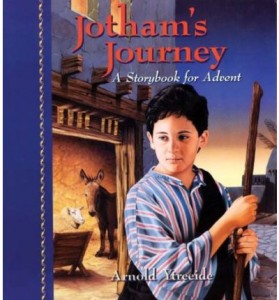
Jotham’s Journey, Tabitha’s Travels, and Bartholomew’s Passage are written for ages 9years and upwards. It all begins with Jotham and it continues in Bartholemew’s Passage culminating in a wondrous story called Tabitha’s Travels. This series of books has mystery, suspense, humour, victory and more. Not just a fictional story, it also contains a short, devotional reading for each day in the build up to Christmas.

jothams journey

Over the years we have thoroughly enjoyed the whole series of books by Arnold Ytreeide. If you haven’t heard of these book syet, please look into them and make reading one per year a new family tradition.

The stories are to be read each day in the lead up to Christmas. They tell stories that are filled with adventure and are rich in history. They have been woven together and include psalms, stories from the Old Testament and culture to paint a vivid and thought provoking series. The series is full of great explanations about how Jesus is the promised Messiah, and what that means for us today. Almost every chapter ends in a cliff hanger and the kids were just dying to read more. They were very excited when they made connections from Jotham’s story and Bible stories they are familiar with.

Our family didn’t have an issue with the somewhat graphic violence in the stories but I know of some families who have not been able to continue with the books because of it.

Arnold Ytreeide is married with two grown and married children. He has worked as a youth pastor, policeman and televaision producer. He has a degree in theology and he actually wrote Jotham’s Journey for his own children when they were young.

Ytreeide trilogy

Links

Best prices

Amazon

Series on Kindle: $9.99
Jotham’s Journey$11.19 US
Tabitha’s Travels $11.19 US
Bartholomew’s Passage $11.19 US

ChristianBook– free shipping!

Jotham’s Journey: A Storybook for Advent $7.99US
Tabitha’s Travels $7.99US
Bartholomew’s Passage: A Family Story for Advent $7.99US
Ytreeide Advent Stories, 3 Volumes $22.99US

Book Depository US

Jotham’s Journey $13.20AU
Tabitha’s Travels $13.20AU
Bartholomew’s Passage $13.20AU

Fishpond – free shipping!

Jotham’s Journey: A Storybook for Advent $15.41AU
Tabitha’s Travels: A Family Story for Advent $13.13AU
Bartholomew’s Passage: A Family Story for Advent $14.39 AU

Affiliate links are used and I may receive a commission if you purchase through these links.

And His Name Shall Be Called…

C’mon, you seriously didn’t think that Christmas could go by without some mention of it on the blog, did you? Of course not! Friends know I always have something to say. 😉 However, I’ve said/written it before and I really don’t like the sound of my own voice that much so instead of boring you all to tears I’ll just link to previous posts where I share about how, when and where we remember the details of the Christmas story.

Note: Many of the external links on the following pages may be out of date. I apologise in advance but I’m not going to try and keep up to date with them. There is new material coming out all the time so make google a good friend utilise him wisely. 🙂

Previous Posts

To celebrate or not to celebrate: http://susanpriolo.com/to-celebrate-or-not-to-celebrate-2553.htm
and
Who, why, what, when: Christmas in our home: http://susanpriolo.com/who-why-what-when-christmas-in-our-home-2559.htm

Who, Why, What, When: Christmas In Our Home

Yes, yet another re-post from the archives

NoChristmasTree1We don’t ‘do’ Christmas. Years ago when the children were small, we tried. But we would get a knot in the pits of our stomach. A few years ago, the commercialism of it all used to be a huge bother to me…now I’ve pretty much accepted that is the way it is and I’m not gonna change the world but I can impact or influence my own family so I’ll stick to that. 😉

We have no problem with anyone who does celebrate Christmas though. For us, it is not a divisive issue – we are free to visit people and receive a gift (at the risk of our refusal offending them) and we are free not to. It isn’t an issue of salvation – our salvation is not dependent upon whether we celebrate Christmas or not.

Everything we do should be expressly Christ-centered; God-honoring.

We don’t talk much about it either as it is our walk, our decision, our beliefs and as is isn’t salvation dependent, there are more important issues to preach about! I have many discussions on forums about this and after receiving a personal email about it I thought I’d post here.

a) Why did you make the decision to not celebrate Christmas.
Firstly because of the commercialism but then because it all seemed to so empty and meaningless. We tried hard to think of ways to ‘put Christ back into Christmas’. Some people have said that there is no scriptural basis for celebrating the birth of Christ, but I don’t see that…I see that God desires us to teach our children His ways and he is into object lessons in a big way, so I don’t have a problem with doing things to remember the birth of Christ as it is all part of God’s redemptive story! We teach God’s story but we do it all the time. Plus the whole white Christmas thing is a bit over the top, especially as Aussies! 😉 We did try a few of the unit studies centred around Christmas and the symbols of Christmas, just in case I was being a stickler, but the more often we did them, the more the whole things stuck in my side and I couldn’t get past it. We tried doing Advent readings but I lost track of it all. We have read some of the books by Arnold Ytree but these are beautiful books that can be enjoyed at any time of the year! We’re about to start another one real soon.

When I went researching this whole thing a few years ago, I found some real loopy sites (be wary of what you allow your mind and heart to ingest) …some real genuine sites, some real genuine articles…but the more I read, the more confused I could sense I was getting. One could find a thousand articles against Christmas or celebrating it and another thousand articles for it…a lot of Scripture is thrown in there on both sides. What is one to do? I reckon its like most issues – we each need to seek God, study the Word and trust that in this, the Holy Spirit will lead you in all truth – John 14:26

‘These people honor me with their lips, but their hearts are far from me.’
Matthew 15:8

It’s not something I think one can be convinced of – the Holy Spirit needs to convict us, we don’t need to be convinced by man. 🙂 I am glad that I am not saved because of this issue. I do believe that each person must seek God for themselves and not be lead my man’s teaching alone. God is our judge and He alone. I’m also glad that we are not bound by our stance with Christmas. Jesus gives us freedom, not bondage.

b) My family likes Christmas. I can’t not celebrate it. What can I do?
Rather than ask the question of should we or shouldn’t we, maybe we can ask God “how should we”? Sometimes a different question is the way that we can turn our ear and heart to hear His still, small voice. It’s really a matter of personal study, conviction and relating with God and His word. Do your own personal study. Learn the history of Christmas. It’s all very interesting.
If we take Christ out of everything Christmas, what would we do? What would we be left with? A get together, BBQ’s, presents, cards, holidays, lots of food, etc. If we take Christ out of everything Easter, what would we do? Take Christ out of Easter and you still have a holiday, eggs, chocolate, bilbies and lillies.

‘In vain do they worship me, teaching for doctrine the commandments of men.’
Matthew 15:9

I have taught my children how to bless me for Mother’s Day. I’ve taught them how to bless their Dad on Father’s Day. It is about honoring the person. (I teach my children to do this so they can bless and honor others- it isn’t all about me ;0) You wouldn’t honor me on Mother’s Day by giving me a drill and taking me to the hardware store! But you wouldn’t honor John by giving him a box of chocolates or a new PDA. 😉 You would consider the person who is due the honor. In what way would they want to be honored?

We should consider how God wants to be honoured. The things that are honoring to God are the songs we sing, the prayer we pray, the Scriptures we read, the talks we have, the way in which we live and breathe. But these things are to be done all the time or regularly as worship. If we want to have a get together with lots of food and give presents then we can- we don’t need to make an excuse which we think and the world says, is about Christ, when it really isn’t about Christ. The way the world treats Christmas (generalisation) is often nothing more than self indulgence! The world loves Christmas time with all its celebrations. Holidays, food, gifts, etc. Yet it denies the very one whom it is supposedly about! Oh it’s okay to remember Christ as a babe but not the Saviour of the Human race. For many, it is just about *me*. That is largely how the world sees it.

Don’t love the world’s ways. Don’t love the world’s goods. Love of the world squeezes out love for the Father. Practically everything that goes on in the world…wanting your own way, wanting everything for yourself, wanting to appear important?has nothing to do with the Father. It just isolates you from him. The world and all its wanting, wanting, wanting is on the way out…but whoever does what God wants is set for eternity.
1 John 2:15-17

So, if Christmas is going to be something that you do, then how you do it needs to be considered. Who is it about? Why are you doing it? When are you doing it? What will you do? Where will you do it? And how will you go about it? (Sorry my little brain uses the 5 W’s and H) If it is the Lord you are seeking to honor, then go to Him and see how He would be honored? (Like the Father’s Day principle 😉 See, I did have a point in there somewhere)

I know these thoughts are not for everyone, and that’s okay. This is our walk and our journey. But I also want you to know that we don’t judge other’s for celebrating the birth of Jesus the Messiah.

A few links:

Spurgeon on Christmas
The Christmas Irony
What does Jesus want for Christmas
When there is crisis at Christmas
Christmas and Advent
The Babe who will not be tamed
We did this Christmas quiz a few years ago and we’ll go through it again this year.
Is Christmas Necessary?
Robin Sampson’s article: Holiday Dilemma’s.

To celebrate or not to celebrate…

NoChristmasTree1Yes, it’s that time of the year again…I have previously written about how we do, or don’t, celebrate Christmas. Rather than try to rewrite old thoughts I will just copy and paste from the archives. You can find the original post here.

Well it’s that time of year again eh! A time when we get loads of sideway looks from people who question us as to why we don’t ‘do‘ Christmas. In actual fact we do ‘celebrate’ Christmas…every day of the year! The way in which we celebrate is a decision that John and I decided upon…not through reading of others opinions and lifestyle choices rather, through our faith in God and our walk along the path of life.

I have an issue with our modern society and feel that we have been sucked into much consumerism and materialism. Don’t get me wrong; I love tradition. I love creating memories for my children. I love doing things together that form family bonds. But I don’t see how spending money on presents, decorating our homes with unnecessary items (that for those Down-Under are out-of-season) is celebrating the birth of the Saviour of mankind. So many people are caught up ‘doing Christmas’ that they miss the true wonder of it all…they’re drowning in a sea of tradition and of trying to ‘keep up’.

I love to give of my time, money and energy…I look for ways to give. But is it wise or prudent to go into debt in order to give presents simply out of a sense of obligation or because everyone else is or because it is ‘Christmas’. In the name of Christ, I can give to others any day of the year.

I feel prickles whenever I hear children exclaiming to their parents or friends what they WANT for Christmas. As though it is expected! I don’t fully understand how someone can be truly grateful and thankful if they know that their gift is coming. I know, as believers, we do this: as sinners we cry to the Lord for salvation and God delivered us through Christ and it is this that compels me to be thankful for Christ every day…to teach my children the ways of God, every day…to give honor to Him, every day. But to give presents simply because it is this time of year doesn’t teach our children much at all. I still don’t even see how the whole gift giving thing comes into Christmas. Christ was the *gift*. The Father God was the *giver*. The gift has been given. What that has to do with giving my child a new toy or new clothes in December escapes me.

I love getting together and having a family feast and a sweet time of fellowship at any time…and we can do this at any time while also giving thanks to the Lord. The focus can be on the Father, each other and serving but not about decorations, presents or things that can distract us from Jesus, The Truth. In fact, I see a danger in becoming too familiar with the way the world celebrates Christmas: familiarity with Christmas and all things Christian *can* breed familiarity- which isn’t necessarily a positive thing. Luke 4: 16-24 describes how the local people missed seeing the true identity of Jesus, as they were so familiar with Him. That’s why it’s important that the traditions we build are meaningful, rich and not done frivolously.

John and I decided that we would not teach our children about Santa…despite the local Christian school embracing the philosophy. (I remember when I first learnt that Santa wasn’t real…that he didn’t bring my presents and eat the milk and bikkies I left. I wasn’t devastated at the reality of his non-existance…I was devastated to realise that my parents knew about this untruth and let me believe in it…that they found some sort of happiness in having me believe a lie! I couldn’t believe that they lied to me! I recall adamantly telling my Mother that I was very sad because of that. That was my persepctive, as a child.) Anyway, as our children got older, we started to learn about St. Nicholas and the symbols and traditions of Christmas…yet we couldn’t see the relevance of it in the Christian’s life or in the celebration at Christmastime. We found that a lot of the tradition and symbolism was taken from pagan origins…so I started investigating this further and further… We tried celebrating Christmas by putting ‘Christ back into Christmas‘, but it was still like pouring new wine into old wineskins- it still clanged.

So much of our traditions and customs are not based on Scripture. So much of what I believed to be truth actually came from Hallmark and all those greeting cards! I get a little annoyed at how many people get all sentimental at Christmas time and they all are fine with Jesus…as a baby! But, how many recognise that He was God’s purpose and plan to redeem mankind? I like a bit of emotion and sentimentality…but when it comes to matters of faith then I think that if we need to whoop it up, then the thing (object of our faith) our faith is in, isn’t very solid. I like this article: The Power of Christmas Truth

Am I a wet-blanket or a party-pooper? Some will certainly think so! But, this is my walk to tread…I would never propose to tell anyone else that they should or should not celebrate any day in any certain way. I’d rather point out truths and facts and have everyone make an informed decision for themselves. It isn’t so much about whether you do or don’t – it is do you know WHY you do what you do? In it all, WHAT are you passing on to your children– a legacy of timeless truth or of empty consumerism?

A few years ago, Miss R went to the community Carols by Candlelight last week, that was held at our church grounds. The church was working with the local council and hosting the event. The youth leader asked her to go early and help to paint childrens’ faces to which she was more than happy to help. After I picked her up, she was covered in paint, but I was dismayed to see that all the face/body painting was of Christmas trees and non related pictures! Okay, I know it’s a bit hard to paint a true Nativity scene on a face but is that the best that we (as the body of Christ) could do? Oh boy.

“Thus saith the Lord, Learn not the way of the heathen . . . for the CUSTOMS of the people are vain.”
(Jer. 10:1-3)

Speaking of those Hallmark Christmas cards…and the Nativity. A few years ago, when we were ‘putting Christ back into Christmas‘, the children made their own Nativity. It was really nice and sweet. This led us to really examine the Scriptures as to the truth of the Nativity. Here’s a picture of a fairly common nativity scene: Let’s have a quick quiz while we’re looking at it eh?

How many wise men were there?
What animals were present at the Nativity?
How soon after Joseph and Mary reached Bethlehem was Jesus born?

Checking with Scripture (Luke is good here), how many did you get right or how much of your knowledge comes from paintings of the Nativity and greeting cards?

Here’s another quiz to do with your children:

Take the Christmas Quiz!

and discover some more Christmas myths:

What is Christmas to you…really? Is it a time of feasting, laughter, praise, remembrance, sadness, loneliness? How about we remember why the gift was given: The Ugliness of Christmas:

For us, this is not a divisive issue – we are free to visit people and receive a gift (at the risk of our refusal offending them) and we are free not to. It isn’t an issue of salvation – our salvation is not dependant upon whether we celebrate Christmas or not. We don’t believe that Scripture commands believers to celebrate or not celebrate Christmas, despite the fact that Christmas wasn’t observed until after the biblical era. We believe that Romans 14:5-6 and 1 Corinthians says it well.

One man esteems one day above another. Another esteems every day alike. Let each man be fully assured in his own mind. 6 He who observes the day, observes it to the Lord; and he who does not observe the day, to the Lord he does not observe it. He who eats, eats to the Lord, for he gives God thanks. He who doesn’t eat, to the Lord he doesn’t eat, and gives God thanks.

We can set aside any day as a day unto the Lord.

So whether you eat or drink or whatever you do, do it all for the glory of God.”
1 Corinthians 10:31

Whether you do or don’t, or how you do or don’t, the main point, (in my opinion) is to not be ignorant of what you do (know why you do what you do), don’t be caught up in the worldy ways so that you miss the wonder of the eternal perspective, don’t get caught up in idolatry, consumerism or materialism and don’t treat the Saviour of the world with too much familiarity, lest that familiairty breed contempt.

LINKS

The Truth of the Nativity
Is Christmas Necessary?
Why I don’t celebrate Christmas by Tim Hegg
This paper looks historically at the holiday, showing how many pagan symbols and practices are actually at its core.

Mothers Day 2009

I was planning a feast for Mother’s Day. I wanted to celebrate being a mum and I wanted to bless my husband and children- for without them I wouldn’t be a mum! However John won’t be home on Sunday…he has to work. This disappointed Miss A so yesterday she got with the other children and went shopping for a gift.

I woke up this morning and they children took me out for breakfast. We went to Cafe Verdi and had yummy food and good coffee. (Okay, the coffee wasn’t the best but the company and event made it the best). The children presented their lavish gifts to me. Wow, did they spoil me or what!

(Click to see larger image)

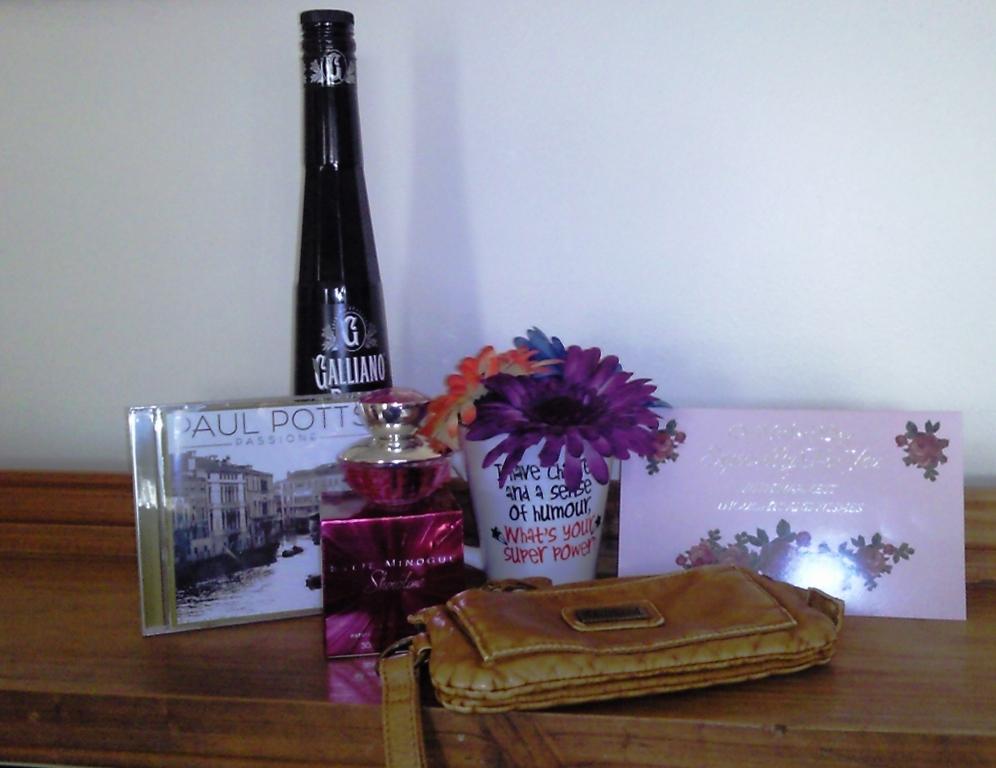
I received a lovely black top, with Indian style needlework down the front. A Bottle of Kylie’s “Showtime”, a purse, a great coffee mug filled to the brim with honey coated cashews and a bottle of liquorice Sambuca. And…and the recent Paul Potts CD: Passione. Whoohoo, I’ve wanted this as soon as I heard about it. And a card…I love cards. Especially when they children write in them. (Tehee, the slogan on the coffee mug is “I have children and a sense of humour, What’s your super power?”)

(Click to see larger image)

I used to look at some mum’s and wonder why my children didn’t do those lovely, sweet things. Problem was, I was looking at the mums who had teens and young adults and wishing my younger children would be like that. Pffttt! How unreal of me. Mother’s Day certainly looks different now to when I had young children…but I love all the stages. Grubby little hand prints and misspellings on cards…weeds picked and given as flowers…ah, how sweet and adorable is that?

But that season of life has passed for me…I now get more ‘grown up’ gifts but as the mother of a prodigal it is not all roses and chocolate. The day also brought yet another heartache…as special family days usually do when a family has a prodigal child. So with John away at the moment, it was lovely to receive a phone call from him. He wasn’t due to call me until late tonight but somehow he was able. Thank you Lord for prompting him and providing opportunity for him to call, if only for a brief few minutes.

How are you planning to celebrate Mother’s Day this year? Are you in a stage of celebrating and blessing others? Are you training your children in the art of blessing others? What will you do this Sunday?

Jesus Died!

Listen to this short presentation today or tomorrow. Watch it with your children, your husband. Pass it on to others. It is about the fulfillment of the Passover…it is The Easter Story.

httpv://www.youtube.com/watch?v=a11ASw5NRUw

Messianic Seder: Celebrating Passover

The Messianic Seder

There are no set rules for the basic order of the seder. Just like with Thanksgiving dinner, traditions vary among families. In this chapter is an example of:

1.) a very simple seder with no specific readings.

2.) a traditional seder outline. This outline consists of eighteen traditional steps you can adapt for your family.

3.) an easy-to-use twenty-four page step-by-step Haggadah* (you may reproduce for your family’s use) that explains just what to say for each blessing as you pour the wine, when to eat and drink, and a list of the Bible verses to read. The leader simply reads aloud the text from the gray box on each page as the rest of the group follows the directions.

4.) a basic checklist of what you need to have at (or close by) the dinner table.

The one thing you should not do is get all bound up in “doing it right” and ruin the dinner. That would defeat the purpose. Pray and trust God to lead you. Passover was reintroduced by Hezekiah in Bible times (Numbers 9). They were unable to follow every step outlined in Leviticus; however, God knew their hearts. He had grace towards them and healed their people.

*The 24 page reproducible Haggadah is included in the book A Family Guide to the Biblical Holidays.

An excellent Passover video is available from Sojourner Ministries. You can view a clip online. Click The Unleavened Messiah Video

More About Passover

Simple Seder | Traditional Seder | Seder Checklist | Jewish Customs | Ten Plagues | Other Crafts | Sheep Unit | Messiah in Passover |


If you think these articles were interesting you haven’t seen anything yet! Wouldn’t you like to have all this information fully illustrated at your fingertips in one volume? All of the REALLY GOOD stuff is in the book…
Click to Order the A Family Guide to the Biblical Holidays or Order Electronic Files and Begin Reading Today!


An excellent Passover video is available from Sojourner Ministries. You can view a clip online. Click The Unleavened Messiah Video


Kindly used with permission from Robin Sampson, Biblical Holidays

Messiah in the Passover

Several symbolic clues during Passover are fulfilled in Christ. John the Baptist introduced Jesus by saying, “Behold the Lamb of God who takes away the sin of the world.” (John 1:29). The Jews had been celebrating Passover for 1,500 years. They understood the significance of John’s statements.

Isaiah 53, written hundreds of years before Christ, records the suffering the human lamb would experience.

He was oppressed, and he was afflicted, yet he opened not his mouth: he is brought as a lamb to the slaughter, and as a sheep before her shearers is dumb, so he openeth not his mouth. He was taken from prison and from judgment: and who shall declare his generation? for he was cut off out of the land of the living: for the transgression of my people was he stricken. And he made his grave with the wicked, and with the rich in his death; because he had done no violence, neither was any deceit in his mouth. Yet it pleased the LORD to bruise him; he hath put him to grief: when thou shalt make his soul an offering for sin, he shall see his seed, he shall prolong his days, and the pleasure of the LORD shall prosper in his hand (Isa. 53:7-10).

Triumphal Entry of the Lambs

In the first century, a lamb was chosen by the high priest outside of Jerusalem on the tenth of Nisan. Then the priest would lead this lamb into the city while crowds of worshippers lined the streets waving palm branches and singing Psalm 118, “Blessed is He that comes in the name of the Lord.”

Jesus our Messiah entered Jerusalem this same day, on a donkey (usually ridden by a king), probably right behind the High Priest’s procession. The crowds that had just heralded the entrance of the sacrificial lamb heralded the entrance of the Lamb of God. Accordingly, Jesus identified himself with the Passover sacrifice (John 12:9-19). The next day, as Jesus entered Jerusalem, His entry fulfilled prophecy.

Enthusiasm filled the air. All Israel knew that it would be in Jerusalem where Messiah would be enthroned as their King. Edersheim writes,

Everyone in Israel was thinking about the Feast, Everyone was going to Jerusalem, or had those near and dear to them there, or at least watched the festive processions to the Metropolis of Judaism. It was a gathering of universal Israel, that of the memorial of the birth-night of the nation, and of its Exodus, when friends from afar would meet, and new friends be made; when offerings long due would be brought, and purification long needed be obtained and all worship in that grand and glorious Temple, with its gorgeous ritual. National and religious feelings were alike stirred in what reached far back to the first, and pointed far forward to the final Deliverance.

The High Priest would then take the lamb to the Temple, where it would be tied in public view so that it could be inspected for blemish. In the same way, Yeshua sat and taught in the Temple courtyard for four days. He was inspected and questioned as the Sadducees, the Pharisees, and the teachers of the law sought to trip him up in His words and entrap Him. They could not, because He was perfect and without blemish (Lancaster1996).

Passover pronounces redemption. To believers in Messiah, the Passover feast has a special meaning. Though we are not slaves, as God’s people in Egypt, we were slaves to our sin, our own wants and desires. Sin was our master until Jesus, the Passover Lamb, delivered us from our Egypt. The lamb slain during Passover is a foreshadow of the redemption we find in Jesus, the Messiah, our Passover lamb. The principle of redemption is the concept of bondage to the slavery of sin and freedom from its domination (John 8:31-36). To be “redeemed” means to be purchased from slavery. Jesus Christ purchased our freedom with His blood as the payment for the redemption (Ps. 34:22; 1 Peter 1:18,19; Gal. 3:13; Eph. 1:7; 1 John 1:7).

Jesus ate the Passover meal with eleven of His disciples (see Passover in Bible Times). Just as the priest was to teach, pray, and offer sacrifice, Christ, the High Priest, taught, prayed, and then offered Himself as our sacrifice.

After the Meal

When Jesus had spoken these words, he went forth with his disciples over the brook Cedron, where was a garden, into the which he entered, and his disciples. (John 18:1).

Jesus went to the Garden of Gethsemane. The garden has many ancient olive trees today, some of which may have grown from the roots of the trees that were present in Jesus’ time. (All trees in and around Jerusalem were cut down when the Romans conquered the city in 70 a.d. Olive trees can regenerate from their roots and live for thousands of years.) The name Gethsemane comes from the Hebrew Gat Shmanim, meaning “oil press” (Kollek). Since oil is used in the Bible to symbolize the Holy Spirit, it may be said that the garden is where “the Spirit of God was crushed” (Missler 1995).

It was here that Jesus agonized in prayer over what was to occur. It is significant that this is the only place in the King James Version where the word agony is mentioned (Strong’s concordance). The Greek word for agony means to be “engaged in combat” (Pink). Jesus agonized over what He was to go through, feeling that He was at the point of death (Mark 14:34). Yet He prayed, “Not my will, but thine be done” (Terasaka 1996).

Of medical significance is that Luke mentions Him as having sweat like blood. The medical term for this, hemohidrosis, or hematidrosis, has been seen in patients who have experienced extreme stress or shock to their systems (Edwards). The capillaries around the sweat pores become fragile, and leak blood into the sweat. A case history is recorded in which a young girl who had a fear of air raids in World War I developed the condition after a gas explosion occurred in the house next door (Scott). Another report mentions a nun who, as she was threatened with death by the swords of the enemy soldiers, “was so terrified that she bled from every part of her body and died of hemorrhage in the sight of her assailants.” (Grafenberg) As a memorial to Jesus’ ordeal, a church which now stands in Gethsemane is known as the Church of the Agony (ibid).

Immediately thereafter, He was betrayed by Judas (Mark 14:43), and captured by the high priest and taken for trial before Caiaphas (Luke 22:54). Consequently, Jesus was crucified between two thieves, fulfilling His own prediction that “as Moses lifted up the serpent in the wilderness, even so must the Son of man be lifted up” (John 3:14). Most of His disciples fled at His arrest; only a group of women and one disciple, called “the disciple whom He loved,’ were present at the cross when He died (John 19:25-27; compare Matthew 27:55-56; Mark 15:40; and Luke 23:49).

Jesus’ Trial, Death, and Resurrection

Many of us have a hard time grasping the pain and suffering Christ went through on the crucifixion day. Television today has de-sensitized our feelings pertaining to the horrifying violence of the torture and slow death of Jesus.

The following is just a portion of an article by Dr. C. Truman Davis, M.D., M.S., titled: “The Crucifixion Of Jesus: The Passion Of Christ From A Medical Point Of View,” which explains some of the agony of Christ:

In the early morning, Jesus, battered and bruised, dehydrated, and exhausted from a sleepless night, is taken across Jerusalem to Pontius Pilate. The prisoner is stripped of His clothing and His hands tied to a post above His head. A short whip consisting of several heavy, leather thongs with two small balls of lead attached near the ends of each is brought down with full force again and again across Jesusÿ shoulders, back and legs.

The condemned man was forced to carry the patibulum [cross bar], apparently weighing about 110 pounds, from the prison to the place of execution. Without any historical or Biblical proof, medieval and Renaissance painters have given us our picture of Christ carrying the entire cross. Many of these painters and most of the sculptors of crucifixes today show the nails through the palm. Roman historical accounts and experimental work have shown that the nails were driven between the small bones of the wrists and not through the palms. Nails driven through the palms will strip out between the fingers when they support the weight of the human body. The misconception may have come about through a misunderstanding of Jesus’ words to Thomas, observe my hands. Anatomists, both modern and ancient, have always considered the wrists as a part of the hand. A titilus, or small sign, stating the victims crime was usually carried at the front of the procession and later nailed to the cross above the head. A small bundle of flexible branches covered with long thorns (commonly used for firewood) are plaited into the shape of a crown and this is pressed into His scalp. The heavy patibulum [crossbar]of the cross is tied across His shoulders, and the procession headed by a centurion, begins its slow journey along the Via Dolorosa. In spite of His efforts to walk erect, the weight of the heavy wooden beam, together with the shock produced by copious blood loss, is too much. He stumbles and falls. The centurion, anxious to get on with the crucifixion, selects a stalwart North African onlooker, Simon of Cyrene, to carry the cross.

The crucifixion begins. The legionnaire drives a heavy, square, wrought-iron nail through the wrist and deep into the wood. The patibulum is then lifted in place at the top of the stipes and the titulus reading, ÿJesus of Nazareth, King of the Jews is nailed in place.

Hours of this limitless pain, cycles of twisting, joint-rending cramps, intermittent partial asphyxiation, searing pain as tissue is torn from His lacerated back as He moves up and down against the rough timber; then another agony begins. A deep crushing pain deep in the chest as the pericardium slowly fills with serum and begins to compress the heart.

The body of Jesus is now in extremis, and He can feel the chill of death creeping through His tissues. This realization brings out possibly little more than a tortured whisper, ÿIt is finished.ÿ

His mission of atonement has been completed. Finally He can allow His body to die.

With one last surge of strength, He once again presses His torn feet against the nail, straightens His legs, takes a deeper breath, and utters His seventh and last cry, ÿFather, into thy hands I commit my spiritÿ (Truman 1965).

Jesus died as the lambs for the Passover meal were being slain. Not a bone was to be broken in these sacrificial lambs (Ex. 12:46; Num. 9:12). Jesus, the Lamb of God, was the perfect sacrifice for the sins of the world (1 Cor. 5:7).

During the Passover time, a sign hung on each lamb’s neck, bearing the name of the owner of the lamb. Jesus was crucified with a sign hung over His head with the name of His Father. Studies have shown the Tetragrammaton probably appeared over Jesus when He hung on the cross. During Bible times, messages were commonly written with the first letter of each word. An example in English: UPS, stands for United Parcel Service. The phrase Jesus of Nazareth and King of the Jews was written in three languages on a sign above Jesus as He hung on the cross (John 19:19). The Hebrew initials for Jesus of Nazareth and King of the Jews was YHWH. That is why the priest asked Pilate to change the writing. Then said the chief priests of the Jews to Pilate, Write not, The King of the Jews; but that he said, I am King of the Jews. Pilate answered, What I have written I have written (John 19: 21-22).

The story does not end with the death of Jesus. His body was placed in a new tomb that belonged to a man named Joseph of Arimathea (Luke 23:50-56; John 19:38-42). The greatest event that separates Jesus from all others is the fact that He overcame death. In three days He rose again and lives today. He arose from the grave on the Feasts of Firstfruits!

On Nisan 17, when Israel emerged from the Red Sea, this emergence was a shadow of the fulfillment of the day of Firstfruits (Lev. 23:9-14). This was the first of God’s people to emerge from sin (Egypt). It was fulfilled 1,478 years later on Nisan 17, 30 a.d. when Jesus was resurrected and ascended to heaven as our high priest, the Firstfruit of the resurrected (John 20:17).

Two Passovers

The gospels appear to say that the Messiah ate a Passover meal with the twelve on the evening beginning Nisan 14, and John appears to say Jews were having their Passover meal one day later. There are different theories to explain this.

1. The Sadducees and Pharisees disagreed on the day of Passover. The Sadducees (more conservative group) believed the Feasts of Passover and Unleavened Bread were separate feast days. They held Passover on the fourteenth as God decreed in Exodus, Leviticus, and Numbers. Those of the majority opinion, including the Pharisees, held Passover on the fifteenth. Jesus may have been following both dates by having Passover with the disciples on the fourteenth and becoming the Passover lamb on the fifteenth.

2. Thousands of people would come to Jerusalem to have their lambs ritually slain in the Temple. If they only had one day in which to prepare for the Passover, it would have been extremely difficult to have slaughtered all the lambs brought in to be sacrificed. Therefore, they worked on two different time scales. The northern part of the country went with the old way of dating (starting from morning and going to the following morning). The southern part of the country followed the official dating method (from evening to evening). Thus, there were two times when lambs were being killed in the Temple for sacrifice.2

This controversy as to what day Passover should be is not the purpose of this. You must study to decide for yourself which day is correct. Some families celebrate both days, one with their church and one at home.
Three days, Three Nights

“For as Jonas was three days and three nights in the whale’s belly; so shall the Son of man be three days and three nights in the heart of the earth.” (Matt 12:40).

Friday to Sunday does not equal three days.

Click here to view a chart of the last week of Christ’s life on earth. (Acrobat file)

More About Passover

Simple Seder | Traditional Seder | Seder Checklist | Jewish Customs | Ten Plagues | Other Crafts | Sheep Unit | Messiah in Passover |

If you think these articles were interesting you haven’t seen anything yet! Wouldn’t you like to have all this information fully illustrated at your fingertips in one volume? All of the REALLY GOOD stuff is in the book…
Click to Order the A Family Guide to the Biblical Holidays or Order Electronic Files and Begin Reading Today!

An excellent Passover video is available from Sojourner Ministries. You can view a clip online. Click The Unleavened Messiah Video

Kindly used with permission from Robin Sampson, Biblical Holidays

Jewish Customs of Passover Today

Passover is the most popular Jewish holiday. The dinner celebration is called a seder. The Passover Seder is a meal with special foods, practices, and Scripture readings that commemorate the liberation from Egyptian slavery, in accordance with God’s instructions (Lev. 23:1,4, Exod. 12:14,24-27).

Seder means “order.” The seder invites each family to recount its own version of the great story of Passover with each family member actively involved. The meal induces the experience of going from slavery to liberty through the food experiences and story as the meal turns into an elaborate feast. There is no “right way” to conduct a seder.

The seder is usually a family dinner but can also be held with your family or with a church group. During the Seder, the narrative of the exodus is related and prayers of thanksgiving are offered up to God for his loving protection. The dinner table is beautifully set with fancy dishes and candles. There is a special pillow on the chair for the leader of the seder to lean on to symbolize the comfort of a free person reclining (as opposed to a slave who never rests). Orthodox Jewish tradition directs that, during Passover, meals be prepared and served using sets of utensils and dishes reserved strictly for that festival. The readings, songs, and prayers of the Seder are included in the Haggadah.

The Haggadah

The Haggadah is the prayer book used at the Seder, or ritual dinner observed at Passover. Sometimes there is a small book for each person participating in the seder. Haggadah means “telling.” The Haggadah is a “script” of what the leader and participants should say and the order of eating and drinking during each part of the meal as it tells the story of the Exodus from Egypt. The Haggadahs were not used until the eighth century a.d. before this oral tradition was used to tell the Passover story. There are over three thousand different Haggadah versions available.

We have included a Messianic Haggadah in this chapter that you may reproduce, for your family only. This Haggadah is written to be used with a family with small children. We have also included a Messianic Seder Outline so you can make your own Haggadah, if desired.

The Seder Plate

There is a special plate in front of the leader called the seder plate. The Seder consists of three directive foods listed in Exodus 12 and customary foods later added by the Rabbis. Each of the foods symbolizes some aspect of the ordeal undergone by the Israelites during their enslavement in Egypt

Foods listed in Exodus 12

  • Bitter Herbs (usually horseradish) representing the bitterness of bondage
  • Shank Bone of a Lamb symbolizes the lamb eaten before they fled Egypt.
  • Matzah– must be made solely of special flour and water (no leaven).

Customary foods later added by the Rabbis

  • Haroset (it looks unappetizing but is delicious) is a mixture of apples, nuts, grape juice, and cinnamon. It represents the mortar the Israelites used to build the Egyptian cities and the sweetness of a better world.
  • Roasted Egg is said to be the symbol of life, but we believe it came in with the pagan fertility rituals (Boaz 1996). (Our family decided to leave off the egg.)
  • Karpas or fresh greens (usually parsley or celery) symbolizes the new life for the Jewish people and the hyssop used to sprinkle blood on the door post. The parsley is dipped into salt water representing the tears of slavery.

| Four Questions | Four Cups | Matzah |
An excellent Passover video is available from Sojourner Ministries. You can view a clip online. Click The Unleavened Messiah Video

If you think these articles were interesting you haven’t seen anything yet! Wouldn’t you like to have all this information fully illustrated at your fingertips in one volume? All of the REALLY GOOD stuff is in the book…
Click to Order the A Family Guide to the Biblical Holidays or Order Electronic Files and Begin Reading Today!

Passover Overview

Passover Overview

The name of the festival, Pesach in Hebrew, passing over or protection, is derived from the instructions given to Moses by God (Ex. 6:6-8). Moses was chosen by God to lead the Israelites out of Egypt. God commanded Moses to tell the children of Israel:

Wherefore say unto the children of Israel, I am the LORD, and I will bring you out from under the burdens of the Egyptians, and I will rid you out of their bondage, and I will redeem you with a stretched out arm, and with great judgments: And I will take you to me for a people, and I will be to you a God: and ye shall know that I am the LORD your God, which bringeth you out from under the burdens of the Egyptians. And I will bring you in unto the land, concerning the which I did swear to give it to Abraham, to Isaac, and to Jacob; and I will give it you for an heritage: I am the LORD (Ex. 6:6-8).

Passover is the time of beginnings for Israel. This festival ushers in the coming of spring on the Jewish calendar. It is celebrated on the fourteenth1 day of Abib (the first month of the Jewish religious calendar, later called Nisan). Each of the three pilgrimage festivals Passover, Pentecost, and the Feast of Tabernacles has an agricultural basis as well as an historical significance. Many different things are celebrated during Passover. A few of these include: the end of the rainy season and the beginning of the growing season; the new lambing time, and the Exodus of the Israelites from Egypt during Passover.

It cannot be overemphasized as to how foundational Passover is in God’s eternal redemption plan. Only Nisan can be the first month in God’s calendar. Though other cycles and other aspects of life in the LORD are important, it is the sacrifice of the Lamb that gives it all meaning. Except for the sacrifice of the Passover and the blood on the doorposts, Israel would have suffered the same fate as the Egyptians.

The promises to Abraham, Isaac, and Jacob would have then become void. With no Passover sacrifice and with no blood on the doorposts, then no Torah could have been given and no other celebrations could have followed. Apart from the sacrifice of the Passover and the blood on the door posts, there would have been no basis for Messiah, our Passover, to be sacrificed on the anniversary of that momentous occasion. We would have no hope and remain dead in our sins; however, the command was obeyed and deliverance was accomplished. Indeed, for us, this is most certainly the first of all the months, the first month of the year, truly the real beginning of all spiritual life (Michael 1996).

God directs parents, this special night of the year, to take on the role of teacher, and pass down His story of the exodus from Egypt to future generations. This ceremony not only looks back to the miraculous story of God delivering His people, but it also presents the promise of Messiah’s death and resurrection. It is an exciting experience centering on a mixture of ritual foods. The matzah, bitter herbs, wine, and the rest, provide a lasting link through the march of history.

Israel’s Redemption from Egypt

( Exodus 1:1-27 )

The Old Testament story of Passover has more light, more splendor, more vividness, and a richer application to life than any other story in the book of Exodus. Moses and his brother Aaron went to Pharaoh and told him that the Lord said to let the Israelites go. Pharaoh refused to release the Israelites, even for a brief visit to the desert to worship their God. In fact, he made life for the Israelite slaves even worse. Moses had warned Pharaoh that God would send a series of plagues upon Egypt unless the people were freed.

God sent the plagues to show the people that He is the one true God. He confronted the things that the Egyptians called gods. The ten plagues were righteous plagues, and justly inflicted upon the Egyptians because each plague had something to do with the false gods that the Egyptians worshipped. God makes those false things that we worship a burden to us.

The word plague is from the Hebrew word oth, which means “sign”. The Egyptians believed in magic. They were always trying to override the laws of nature to perform their “tricks” God used the laws of nature to bring about His signs and wonders.

The entire episode of the plagues is supposed to have happened within eight to ten months. Each of the plagues spoke as a sign to the Egyptians, showing them that He is greater than their so-called gods. The first three plagues affected all the people, even the Hebrews. The next three plagues were much more intense and only happened to the Egyptians (I will put a division between my people and thy people v. 23). Before each plague, God commanded Moses and Aaron to warn Pharaoh, Let My people go or I [God] will bring a plague upon you. Before each plague, for three weeks, Moses warned Pharaoh. The actual plague lasted one week.

Click here to Read about the Ten Plagues

Seder

During the Passover celebration, Jews and Christians remember this great event by eating special foods associated with the bitterness of slavery and the sweetness of freedom. The entire meal, called the seder, is eaten as the story of Israel’s freedom is told. Everything in the Seder is directed toward the prime command from the Bible: And thou shall shew thy son in that day saying, This is done because of that which the LORD did unto me when I came forth out of Egypt (Exod. 13:8). See a Messianic Seder Process in the next chapter.

Redemption

The great miracle of the splitting of the Red Sea is the climax of the departure from Egypt and the inspiring wonder that forged a group of slaves into a nation. The redemption from Egypt is not only that of Israel but also a salvation by faith in general. The celebration of redemption from Egypt will be a pattern for salvation from all other evil.

During this God-ordained night we celebrate the doctrines of our salvation. Thus, like ancient Israel, we are sovereignty brought to the edge of the “sea” with no hope except to trust His deliverance and to follow Him. We marvel at His overwhelming sufficiency. Like ancient Israel, when we trust Him for deliverance and walk through the “sea” with Him, we end up singing and dancing on the other side. That’s Pesach! (Berkowitz 1996)

Note: A day on the Jewish calendar begins at sunset. When a date is given for a Jewish holiday, the holiday actually begins at sundown on the preceding day.

Kindly used, with permission. Robin Sampson, Biblical Holidays.

Spring Holydays

Guest post from Robin Sampson at Biblical Holidays

Three of the four spring holidays are celebrated within an eight-day period (Abib 14-21). The three spring festivals overlap or run into each other. The fourth and final spring feast is the Feast of Weeks (Shavuot or Pentecost). The Feast of Weeks is held seven weeks or fifty days following the morrow after the Sabbath of Passover.

The spring holidays of Passover, Unleavened Bread, and Firstfruits are a portrait of the death and resurrection of Y’shua (Jesus). He sacrificed Himself on Passover, was buried on the Feast of Unleavened Bread, and was resurrected on Firstfruits. The Feast of Weeks (Shavuot or Pentecost) was the day the Holy Sprit fell on believers.

Passover and the Feast of Unleavened Bread are held in immediate sequence. The lamb was slain on the fourteenth and the Feast of Unleavened bread began on the fifteenth day of the first month. And in the fourteenth day of the first month is the Passover of the LORD. And in the fifteenth day of this month is the feast: seven days shall unleavened bread be eaten (Num. 28:16-17). This passage might account for why Jesus began His Passover seder on the fourteenth. These are distinctly different holidays falling on different days; however, due to their closeness they are usually treated as one festival. (The scriptures seem to teach that these are two names for the same festival. See Exodus 13:3-8.)

As you study the Spring Festivals, you will see the plan of God fulfilled in such dramatic detail that you cannot help but be stricken by the awesomeness of our Eternal King. The spring festivals clearly prophesy the first coming of Messiah and the fall festivals are prophetic of His second coming.

Dates

All holidays begin at sundown of the preceding day and end at nightfall of the final day of observance.

Passover (Pesach)
April 09, 2009 (15th of Nisan, 5769)
Pentecost (Shavuot)
May 29, 2009 (6th of Sivan, 5769)

If you think these articles were interesting you haven’t seen anything yet! Wouldn’t you like to have all this information fully illustrated at your fingertips in one volume? All of the REALLY GOOD stuff is in the book…

Click to Order the A Family Guide to the Biblical Holidays or Order Electronic Files and Begin Reading Today!

How do you feel about Christmas? (guest post)

Today’s post is by guest blogger, Robin Sampson from Heart of Wisdom. Robin has a particular focus on the Hebraic roots of Christianity.

How do you feel about Christmas?

Do you observe it differently now compared to how you observed it when you were a child? Do you observe it at all? Did you know Christmas has pagan roots? Does that bother you?

Don’t get nervous. I’m not going to tell you what you should or shouldn’t be doing this time of year. I can’t because I don’t have it all sorted out myself.

Since the beginning of the Church, there has been controversy over pagan customs. On one side were those who wanted to ‘christianise’ the customs to win over the heathen and on the other side were those who rejected anything to do with paganism.

Some Christians observe Christmas as they always have with family traditions, Santa, etc. but with a focus on the Savior’s birth. Some avoid the Santa scene, try not to get wrapped up in materialism (pardon the pun) and focus on Christ.

Some have completely given up Christmas because of the pagan roots, or because the Puritans didn’t observe it, or the materialism, etc. Those that have given up Christmas usually face a lot of flack from friends and family.

Our Christmas Evolution

Our Christmas in the Sixties

As a child we did what everyone else did in the 60’s. Full blown Santa is coming, tinsel-decorated tree, with a big-time focus on presents. We didn’t leave out Jesus but He wasn’t the focus. My mother would read the Christmas story in front of the nativity scene on Christmas Eve. Jesus got about 15 minutes of the holidays rush.

Our Christmas in the Seventies

When my first children were toddlers (over 30 years ago) we had a birthday cake for Jesus each year. Our traditional centerpiece was a Santa kneeling over the Baby Jesus in the manger. I also took my children to have their photo taken with Santa. Santa even came to our church to pass out presents.

Our Christmas in the Eighties

By the time my oldest children were school age we dumped all Santa décor and focused on Christ. (We also stopped all Easter bunny traditions that year). We made Chrismoms (symbols of Christ) for the tree out of white and gold felt and sequins and hung them every year as we read Scripture verses for the symbol (door, crown, sheep, bread, etc). We sent out “Jesus is the Reason for the Season” Christmas cards. I remember my mother was disappointed we didn’t accept Santa and reindeer presents. The tree and stockings were still a family tradition.

Our Christmas in the Early Nineties

About 15 years ago I learned about the Bible holidays and the pagan roots of Christmas and Easter. I wanted to give up Christmas and Easter. My children were horrified. All those holiday memories! Mom has lost her mind!

We went back and forth on the topic for a few years. I wanted to at least get rid of the tree (based on Jeremiah 10:1-5). We finally made the decision not to have Christmas. It was hard. My Grandmother was crushed. (The shocked reactions from telling family and friends of homeschool and homebirth decisions pale compared to reactions we got from giving up Christmas.)

When a Christian is raised to believe that devoted family traditions bring glory to God, then finds out about pagan history and God’s ways, it’s quite a blow. God’s ways should have been taught since childhood and are now being learned in adulthood. My motives were pure. I only wanted to do what I believed God wanted us to do.

Our Christmas from Late Nineties until Now

Ten years ago we went back to celebrating Christmas. I remarried and my new husband did not want to give up Christmas (mainly because it is the only time his family gathers). I still don’t feel at peace with this decision but it is really not my call. So I make the best of it and focus on Christ. I feel God can use all things for His good.

I want to Celebrate the Birth of Christ!

I have no problem that celebrating Jesus’ birthday wasn’t commanded by God. Purim wasn’t commanded by God, but suggested by the Hebrews as an observance to remember a miracle of God. I want to celebrate the birth of Christ as a miracle of God. The most wonderful miracle of all! I would just prefer not to merge the celebration with a pagan festival. It’s a compromise I don’t feel good about.

12 Things I like About Christmas

1. Focus on Christ
2. Families getting together (for some, the only time of the year)
3. Church programs (giving to the needy, the elderly, plays, songs, etc., focusing on Christ)
4. Nativity scenes
5. Generosity
6. Caroling
7. The music (especially Handel’s Messiah)
8. The lights
9. Baking
10. Homemade gifts and cards (especially from children)
11. Goodies (fudge, cookies, nougat, and peppermint–yum)
12. Creativity (crafts, gingerbread houses, decorations, Chrismoms, etc.)

12 Things I don’t like about Christmas

1. Lack of focus on Christ
2. Pagan roots
3. Lonely people feeling lonelier
4. Christians disagreeing
5. Greed (coveting)
6. Materialism
7. Shopping, shopping and more shopping
8. Debt
9. Family stress
10. The good are rewarded philosophy that spills over in “saved by works” mentality
11. Santa worship (idolatry)
12. Political War on Christmas

God Wants us to Have Holidays (Holy Days)

God created us with a desire to have celebrations. He gave us instructions for observing seven holidays listed in Lev 23. The holidays contain more divine information of spiritual and prophetic value than any subject of scripture. Why aren’t we taught these marvelous lessons in church? The answer is found during the first through the fourth centuries.

Read What Happened to the Holidays for more information. I give you the link with a warning. Once you learn about God’s Holidays (they are God’s holidays not Jewish holidays) you will face controversies.

How does God feel about us ignoring the holidays He gave us and replacing them with other days? I’ll answer in a parable and let you decide.

A Parable

Once upon a time there was a little boy who loved his Father very much. His Father asked the boy to prepare and serve a special dinner on a particular day. The Father wrote out all the specific instructions clearly and departed for awhile expecting these instructions to be executed.

While the Father was gone the boy shared the instructions with a family friend. The family friend said, “I have a better idea. We had a party that was much more fun, let me tell you about it.” We tell mythical stories, dress up in furry costumes and make beautiful decorations and have tasty treats. The friend gave all the details and suggested they change the dinner date to another day. The boy decided the party would be more fun than the dinner and felt his father would understand. The boy undertook the friend’s party plan.

Was the Father disappointed?

The Father loved his precious son but was probably disappointed in his disobedience. To what degree would depend on two facts. 1. the age or maturity of the boy and 2. the motivation of the boy.

God Looks on the Heart

Yes, I do believe the pagan holidays are offensive to God. I also believe He is merciful. . . God looks on the heart and views our motives.

Man looks to the outward appearance but God looks to the heart.”

The Reason for the Season

The attention of the whole world is called to acknowledge the birth of the Savior at this time of year, even if they don’t believe. Let us be careful not to get our focus off of what is important. If our desire is to celebrate or not to celebrate the birth of Jesus at this time of the year, then let that be done according to the purity of the heart and with integrity of conviction without judgment toward others.

God looks at the heart. Jesus taught against condemning one another—He taught the most important things: 1. Love God. 2. Love others. This should be our focus. Too many are condemning others on either side.

Christmas is a merging of pagan and Christian religions—it is a fact. The ultimate would be to abandon all forms of pagan worship and teach our children the ancient paths—only God’s pure worship. Then our children won’t be faced with this holiday dilemma each year.

How do we get there from here? I think it’s going to take time. Josiah changed things (2 Ch 34:3-8). He got rid of the paganism that crept in—but over a period of time. If we commit to seeking God through His Word and teach our children His Word, we will grow spiritually and God will reveal His paths.

A Season of Peace?

With so much controversy how does one have peace? Isaiah 26:3 says that if we keep our mind stayed (focused) upon God we will have perfect peace. Perfect peace was put in this verse when it actually says Shalom, Shalom.

Thou wilt keep him in perfect peace, whose mind is stayed on thee: because he trusteth in thee. Isaiah 26:3

Let not your heart be troubled: John 14:1a

Bring peace to this season by focusing on Christ. Then celebrate Jesus in every season by loving one another.


Glory to God in the highest heaven, and peace on earth to all whom God favors. (Luke 2:14).

Of further interest:

It's 'that' time of year again: Christmas

Rather than totally re-post the whole post, which may make readers miss out on the great comments from a previous entry, please visit today’s post, which is actually a re-post.

bullet How we do Christmas.

Scroll right down and read all the reader’s comments and the links to further reading.

Mother's Day: Part Two

How was your Mother’s Day?

I woke to yummy smell of pancakes and maple syrup with cappuccino. The children got up early and made breakfast in bed for me. It was lovely. It’s great to see the children working together on a common goal- that of blessing someone else.

I spent a large part of the day in the kitchen. This was my choice. I cooked up an Indian style feast for tea that night. I did this to bless my family. Before the meal I spoke a few words of thanks and appreciation to my husband and children…I affirmed them, made eye contact and spoke of my love for them. I explained that without them Mother’s day wouldn’t be, for me. I don’t write this to boast, rather to offer another side of me and my family. I had previously written about Mother’s day and that post is true…but as can happen with this medium, it is only one side of the story. I want to offer the same story but from another side or angle.

photo0090When John and I first got married, we wanted to start a family as soon as possible. But it didn’t happen. Each month would see me sad and teary. I desperately wanted to have a child and be a mother. It was 2 years before we conceived. Those two Mother’s Days were very sad for me. Oh, I would honour my own mother and my mother-in-law but it was also a painfully emotional time for me. Even now I remember the pain and the hurt that I felt. That pain doesn’t affect me now…I do not feel the sting of it but I do remember how it felt. And that in turn causes me to be so very appreciative and thankful for the four blessings that I do have. And I’m also reminded of the daunting task before me…that of parenting. Thankfully, God has the paths of my children firmly in His grasp. While I have a task, a duty, a responsibility, a privilege, God already knows their path and He is responsible for their salvation, not me.

How did you spend your Mother’s day? Have you learned any lessons from your own mum or mother-figure in your life? What did you ‘teach’ your children on this day? I’d love to hear from you.

Happy Mother's Day

May you have a blessed Mother’s Day today!

I thought I’d repost something that I wrote last year regarding Mother’s day. I originally posted it just before Mother’s Day but the principle is the same.

Mother’s Day is just around the corner. What are you planning?

My mother isn’t on this earth any more. She graduated and went to be with the Lord nearly 10 years ago. While she was here with us, my children had opportunity to see for themselves how I still honoured her as my mother. Now she isn’t here, I look for similar opportunities to teach my children how to serve and bless others.

Mother’s Day can be a day filled with self indulgent motives and consumerism which often teaches our children that money and gifts can buy happiness. I don’t want to impart this to my children. However, this day can also send other messages…ones which may not be entirely what we want our children to receive.

Some people have been surprised to learn that I encourage my children to bless me on Mother’s Day (and Dad on Father’s Day). While they are still young, I am teaching them how to bless others… impart to them a desire to serve. While I can live quite happily without being spoiled on Mother’s Day, it is for the children that I do this. That sounds rather pious, but it truly is my heart’s motive.

As a mother who chose to stay at home and teach her children, I am aware that this was my choice to live this lifestyle. I dearly want my children to have similar values. But if they see my life as not appealing…then how or why would I expect that they would desire it? If they see me moping around the house often, complaining and not living in joy, then why on earth would they choose a similar life? If all they see is mother being a martyr then they may ‘hear’ that the home-schooling lifestyle or even the lifestyle of motherhood is not one they want. Oi voi! I hope not!

I’m learning more and more lately how important it is to teach our children the value of family through our own life experience. The children don’t always see me as ‘a child’. Naturally, they think that I’m an adult, grown up. And I am. But I’m also a child and will be as long as my father is alive. But even more so, I will always be a child as my heavenly Father is eternal. We need to teach our children what it means to know God as father…and part of this means being a child, being parented by God.

My older girls have a heart to bless others and they bless me without any prompting. However, my boys are still a little younger (9 and 11yo) and they still need some guidance and prompting in this area. It is also good for them to learn these lessons as I believe it will help them to love and honour their own wives, when they have them. The day will come when I will no longer encourage or prompt them to think of me on Mother’s Day…it will be totally up to them. I hope I will handle that time with love and grace.

I’d like to encourage you to think about Mother’s Day. What messages do you send your child regarding motherhood? Think about what legacy you’d like to leave your children…what lessons can you teach through this day? Your children will not always be young, and the time for teaching these sorts of lessons will not always be so ripe. Make the most of it! Pray and discover how you can creatively impart life values to your child and teach them the important lessons in life. Drop me a line and let me know how you plan to spend Mother’s Day.

For the Children’s Sake…

Mother's Day

How was your Mother’s Day?

I woke to yummy smell of pancakes and maple syrup with good cappuccino. The children got up early and made breakfast in bed for me. It was lovely. It’s great to see the children working together on a common goal- that of blessing someone else.

I spent a large part of the day in the kitchen. This was my choice. I cooked up an Indian style feast for tea that night. I did this to bless my family. Before the meal I spoke a few words of thanks and appreciation to my husband and children…I affirmed them, made eye contact and spoke of my love for them. I explained that without them Mother’s day wouldn’t be, for me. I don’t write this to boast, rather to offer another side of me and my family. I had previously written about Mother’s day and that post is true…but as can happen with this medium, it is only one side of the story. I want to offer the same story but from another side or angle.

When John and I first got married, we wanted to start a family as soon as possible. But it didn’t happen. Each month would see me sad and teary. I desperately wanted to have a child and be a mother. It was 2 years before we conceived. Those two Mother’s Days were very sad for me. Oh, I would honour my own mother and my mother-in-law but it was also a painfully emotional time for me. Even now I remember the pain and the hurt that I felt. That pain doesn’t affect me now…I do not feel the sting of it but I do remember how it felt. And that in turn causes me to be so very appreciative and thankful for the four blessings that I do have. And I’m also reminded of the daunting task before me…that of parenting. Thankfully, God has the paths of my children firmly in His grasp. While I have a task, a duty, a responsibility, a privilege, God already knows their path and He is responsible for their salvation, not me.


How did you spend your Mother’s day? Have you learned any lessons from your own mum or mother-figure in your life? What did you ‘teach’ your children on this day? I’d love to hear from you.

Related posts

Why I Don't Make New Year Resolutions

I don’t make New Year resolutions! Years ago, after many failed resolutions I declared that I would make only one more New Year resolution. That would be that I would never make New Year resolutions! I can report that I have been successful with that resolution.

I have a few friends (yes, only a few) and I think I sometimes get on their nerves with my incessant questioning of everything. To everything I ask the 5W’s and a H (I think that might be a theme for my year). If a friend tells me they’re moving interstate, I ask ‘Why?’. Yet another friend will excitedly share a new curriculum to use with their child and I’ll ask, ‘Why?’. I can’t help myself. I don’t do it deliberately, I promise. I just want to know why. So it was with New Year resolutions. I wanted to know why it was such a common practice. Oh, I used to love that feeling of being able to have a fresh start, a blank slate to begin again with but then I truly realised that every day is a new day. There isn’t anything special or empowering about a New Year resolution or any other goal for that matter. About 3000 years ago, the Ancient Babylonians were in the practice of making a New Year resolution. (There truly is nothing new under the sun eh? 🙄 ) I’m not sure I need to model myself after them!

So, why make a resolution? I guess people practice it because of that clean, fresh start feeling. But I’m reminded time and time again that every day is a new day. I don’t have to wait until next week, next term or next year to work to a goal. I can start tomorrow.

Because of the LORD’s great love we are not consumed,for his compassions never fail.
They are new every morning; great is your faithfulness.
Lamentations 3:22-23

My motivation is the important matter in setting goals or resolutions. If God is at the centre then I’ll have greater chance f success. For God’s sovereign will comes into the picture even as a homeschooling mum! If my goal is in accordance with His will, and His will is what I most desire then He will enable me to fulfill that goal…giving me strength as I work through with (learning) diligence.

I can do everything through Him who gives me strength. Philippians 4:13

I am the vine; you are the branches. If a man remains in me and I in him, he will bear much fruit; apart from me you can do nothing. John 15:5

While I don’t do New Year resolutions, I do practice goal setting. This can and should be done regularly, at all times of the year. For me, it is about setting a goal – breaking it into manageable, attainable, smaller steps with frequent evaluation and assessment. This just becomes a part of life- a natural part of life. Years ago, I taught ‘Miss A’ about goal setting, within the context of her chosen sport. She took the principles, applied them and achieved success. So much so, that she is now a better and more efficient goal setter than I am, in every aspect of her life! Now, that’s real life learning!

Goal setting steps

  • Firstly, I pray and ask God for wisdom (James 1:5)
  • Then, I’ll pray (again without ceasing) and ask God for practical steps to fulfilling those goals and breaking them into manageable, little bit by little bit, steps.
  • Pro actively set out to attain the manageable steps, setting in place measures whereby I can be accountable, all the while relying on His strength.
  • Thank Him for any success and failure. When I achieve success, be sure to give God the glory and keep an open heart to Him so that I may be humble and not grow in pride. Sure, but what about giving thanks in failure? What? Why give thanks in failing? Oh I am so thankful that our Father has promised to accept all who believe, regardless of their worthiness. John 6:40 I am thankful that when I fail or lose it or don’t achieve my goals, I am thankful that Jesus Christ is the same yesterday, today and forever. Hebrews 13:8

I really liked Leonie’s thoughts about motto’s and themes. (Teehee, she does these but not goals! My, how different we all are 😀 ) I would have to agree with her- at least for my life. I have had themes. I remember a few years ago a theme for me was, Bloom Where You Are Planted. It was just after another interstate move that I didn’t want. I spent a good part of the year sulking and complaining, hibernating from everyone. Until I learned that I need to “Bloom Where I am Planted”! That became my catch-cry for the next year- on until the next move interstate. Another year my theme was “Just Do it!“. I had spent years trying to learn and practice a new method of Bible study…after after it all I found the easiest way was to Just Do It! I’ll figure the finer details out once I start doing it. This past year I guess my theme was Fit n 40.

Unlike Leonie though, I don’t really develop my themes in advance. (Bravo to Leonie for being so gung-ho and proactive though. She has more energy than I do.) I’ll have to wait a little while until this year happens to see what my motto or theme will be, although I strongly suspect I have already written of two themes in this post! If you read my blog regularly you’ll probably pick up on it yourself.

Commit your way to the LORD, trust also in Him, and He shall bring it to pass. He shall bring forth your righteousness as the light, and your justice as the noonday.
Psalm 37:5-6

So what about you? Do you make New Year resolutions? If so, why? Do they work for you? If so, to what do you credit with your success? Maybe you don’t do goals or resolutions- I’d love to hear from you too! Share with me what works for you.

How We 'Do' Christmas

We don’t ‘do’ Christmas. Years ago when the children were small, we tried. But we would get a knot in the pits of our stomach. A few years ago, the commercialism of it all used to be a huge bother to me…now I’ve pretty much accepted that is the way it is and I’m not gonna change the world but I can impact or influence my own family so I’ll stick to that. 😉

We have no problem with anyone who does celebrate Christmas though. For us, it is not a divisive issue – we are free to visit people and receive a gift (at the risk of our refusal offending them) and we are free not to. It isn’t an issue of salvation – our salvation is not dependent upon whether we celebrate Christmas or not.

Everything we do should be expressly Christ-centered; God-honoring.

We don’t talk much about it either as it is our walk, our decision, our beliefs and as is isn’t salvation dependent, there are more important issues to preach about! I have many discussions on forums about this and after receiving a personal email about it I thought I’d post here.

a) Why did you make the decision to not celebrate Christmas.
Firstly because of the commercialism but then because it all seemed to so empty and meaningless. We tried hard to think of ways to ‘put Christ back into Christmas’. Some people have said that there is no scriptural basis for celebrating the birth of Christ, but I don’t see that…I see that God desires us to teach our children His ways and he is into object lessons in a big way, so I don’t have a problem with doing things to remember the birth of Christ as it is all part of God’s redemptive story! We teach God’s story but we do it all the time. Plus the whole white Christmas thing is a bit over the top, especially as Aussies! 😉 We did try a few of the unit studies centred around Christmas and the symbols of Christmas, just in case I was being a stickler, but the more often we did them, the more the whole things stuck in my side and I couldn’t get past it. We tried doing Advent readings but I lost track of it all. We have read some of the books by Arnold Ytree but these are beautiful books that can be enjoyed at any time of the year! We’re about to start another one real soon.

When I went researching this whole thing a few years ago, I found some real loopy sites (be wary of what you allow your mind and heart to ingest) …some real genuine sites, some real genuine articles…but the more I read, the more confused I could sense I was getting. One could find a thousand articles against Christmas or celebrating it and another thousand articles for it…a lot of Scripture is thrown in there on both sides. What is one to do? I reckon its like most issues – we each need to seek God, study the Word and trust that in this, the Holy Spirit will lead you in all truth – John 14:26

‘These people honor me with their lips, but their hearts are far from me.’
Matthew 15:8

It’s not something I think one can be convinced of – the Holy Spirit needs to convict us, we don’t need to be convinced by man. 🙂 I am glad that I am not saved because of this issue. I do believe that each person must seek God for themselves and not be lead my man’s teaching alone. God is our judge and He alone. I’m also glad that we are not bound by our stance with Christmas. Jesus gives us freedom, not bondage.

b) My family likes Christmas. I can’t not celebrate it. What can I do?
Rather than ask the question of should we or shouldn’t we, maybe we can ask God “how should we”? Sometimes a different question is the way that we can turn our ear and heart to hear His still, small voice. It’s really a matter of personal study, conviction and relating with God and His word. Do your own personal study. Learn the history of Christmas. It’s all very interesting.
If we take Christ out of everything Christmas, what would we do? What would we be left with? A get together, BBQ’s, presents, cards, holidays, lots of food, etc. If we take Christ out of everything Easter, what would we do? Take Christ out of Easter and you still have a holiday, eggs, chocolate, bilbies and lillies.

‘In vain do they worship me, teaching for doctrine the commandments of men.’
Matthew 15:9

I have taught my children how to bless me for Mother’s Day. I’ve taught them how to bless their Dad on Father’s Day. It is about honoring the person. (I teach my children to do this so they can bless and honor others- it isn’t all about me ;0) You wouldn’t honor me on Mother’s Day by giving me a drill and taking me to the hardware store! But you wouldn’t honor John by giving him a box of chocolates or a new PDA. 😉 You would consider the person who is due the honor. In what way would they want to be honored?

We should consider how God wants to be honoured. The things that are honoring to God are the songs we sing, the prayer we pray, the Scriptures we read, the talks we have, the way in which we live and breathe. But these things are to be done all the time or regularly as worship. If we want to have a get together with lots of food and give presents then we can- we don’t need to make an excuse which we think and the world says, is about Christ, when it really isn’t about Christ. The way the world treats Christmas (generalisation) is often nothing more than self indulgence! The world loves Christmas time with all its celebrations. Holidays, food, gifts, etc. Yet it denies the very one whom it is supposedly about! Oh it’s okay to remember Christ as a babe but not the Saviour of the Human race. For many, it is just about *me*. That is largely how the world sees it.

Don’t love the world’s ways. Don’t love the world’s goods. Love of the world squeezes out love for the Father. Practically everything that goes on in the world?wanting your own way, wanting everything for yourself, wanting to appear important?has nothing to do with the Father. It just isolates you from him. The world and all its wanting, wanting, wanting is on the way out?but whoever does what God wants is set for eternity.
1 John 2:15-17

So, if Christmas is going to be something that you do, then how you do it needs to be considered. Who is it about? Why are you doing it? When are you doing it? What will you do? Where will you do it? And how will you go about it? (Sorry my little brain uses the 5 W’s and H) If it is the Lord you are seeking to honor, then go to Him and see how He would be honored? (Like the Father’s Day principle 😉 See, I did have a point in there somewhere)

I know these thoughts are not for everyone, and that’s okay. This is our walk and our journey. But I also want you to know that we don’t judge other’s for celebrating the birth of Jesus the Messiah.

A few links:

Spurgeon on Christmas
The Christmas Irony
What does Jesus want for Christmas
When there is crisis at Christmas
Christmas and Advent
The Babe who will not be tamed
We did this Christmas quiz a few years ago and we’ll go through it again this year.
Is Christmas Necessary?
Robin Sampson’s article: Holiday Dilemma’s.

Labour Day-Public Holiday

Today is Labour Day! It is a public holiday in Queensland. Yahoo! But many people don’t know what significance this holiday has for them. Do you know? Do your children know?

Labour Day is a public holiday in recognition of when workers won the right to a reduced work day of 8 hours in the late 1850?s. Their struggle was founded under the philosophy that each day should consist of 8 hours for work, 8 hours for recreation and 8 hours for sleep. The Stonemason?s spearheaded this campaign and after a long battle, the unions eventually achieved their aim and they held parades to celebrate the victory. Before this time, workers were required to work 10 to 12 hour days, six days a week. (Whew!) The five-day 40-hour week was achieved almost a century later in 1948. The first parade was held in Melbourne on 21st April 1856. How does your town/city or state celebrate Labour Day? How did you spend your public holiday?

I have made a sheet that can be printed out and used as a prompt. You can download it here.

Let me know if you find it useful and if you’d like to see more sheets like this.

In His Grace,

Susan <><

Mother's Day: Teaching Children to Serve

Mother’s Day is just around the corner. What are you planning?

Home n Hearth

My mother isn’t on this earth anymore. She graduated and went to be with the Lord nearly 10 years ago. While she was here with us, my children had opportunity to see for themselves how I still honoured her as my mother. Now she isn’t here, I look for similar opportunities to teach my children how to serve and bless others.

Mother’s Day can be a day filled with self indulgent motives and consumerism which often teaches our children that money and gifts can buy happiness. I don’t want to impart this to my children. However, this day can also send other messages…ones which may not be entirely what we want our children to receive.

Some people have been surprised to learn that I encourage my children to bless me on Mother’s Day (and Dad on Father’s Day). While they are still young, I am teaching them HOW to bless others… impart to them a desire to serve. While I can live quite happily without being spoiled on Mother’s Day, it is for the children that I do this. That sounds rather pious, but it truly is my heart’s motive.

As a mother who chose to stay at home and teach her children, I am aware that this was my choice to live this lifestyle. I dearly want my children to have similar values. But if they see my life as not appealing…then how or why would I expect that they would desire it? If they see me moping around the house often, complaining and not living in joy, then why on earth would they choose a similar life? If all they see is mother being a martyr then they may ‘hear’ that the home-schooling lifestyle or even the lifestyle of motherhood is not one they want. Oi voi! I hope not!

We have such special opportunities to teach our children the value of family through our own life experience. The children don’t know me as ‘a child’. Naturally, they think that I’m an adult, all grown up. And I am. But I’m also a child and will be as long as my father is alive. But even more so, I will always be a child as my heavenly Father is eternal. We need to teach our children what it means to know God as father…and part of this means being a child, being parented by God.

My older girls have a heart to bless others and they bless me without any prompting. However, my boys are still a little younger (9 and 11yo) and they still need some guidance and prompting in this area. It is also good for them to learn these lessons as I believe it will help them to love and honour their own wives, when they have them. The day will come when I will no longer encourage or prompt them to think of me on Mother’s Day…it will be totally up to them. I hope I will handle that time with love and grace.

I encourage you to think about Mother’s Day. What messages do you send your child regarding motherhood? Think about what legacy you’d like to leave your children…what lessons can you teach through this day? Your children will not always be young, and the time for teaching these sorts of lessons will not always be so ripe. Make the most of it! Pray and discover how you can creatively impart life values to your child and teach them the important lessons in life. Drop me a line and let me know how you plan to spend Mother’s Day.