Bible study

The Promised One: The Tower of Babel

The story of the Tower of Babel challenges us to consider where or in whom is our trust, our safety, our security and our provision? It is a story of mercy in action. Again.

To read the previous studies you can go here to the archive.

Do:

  • Read Genesis 10:1 – 12:3
  • Read and complete the Personal Bible Study on pages 119-122
  • Read the teaching chapter on pages 123 – 140

This city of man is not my home. Christ is preparing a home for me where I will be safe and secure

Up until this point in the Bible, the whole world had one language – one common speech for all people. Man became skilled in construction and decided to build a city with a tower that would reach to heaven. By building the tower they wanted to make a name for themselves and also prevent their city from being scattered.

God new what was going on in the city, the building of the tower and in the hearts of man. He perceived their intentions, and in His infinite wisdom, He knew this “stairway to heaven” would only lead the people away from Himself. In His mercy, He confused their language, causing them to speak different languages so they would not understand each other.

God does not desire that we should attempt to work our way to Him or that we try and make something of ourselves apart from Him. The story of the Tower of Babel is mercy in action. It shows us again how God came down to us, to mankind to save us from ourselves. He has built the way for us, through Christ.

God’s Intention

Remember Eve in the garden? She believed satan when he said you will be “like God”. Her desire for glory became greater than her desire for God’s glory. And so it was in the heart of man at the time. After the flood, God recommissioned Noah with the same task as He did with Adam and Eve. God’s intention is for the earth to be filled with people who worship Him.

The Ambition of Man in Building the Tower of Babel

God had said to “fill the earth” But they didn’t do that. Instead they sought to create safety and security in significant numbers. They were trusting and glorying in themselves and not in God, the Father. God saw this and He knew their hearts. He knew that if left to their own devices their hearts would harden and they would not sense a need for salvation.

God Intervened

God again showed mercy and grace to mankind. By dividing them (which is what he had initially commanded them to do) He made it harder for them to communicate. He limited their progress in order that any damage might be limited.

To Takeaway

Is your life going to be all about what you will do, what you will accomplish, what you can build, or what you can make of yourself? Or is your life going to be all about what God has done, what God will do, and what God will give to you and make of you? Do you want your life to be about building a monument to yourself and your ingenuity and abilities and accomplishments? Or do you want your life to be about God seeking you out when you weren’t even looking for him, calling you to leave everything behind to follow him? Do you long for your life to be about God blessing you, protecting you, and filling your life with significance, with himself?

I don’t have to build a tower to find my way to God. God has come down in the person of Jesus Christ

Discussion

For those who are trying to follow along but don’t have the book, here are a few of the discussion questions. You might like to share your thoughts with us.

~ What are your thoughts about this picture of people sticking together to build a city in defiance of God and building a tower to get to God on their own terms? What is this about?

~ Looking back at the work you did in the Personal Bible Study, what was especially interesting or challenging to you?

~ There is some humor in this story (whether or not we recognize it) in the way God responded to the tower-building project. There is also judgment and mercy. How do you see humor, as well as judgment and mercy here?

~ Some people have said that the story of the tower of Babel is in the Bible as an explanation of why there are different people groups and languages in the world. Do you think that is why Moses told this story? If not, why do you think Moses included this part of primeval history for his original readers, the children of Israel who were preparing to enter the Promised Land?

~ There’s nothing inherently wrong in our desires for security and significance, is there? The question is where we will look to have those needs met. How do you think we can distinguish between legitimate and illegitimate ways of having those needs met?

~ The big question of this week was, “How will you meet your needs for security and significance?” As you look back over your life so far, do you see evidence of trying to secure your own future or make a name for yourself? Would you be willing to share that with the group?

~ Throughout this study, we’re trying to grasp how some of these familiar stories fit into the bigger story of God’s plan for redemption. What part does Genesis 10–11 play in understanding God’s story of salvation through the Promised One?

~ What jumped out at you this week in the study?

~ Have you been pondering a particular verse?

~ What have you learned so far?

~ Share a favourite passage or paragraph from the book.

You have all week to share your responses and you can come back and comment and often as you like.

I don’t have to make a name for myself. I will glory only in the name of Christ

The Promised One: Week 4: Noah & the Flood

This week, we are blessed to have Jenny (Bluewren) outline the study and facilitate the discussion.

To read the previous studies you can go here to the archive.

To Know the Favour of God is not to be loved as you are by nature, but to be loved as you are in Christ. It’s not that you never do wrong or naturally do right, but that God’s grace gives you eyes to see your own sinfulness and a heart of repentance. God’s grace in your life transforms you into a person who loves the world around you less, even as you have an increasing affection for God. Most significantly grace gives you faith to believe in the promised one.

Nancy has said it all here hasn’t she? I think I could easily leave the Bible Study and go and sleep in the sun instead.

God’s promise of a child in Genesis 3:15, who would bruise the serpent’s heel and restore the world from the consequences of Adam’s sin, was passed down to future generations. This child was eagerly awaited by those who trusted God. In Genesis 5:29 we learn Lamech was full of this hope when he named his son Noah, which means comfort and rest.

The world Noah grew up in sounds very much like our own. People had turned away from God and were living selfish lives, only interested in their own pleasure and gain. The Western world today has been dubbed “post Christian” and people say this proudly as if we have somehow cast of the ignorance and shackles of the past. Many of our laws which were based on Biblical principles are being thrown out as being old fashioned and discriminatory. Christians are facing increasing amounts of ridicule and contempt, just as Noah did for being strange and different in the eyes of the world.

God was angry when he saw the selfishness and sin and decided to destroy the life he had created, but His promise to send a saviour to restore creation was not yet fulfilled and as we know, God always keeps his promises. He decided to save one righteous man and his family, the man he chose was Noah who “walked with God”. Noah was not a perfect man, without sin, he was righteous through the grace of God and had a relationship with him.

We all know the story, but do we just think of the nursery version with all the fluffy animals getting on together and Mr and Mrs Noah smiling contentedly? The reality is far scarier, the water rising, people panicking, racing to high ground, hanging on for dear life, trying desperately to save their children, dead bodies of people and animals floating past. Then the realisation there was no escape from horror of death by drowning. Noah and his family would have heard the cries of those who had refused to listen when there was still time and would have been mourning the loss of loved ones, friends and neighbours.

For the grace of God has appeared, bringing salvation for all people,
Titus 2:11

Afterwards God tells Noah to build an altar to make a sacrifice to him and then God placed a rainbow in the sky, a sign of his promise never to destroy the earth again. Nancy reminds us the bow is actually a weapon. This bow is not drawn tight with an arrow ready to fire, but is held loosely at peace. The rainbow also reminds us of the promise God kept when he sent the promised saviour Jesus Christ to earth to be the ultimate sacrifice for our sins, so we could be enjoy life forever with him.

… so that in the coming ages he might show the immeasurable riches of his grace in kindness toward us in Christ Jesus.
Ephesians 2:7

How can we possibly miss seeing Jesus in the account of Noah? God’s promises concerning him shine brightly out of every single event. Maybe we are too caught up with the “nursery story”” of the ark and animals and forgetting to look at the overall picture.

Sadly Noah’s story doesn’t end happily ever after; we don’t teach the kiddies the bit about him becoming drunk and being discovered uncovered “naked” by his sons. It is important though, because it reinforces the fact Noah is a man who was not righteous because of his own “goodness” but because of God’s grace. What a beautiful ending, two of his sons lovingly cover their father, just as Jesus covers the sins of believers so we can be spotless before God.

Nancy ends this study by reminding us that this world in is present state will come to an end. The prophecy in Matthew 24:36-44 reminds us that just like the people of Noah’s day we do not know when this will be. It is vitally important to be awake, watchful and ready.

“The good news at the end of Noah’s story is the good news at the end of our stories if God’s grace has found us and is clearly at work in us. We do not have to fear that sins in our past or in our future will disqualify us from enjoying the benefits of God’s gracious covenant. God has bound himself to us and NOTHING can come between us”.

… nor height nor depth, nor anything else in all creation, will be able to separate us from the love of God in Christ Jesus our Lord.
Romans 8:39

Discussion

During this study I have been considering God’s wrath and the violence of the flood and of the destruction of Sodom and Gomorrah etc. It isn’t easy to comprehend. As Christians we are called on to spread the gospel, I have found, as I am sure everyone has, that when I speak to about Jesus to non-believers, I am often questioned about how a loving God could destroy people, send people to hell just because they don’t have faith in him or how he could let bad things happen. How do you think we should go about trying to answer these questions in a loving respectful way?

[note color=”#E9DFCE”]Thank you Susan for allowing me to share my thoughts on this study of Noah. Please answer as many of the questions and discussion points from the book as you are led to and please feel free to share your thoughts on what has stood out for you from the study this week.[/note]

God’s Blessings to you and your families

Jenny (Bluewren)

The Promised One: Week 3: The Fall

Are you trying to hide from God? Are you embarrassed or ashamed of something in your past or even now in the present? Then this study of Genesis is for you!

This week’s chapter is of great interest to me… we’re looking at Jesus present at The Fall. To read the previous studies you can go here to the archive.

Do:

  • Read Genesis 2:4-3:24
  • Read and complete the Personal Bible Study on pages 61 – 67
  • Read the teaching chapter on pages 68 – 85

But when the fullness of time had come, God sent forth his Son, born of woman.
~Galatians 4:4

Nancy describes what Eden was like and the life that Adam and Eve had in the Garden. She describes the Fall of man in her own words. She describes how satan (Who was created perfect but fell away through pride and he carried many other angelic beings with him in his rebellion against God) twisted God’s words and also added to them. The serpent was planting the idea that God had been unreasonable. Then she showed us how we still do that today. Satan still comes to us suggesting that what God has commanded is unreasonable and is intended

So the Serpent questioned God’s word and added to God’s word, and finally he denied God’s word.And both Eve and Adam fell… their eyes were opened and they saw their own nakedness. They were ashamed. Their flaws were exposed. But instead of seeking God and confessing their guilt they hid. And lied. And played the blame game. They were not only filled with shame but they lived in fear.

But where they and we hide in shame and fear, God seeks us out. In His grace, mercy and love He provides the way back to life.

On page 77, and in Genesis 3:21 we see God displaying His grace, by providing the shedding of blood – where the innocent dies for the guilty. A picture of Christ. Adam received grace in the midst of the curse – a covering for his nakedness, provided by God.

The Second Adam

Adam failed the test in the garden. He failed to live up to all that God intended for him. And because he disobeyed, Adam lost for us the perfect environment, the perfect fellowship, that he and Eve enjoyed with the Father.

Jesus is the the “last” or “second” Adam (1 Cor. 15:45). Like the first Adam, Jesus was tested by God and tempted by Satan — not in the garden, but in a barren wilderness where he was weak from hunger and dehydration. However, Jesus knew that God provided everything He would need. He didn’t believe the lie that God was holding out on them, like Adam and Eve did. Adam and Eve also allowed satan to question, to twist, to deny, add to the word of God whereas Jesus overcame temptation by the power of God’s word.

Adam and Eve faced temptation about a tree in a bright, sunny garden, a paradise with no pressure. But Christ faced temptation about a tree in a dark garden.

Through Adam, life was lost but at the cross, Christ hung full of shame. Not his own shame but your shame. And my shame. (Hebrews 12:2) Why would he do this? Romans 10:11. Hover over the scriptures with your mouse and you’ll be able to read them.

The cross of Christ reaches to all people, throughout all time- proclaiming that we do not have to hide, we do not have to live in fear, that we can be made right with God again – because of the sacrifice of Christ. His sacrifice is sufficient.

For if, because of one man’s trespass, death reigned through that one man, much more will those who receive the abundance of grace and the free gift of righteousness reign in life through the one man Jesus Christ.
~Romans 5:17

Discussion

  • Share any of your responses from the Personal Bible Study section on pages 61-67.
  • Feel free to share and expand upon any of the 9 discussion points that are in the book (p. 86-87).
  • What jumped out at you this week in the study?
  • Have you been pondering a particular verse?
  • What have you learned so far?
  • Share a favourite passage or paragraph from the book.
  • You have all week to share your responses and you can come back and comment and often as you like.

For those who are trying to follow along but don’t have the book, here are a few of the discussion questions. You might like to share your thoughts with us.

~ God did not explain to Adam why eating from the tree of the knowledge of good and evil was prohibited. He simply expected them to trust and obey him. Usually we don’t mind obeying as long as it makes sense to us. Why do you think God did not explain the logic behind this prohibition?

~ Notice that God was not in the garden all the time. He came to walk in the garden in the cool of the day, but for the most part, Adam and Eve had to operate on God’s word that had been given to them. That is what faith is still about: living according to what God has said. What makes living by faith so challenging?

~ What do we learn about how to successfully withstand temptation when we compare the way Adam and Eve dealt with temptation to the way Christ handled the temptations of the devil?

~ Though we think of Genesis 3 being primarily about sin and the curse, there are also some wonderful pictures of grace and presentations of the gospel. How do you see the gospel of grace in this part of God’s story?

~ Many people feel and express anger with God when the brokenness of this world impacts them in ways that bring pain. How could you use what you’ve learned in this study of Genesis 3 (perhaps also using the truths in Romans 8 and Revelation 21 and 22) to help someone who is angry with God to put the blame where it belongs and place their hope in Christ?


Join Me for the Jesus in Genesis Bible Study

I’m going to start a new Bible study… and I thought some other women might like to join me.  I am super excited to start. Want to join me?

Seeing Jesus in the Old Testament

By Nancy Guthrie. This is a ten-week Bible study through the book of Genesis oriented specifically for what Genesis has to show us about who Christ will be and why he will come. There are weekly lessons, including discussion questions. Participants could either respond on their own blog or here in the comment section. Click here to download a pdf sample of the study.

I love the Old Testament. I’ve studied for several years now and I always learn new (new to me) things with every reading. Last year I did another Bible study called Taking the Old Testament Challenge by Judson Poling and it was fantastic… so I just know this one is also going to be excellent.

The weeks or chapters of this study are:

  • The Road to Emmaus (Luke 24)
  • Creation (Genesis 1:1-2:3)
  • The Fall (Genesis 2:4-3:24)
  • Noah and the Flood (Genesis 6-9)
  • The Tower of Babel (Genesis 10:1-12:3)
  • Abraham (Genesis 12-15)
  • Abraham and Isaac (Genesis 16-24)
  • Jacob (Genesis 25:19-35:21)
  • Joseph (Genesis 37-50)
  • The Sons of Jacob (Genesis 29-30, 34-35, 38-39, 48-49)

Who is Nancy Guthrie?

Nancy and her husband, David, and son, Matt, make their home in Nashville, Tennessee where Nancy occasionally teaches at her church, Christ Presbyterian Church, along with speaking at conferences around the country and internationally. She is currently pursuing graduate studies at Covenant Theological Seminary through their distance education program. Visit her website to learn more.

Considerations

  • You will have to purchase the book but Amazon has the Kindle version for under $10. Alternatively, Word and Koorong also have the book and/or ebook for a good price.
  • This study uses the English Standard Version and the New Living Translation. Available freely online.
  • Nancy Guthrie is from the Reformed/Protestant perspective
  • Term 2 starts on the 23rd April… so you’ve got a few weeks to purchase the book and get ready. 🙂

So, are you in? Let me know if you are going to join in so that we can link up.

bible image

The DIY Bible Study

I’ve built a new website and I want you to zip over and visit it.

It’s called The DIY Bible Study.

thediybiblestudy

I started this site (kerugma) as a repository for articles and forum responses that I was writing repeatedly. Over time the site has grown and morphed into my online home. However, this site is really large and has many topics from my personal and family journal, recipes, my exercise and nutrition journal, homeschooling information, blogging info, social media tips and my Bible study posts.

For many years now, I have wanted to share Bible study tips for those who want to dig into God’s word for themselves, instead of using pre-packaged workbook type Bible studies. There’s nothing wrong them- they have their place, but I’ve only used them occasionally throughout my walk as a believer and have never retained much from them. I get much more benefit when I dig into the word by itself – just me, the Bible, pen and paper.

Having said that I never found it easy. I started off with no clue as to how to study the Bible. It was a huge book, bits of it seemed boring and I was, quite simply, overwhelmed with it. Over the years, I’ve learned a few techniques that I now incorporate into my Bible study time. (As a side note, many of these techniques are not ONLY for Bible study but are valid and valuable study tips for any subject – fabulous for homeschoolers and parents wanting to supplement or help their child’s learning). I am certainly no expert. But I believe that’s why many people will benefit from what I have to share. I’m a layman – no fancy words or fancy books. I don’t know Greek or Hebrew or any other language for that matter. I simply want to share some useful tips. So this new site is for parents who wish to teach their children straight from the Word or for new believers or for busy mums who don’t have hours each day to pursue Bible study or attend classes. I did not invent or create these techniques, I am simply collating them in a user-friendly way.

I moved many of the Bible study posts from here to the new site. And I’ll be writing a weekly (God willing) post that will contain one Bible study technique each time, with examples.

I really want to focus on both this personal site and the DIY Bible Study site and separating the two will enable me to do just that. The DIY Bible Study is for all things to do with Bible Study whereas this site will contain the mundane, soapbox-style rants that cross my mind.

Galatians Bible Study with Teens

A commentary with a difference!

Letters to Brian and Daniel is written as letters to two young teenage friends of the author. It is a walk-through commentary on the New Testament book of Galatians. The book is twenty-four studies and it will guide through the book, highlighting the major points that the Apostle Paul was making in his letter to the Christians in Galatia.

There are discussion questions at the end of each chapter to keep focussed on the major points. There are extra Bible references to reinforce the teaching and may help the reader learn about cross referencing.

How We Used It

I used this book with my two boys, aged 14 and 16. It can be used for younger children or for older people who have never read through the book of Galatians, or for new believers. Especially helpful for those parents who are not fully acquainted with Galatians.

The book contains 24 lessons and they can be read through in any manner. They could be read one chapter per day or one chapter per week. We did about 3 chapters per week. There is minimal teacher preparation.

Our Lesson Format

Introduce
Each day I would ask the boys the main points from the earlier lesson. Most times, I simply looked back to the previous lesson’s questions as they emphasise the main points of each passage. Then we would read the passages aloud. The boys took turns in reading aloud from their own Bible.

Digging Deeper
I would read through the chapter in Letters to Brian & Daniel. I emphasised the areas where the author did. Some words or sentences are bold whilst others are in italics.  It’s all quite self-explanatory. Not at all cumbersome or confusing.

Examine & Expand
The boys would write a selection of the passage for copywork. I would simply select a key verse or small section from the reading. Often we would just write out the memory verse. This further reinforces their learning. Using the verses or chapter as oratory practice/ recitation would also be helpful.

Apply
We concluded with a short time of prayer.

Phrases & Concepts

Focussing on one book of the Bible at a time is an excellent way to learn. The Holy Spirit revealed a lot to us throughout our study of Galatians. The boys also became familiar with various Christian phrases. Not Christianese but terms and phrases that are constantly referred to in the Bible, especially by the Apostle Paul. I don’t necessarily want my children to be well versed in Christianese but I do want them to understand Paul and the other books of the Bible.

This book is not devotional in nature. The concepts it deals with are meaty. But it is written in a way that even children can understand. There’s no reason not to learn doctrine when there are truth-filled, helpful books such as this. Letters to Brian & Daniel will clearly impart wisdom on the nature of God, the nature of man, the sovereignty of God, salvation, grace, faith, law and freedom.

This handy guide already has discussion questions revolving around the central points of the passage! But don’t be fooled by its simplicity for the concepts examined are heavy. I was quite surprised at the understanding level that my boys displayed, thanks to the Holy Spirit and John Dunn’s book.

This is a fantastic resource for teens, families, small groups, pastors, parents… anyone and everyone who wants to dig into God’s Word.

It may be purchased through Koorong for $5.00 but the publisher offers it as a free download.

I thoroughly recommend this book and a study through Galatians. If you don’t know what to do next for Bible study, why don’t you grab a copy of this book and do it? It’s free. And meaty. Filled with practical nuggets of essential truths. Please let me know if you use it with your family for I’d love to hear your thoughts on it.

What have you been studying with your family?

Learn The Bible In 24 Hours – fantastic overview!

Learn the Bible in 24 Hours is presented by Dr. Chuck Missler of Koinonia House. The series consists of 24 one-hour videos. This would make an excellent semester series for a middle – high schooler. I have read the book and it’s worth reading… but these videos will give you an audio/visual review of the entire Bible and its design. I recommend it!

Hour 1 – Introduction
Hour 2 – Creation And The Fall Of Man
Hour 3 – The Pre-Historical Period
Hour 4 – The Patriarchs
Hour 5 – The Birth Of The Nation
Hour 6 – In The Land
Hour 7 – The Monarchy
Hour 8 – The Poetical Books
Hour 9 – The Book Of Daniel
Hour 10 – Post-Exile History
Hour 11 – The Major Prophets
Hour 12 – The Minor Prophets
Hour 13 – How Sure Can We Be
Hour 14 – The New Testament
Hour 15 – The Gospels
Hour 16 – The Last Week
Hour 17 – The Book Of Acts
Hour 18 – Romans
Hour 19 – The Church Epistles
Hour 20 – The Hebrew Christian Epistles
Hour 21 – Eschatologicial Summary
Hour 22 – Revelation 1-3
Hour 23 – Revelation 4-22
Hour 24 – Conclusion

If you were using this for your middle/high schooler, you could add in some living books, the Bible readings and you would have a full course for an entire semester!

If you added English lessons (copywork, dictation, grammar, etc) as well as historical fiction you could use this as a full year course.

Fantastic free resource! Do consider adding this to your family bible study.


How to write a best seller

And why I have not tried…

“The best way to write a best-selling book is to know who your audience is (and what they want) before you start writing. You should know everything there is to know about your readers in advance, and then write your book. Most people do it backwards.”   ~John Locke

A few years ago I wanted to write a book. No great surprise there, I suppose. Lots of homeschoolers want to write a book. I think it has something to do with our love of language and our willingness to communicate via literary language.  I used the Bible as our primary textbook for homeschooling. We studied English, Science, Geography, Art and History using God’s word. For a season we used many of the Heart of Wisdom unit studies (which I wholeheartedly recommend) before I modified the HOW methodology to suit our family. Our family bible study pages are a result of that.

Family Bible Study

I wanted to share how we studied the Bible in our family. I saw many parents desiring to impart a love of God’s word to their children but had no idea how to go about it. I observed countless parents who led the family in Bible study using consumable, pre digested bible studies yet they didn’t know how to study the scriptures for themselves. I wanted to write how we did things in our family.

Unlike some other committed womenaka Robin Sampson & Anne Elliott I seem to lack the consistency to write. Maybe the desire was there but it was not the right season for me at that time. Only God knows. But now, a few years later I am glad that I didn’t write Family Bible Study Companion. I’m glad I am not writing a how-to book for homeschoolers or parents. Because, simply, I would be doing it all backwards, as John Locke would say.

On the other hand, I’m not sure I do agree with his statement. Oh it might be correct when attempting to write a best seller but what if that is not one’s goal? What if my desire is to simply share a facet of our study habits? Does it change things?

What do you think? Do you agree or disagree with the above quote?

Which Bible?

Which Bible do we use?

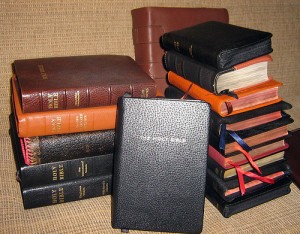
Quite a few! Some are better than others for reading or studying. What am I able to read and understand? What will I actually read, as opposed to leave sitting on the bedside table?  The Bible has been translated into over 75 different translations! Many countries don’t have a Bible in their own language. But before we go there, let’s take a quick look at the different types of translations.

Some people are confused by the various translations on offer. In summary, there are two types:

Actual Translations.
These are translated from the Hebrew test of the Old Testament and the Greek text of the New Testament. These are Bible such as, King James Bible, Revised Version, and the Revised Standard Version. Then, there are other translations which were very carefully translated such as, The New English Bible, The Good News Bible, and The New International Version.

Paraphrased Translations
Paraphrased Translations such as the Living Bible, The Message and the Amplified Bible can be beneficial for understanding the richness of God’s Word by using modern vocabulary, but not for study. Don’t use these types for Bible Study.

Types of Bibles:
Each translation comes in different formats. There are Study Bibles, Devotional Bibles, and more. A Study Bible has notes and explanations which can be very helpful. Some Bibles have a concordance built in with it. Many Bibles contain historical and geographical maps but these individual reference books can also be purchased separately.

stack_biblesWant more? Read on…

When translating from the original language (Hebrew/Aramaic/Greek) to the Receptor language (in our case, English) there are three ways in which translators go about it.Translators, theologians, clergy and laymen have been debating for centuries over which approach is most accurate in communicating the message of the gospel. I find it helpful in using more than one translation and in our studies we will often three translations – one from each translation theory group.

Translation Types:

  • Dynamic equivalence translation:  A “Dynamic Equivalent” attempts to used the original language as a guide in translating, and then “elaborates” to enhance understanding.  The aim is to convey the ‘thought’ of a text. (Thought-for-Thought)
  • Formal equivalence translation (similar to literal translation: word-for-word) Some translators use the formal correspondence approach, translating word for word. This may sometimes cause a sentence to sound a little awkward but it is a word-for-word translation. A “Word-for-Word” translation attempts to add the fewest number of additional words to the translation, and when they do, the generally place the added words in italics.
  • Idiomatic, or Paraphrastic translation. A “Paraphrase” simply attempts to put the meaning of the text into modern day English

Word-for-Word Translations

  • The American Standard Version, (ASV) also known as the Standard American Edition, Revised Version, is a revised version of the KJV. It was completed in 1885 and newly edited by the American Revision Committee in 1901.
  • The Holman Christian Standard (HCS) is a highly readable, accurate translation written in modern English. It is published by Holman Bible Publishers.
  • The English Standard Version Bible (ESV) is a relatively new Bible translation that combines word-for-word precision and accuracy with literary excellence, beauty, and readability.
  • The King James Version (KJV) is the first version of Scripture authorized by the Protestant church and commissioned by England’s King James I.
  • The New American Standard (NAS)  is written in a formal style, but is more readable than the King James Version. It is highly respected as the most literal English translation of the Bible.
  • The New King James Version (NKJ) is a modern language update of the original King James Version. It retains much of the traditional interpretation and sentence structure of the KJV.

Thought-for-Thought

  • The Good News Translation (GNT)  was first published in 1976 by the American Bible Society in a “common language.” The simple, everyday language makes it especially popular for children and those learning English.
  • The New Living Translation (NLT) uses modern English. The translators focused on producing clarity in the meaning of the text rather than a word-for-word text. They wanted however, to remain faithful to the original texts.

Combination of Word-for-Word and Thought-for-Thought

  • The New International Version (NIV) offers a balance between a word-for-word and thought-for-thought translation and is considered by many as a highly accurate and smooth-reading version of the Bible in modern English.It reads more smoothly than most translations and scholars praise it for its accuracy. It was put together by a large team of well recognized Bible scholars.
  • The New Revised Standard (NRS) is a popular translation that follows in the traditions of the King James and Revised Standard Versions. It was written with the goal of preserving the best of the older versions while incorporating modern English.
  • The Revised Standard Version (RSV) is a revision of the King James Version, the Revised Version, and American Standard Version. This text is intended for both private reading and public worship.

English Paraphrases

  • The Message (MSG)  is a paraphrase from the original languages written by Eugene Peterson, a Presbyterian pastor and an excellent writer. It’s great for light reading. Actually, that’s what it id designed for…no verse marks so it’s easy to just pick up and read. However, I believe that Mr. Peterson takes great liberties with words/sentences in his attempt to effectively communicate the thoughts of Scripture(Thought-for-thought, paraphrase)
  • The New Testament in Modern English by J.B. Phillips. This is, In my opinion, one of the better paraphrases. This version translates some of the Greek puns and word plays that are sometimes lost in word-for-word translations.especially handy when reading letters written by Paul.
  • The Living Bible (LB),is a paraphrase of the American Standard Version. It is easy to read and was my first ever Bible!

:star: The important thing to remember is that the central theme of the Bible is the coming of Jesus Christ, his ministry, death and resurrection. This page is not designed to be authoritative or exhaustive on the subject (far from it) but to give a general idea of the different types of versions/translations available today.

:star: The key is: JUST DO IT! The gospel [the good news of Christ and His work on the cross] is the power of God for salvation. You won’t be saved by which translation you read, so go on…grab a translation or two and read it…today!

Further reading:

Download the ebook, How to Study the Bible, by Rev. Geoffrey Bingham

How the Bible Came to Us by Meryl Doney

The following is a chart comparing the different English translations of the Bible. I hope this helps you in selecting a translation.

Noteworthy Free Bible studies

Further to my post about not profiting from the preaching of the gospel I’d like to highlight a few sites that give free Bible studies suitable for home and family use. There are many more I’m sure but these are some that we’ve used. If you know of others, feel free to leave a comment and share the URL.

links

Free Bible curriculum for use in the homeschool and family setting!

Calvary Chapel Sunday School lessons have been created for the purpose of supporting and blessing those who minister to children. Excellent!

Bible Class Books are excellent for elementary, OT, NT, Topical studies and character traits. Do check them out. Well worth your time. http://www.bibleclassbooks.com/index.html

Coromandel Baptist has many free resources, including a SS program that can be easily modified for home use.

The Christian Basics series and the Christian Faith series makes a great study for older children/teens.
http://www.corobaptist.org.au/articles/index.html

New Creation Teaching Ministries has many resources which are free…but even if you wish to purchase their books they are sooo cheap, only charging for printing/publishing costs. Help Me to Grow by Rev. Dr John Annells is a bible study for new Christians BUT I suggest that it is also great for teens.

The Stranger on the Road to Emmaus by John R. Cross, from GoodSeed: http://www.goodseed.com/
This fully illustrated, 304-page book is written for adults and teens who know little or nothing about the Bible. It explains in a straightforward way the greatest themes of the Bible, step by step creating an understanding of sin, substitution and atonement. Available chapter by chapter download.

Corresponding free workbook
Corresponding Answer Booklet
Free Audio download of the book

Bible 101 – A Self-Paced Course
It’s been called “the greatest story ever told.” Now the central message of the Bible is brought to life in this eleven-hour online video series. This self-paced course has been adapted from the popular award winning DVD series – The Stranger on the Road to Emmaus.
http://www.goodseed.com/learning/bible-101/

By This Name is was written to give to or teach people who come from a polytheistic or pantheistic background. It is also geared for those who don’t believe in absolute truth, or say things like “That’s true for you but not for me.” Great study for teens!
http://www.goodseed.com/products/btn-eng-book/

The Lamb by John R. Cross
186 page full color book for children that explains the main message of the Bible

EBible Teacher has lessons for the slightly younger children.
Old Testament and New Testament lessons and Books of the Bible

All that the Prophets have Spoken
As the influence of Islam becomes more widespread and you start to meet more Muslims, you want to be able to communicate with them what you believe to be the central message of Scripture. But where do you begin? How do you even start?

And Beginning with Moses
Are you looking for a way to clearly teach the Bible in a world where truth is relative and God is seen as a force? Have you been noticing a shift in our culture and are struggling to know how to share the gospel with this new generation? You want to teach the Bible, but when people don’t even understand who God is, where do you begin? Great for teens!

Sunday School Lessons on the Tabernacle
The following lesson plans have been designed for a Sunday school class or weekly Bible study for adults or young adults. Each lesson, which can be completed in 45 minutes to an hour, includes one or two main biblical passage(s) on which the lesson is based, a short background description, and several discussion questions. Through these lessons, your students will be able to better understand Christ’s redemptive work on the cross and how He fulfilled every aspect of the tabernacle. Our hope is that they will come away with a stronger, clearer and more accurate grasp of the Gospel.

Bible Explorer
Bible Explorer is the fastest and easiest to use free bible study software. Over 2,800 Bible and Bible reference works available!

I’d like to encourage you to use the materials above to teach and instruct your family. If you use the materials, consider donating to the ministries. While this isn’t necessary it will further help spread God’ word. Please don’t fall for the trap that says ‘just because a book costs a few dollars it must be better than the free ones’. It’s just not true.

Free Devotional Journal download

kerugma

Our Devotional Journal that we used with the girls. I designed this as a simple way that the girls could do their own Bible reading and were prompted to follow the steps in our Kerugma Bible study approach, using the 4 step process with the anagram of IDEA. (Introduce, Digging Deeper, Examine & elaborate, Application to my life)

I show the children how I use this approach in my own day and how it need not take hours each time. It can take 15 min or one and half hours. We need not study one new passage each day…a passage may spread over two days or more! The focus needs to be on process, not outcome. We need to be sensitive to the leading of the Holy Spirit and not be directed by the clock, or the day.

Here is what the various fields mean:

Date: Helpful to record the date
Passage: Record the passage being studied
Key Verse: to be filled in at the end of the study
Pray: asking God to reveal His truths

Introduce
Read the passage– out loud or silently
Re­read the passage, possibly in another translation

Digging Deeper
Dictionary words: Use the vocabulary sheets for words not known
Other resources used: Record other books used for reference. eg: Journey Through the Bible, etc.
5W’s and H: Understand as many of these that apply.

Expand and Elaborate
Paraphrase ..write the passage out in your own words or narrate the passage orally

Application
How does this apply to my life?
Is there a promise to believe?
A truth to be believed?
A duty/an action to perform?
Is there a command to obey?
A prayer to echo?
Is there a positive example in this passage that I can follow?
Is there an action in this passage that I need to avoid?
Is there an attitude in this passage that I need to have?
Is there something I need to be thankful for?
Pray: asking God for help to apply truths learned … To give thanks.

Related pages:

  • IDEA: 4 step lesson format
  • Our [download#10] for you to print out and use

Family Bible Study Guide: first 5 lessons

kerugma!

new Yay, I have finally uploaded the first 5 studies, in pdf format, of our Kerugma Family Bible study. Admittedly we completed these lessons over a year ago but nevertheless, as promised, they are now uploaded. new
To use the lessons, simply download them at the Download Page…along with the Activity Sheets…the Obvservation Sheet and the IDEA Bookmarks. Don’t forget to read the preamble about how the format of our lessons and all other related bits n pieces.

The first lesson is setting up our Bible Notebook and then there are four lessons after that. Feel free to use the ideas with your family. All I ask is that if you do, please leave some feedback by leaving a comment here or on my site.

Familiarity with Bible Terminology

Biblical terminology, vocabulary or jargon: do your children know it? Do you consider it important for them to know? Why? Why not?

The Bible can be hard to understand. It can seem like a foreign language. In a sense, it is. If you were going to go and live in another country where English isn’t spoken would you try to learn the native language in an effort to understand the people, the culture? Well, the Bible can be likened to that too! Learning the language, the terminology, the use of literary style…It’s hard work. It takes study. It takes time, effort, patience and diligence. It won’t happen in 10 min a day, especially if that 10 minutes a day is spent reading someone else’s thoughts on that country or language. Naturally, you’d be much better off to spend time directly learning that language eh. So I’ve been thinking that I’d like my children to have a better grasp on the Bible and God’s plan and purpose than I did…so how am I going about that? (you can see our approach to Bible study here)

What methods are you using to teach your child to study the Bible?

I’m not talking about curriculum or a book but what methods are you teaching your children to use so that they can continue with a lifelong love and habit of studying God’s word? I’d love to hear from you.

Updates: new downloadable freebies at Kerugma

Just a quick note to let readers know that I have added a few more downloadable freebies to the Kerugma site. You can find them at Kerugma, in the Download area, under Bible Study Resources.

Activity Sheets used in steps 3 and 4.

Observation Sheet : narration prompt, writing prompt or research aide

Lesson template: for devising your own lesson plans- based on Kerugma Bible studies

Idea Bookmark : for use with Kerugma Bible study

Vocabulary Worksheets

Outline of Author : Standard sheet for students to use when completing an Author Outline

Chapter Summary Form: this form can be used as a worksheet or simply as narration style prompts.

Book Report: We use these forms as part of our record keeping system.

Book Synopsis: slightly different to a book report. We use this form as well.

Attendance Sheet : Adaptable for any year

Australia, from the beginning: our course of study while reading the book by Eve Pownall. It is only a ‘bare bones’ framework but provides room for more.

What is Labour Day : worksheet for students to complete.

Kitchen Duties: see my blog post for details

Feel free to leave a comment in you have enjoyed the downloads, or if there is anything in particular that you’d like to see.

More coming as time permits…

Updated 19/07/2009

Bible Study Scope and Sequence

HomeGrownKids Scope & Sequence
Our scope and sequence is a similar pattern to what we follow for history. (internal blog link) It is closely linked with my understanding of the Stages of Learning, which you can view here.

Birth to age 9 ( birth -G4)
>> If you have older children that are following the same sequence, it is easy to add simple but beautiful picture books into the junior schedule. Even better if the older children read it and discuss it with the youngers!>> Songs and memory work are of great benefit during this stage. (Colin Buchanan is a classic!!) We also go through the book, Training Hearts Teaching Minds: Family Devotions Based on the Shorter Catechism by Starr Meade.>> We go through the Old Testament – using a children’s Bible such as:

  • Day by Day Kids Bible.
  • Beginner’s Bible-NIrV ISBN: 0310926378
  • Family-Time Bible ISBN: 0842365761
  • Egermeier’s Bible Story Book ISBN: 0871622297
  • The Childs Story Bible by C. Voss

Devotional type of reading: Books like;

  • Little Visits with Jesus ISBN: 0570058074 might come in handy.
  • Little Visits with God ISBN: 0570058090

A few links(more to come)
http://gardenofpraise.com/bibleles.htm
Age 10-13 or (G5 – G8)
>> Review the same chronological cycle, if desired, but in greater depth. Pay attention to biographical stories and Christian fiction.
>> This is the time to develop or use a Bible timeline.
>> Songs and memory work are of great benefit during this stage. We also go through the book, Training Hearts Teaching Minds: Family Devotions Based on the Shorter Catechism by Starr Meade.

Bible reading:

    • Archeological Study Bible
    • Greenleaf Guide to the Old Testament

Studies:

    • How the Bible Came to Us by Meryle Dooney
    • Genesis, Finding Our Roots by Ruth Beechick

Books:

  • Ben Hur
  • The Bronze Bow
  • Adam and His Kin: The Lost History of Their Lives and Times
  • Discover Jesus in Genesis: An Illustrated Biblical Theology for All Ages
  • God King – A Story in the Days of King Hezekiah by Joanne Williamson Timeline: 700 B.C., Egypt/Judea
  • Hittite Warrior by Joanne Williamson Timeline: 1200 B.C., Judea
  • Victory on the Walls- A Story of Nehemiah by Frieda Clark Hyman Timeline: 445 B.C., Israel
  • Jotham’s Journey A Storybook for Advent By Arnold Ytreeide as well as Tabitha’s Travels and Bartholemew’s Passage
  • The Great Dinosaur Mystery and the Bible
  • Life in the Great Ice Age and others like this
  • Twice Freed by Patricia St John
  • Runaway and others by Patricia St John
  • Lots of Bethlehem books

Age 14 through 17-18 or (G9 – 12)
>> Time to tie things all together using a chronological and narrative approach.
>> Doing a survey of the Old and New Testaments is good, as is doing a study on the Life of the Messiah.
>> Consider biographies, historical fiction and unabridged Bible readings.
>> Pay particular attention to discussing thoughts and ideas, updating the time-line or Book of Centuries.
>> Tie all studies in with a Book of Centuries (Timeline), good living books, and a Bible Encyclopedia and other study tools.
>> You may also consider learning a little about Church history as the students get older. Biographies are great for this, and there are too many good books for me to even begin to mention.

Bibles:

  • Narrated Bible in Chronological Order – Chronological accuracy, easy-to-read format. Includes: Moses’ laws by subject; Proverbs presented topically; Psalms arranged by sentiment; Paul’s teachings integrated into Acts.
  • Archeological Study Bible
  • Serendipity Bible for Study Groups

Studies:

  • How to Read the Bible for All its Worth
  • Wisdom Unit Study
  • Messiah Unit
  • Learn the Bible in 24 Hours by Chuck Missler (Literary narrative style. Great read aloud for older students)
  • 30 Days to Understanding the Bible by Max Anders (this is more visual than the one by Chuck Missler)
  • For the Layman- Survey of the Old Testament by Kenneth Levy. This survey is a non-denominational, historical overview filled with foundational information every student of the Bible should have. Using a workbook, Ken Levy guides students on a chronological tour through every book of the Old Testament. Students study how the Old Testament was put together, its major divisions, and what makes it unique using the workbook and cassette tapes.
  • For the Layman- Survey of the New Testament by Kenneth Levy. Life and ministry of Jesus, the growth of the early church, the letters of Paul, and more in this workbook with cassette tapes.
  • 100 Most Important Events in Christian History

Tools:

  • Proverbial Wisdom and Common Sense
  • Evidence That Demands a Verdict
  • The Complete Book of Who’s Who in the Bible – provides readers with a complete listing of people in the Bible with descriptions of their lives and accomplishments.
  • Manners and Customs in the Bible.
  • Student Bible Atlas (Here is a great study guide to go with the Holman Bible Atlas.)
  • The Kregel Pictorial Guide to Bible History (and others) ISBN: 0825424623
  • Victor Journey Through the Bible is our favourite
  • The Case for Christ and Case for Easter by Lee Strobel

Books:

  • The Cross and the Switchblade by David Wilkerson
  • A Voice in the Wind by Francine Rivers (good series)
  • Listen to Her Voice: Women of the Hebrew Bible by Miki Raver
  • Vinegar Boy by Alberta Hawse. This is the gripping story of a boy’s dramatic encounter with Christ on the Cross.
  • Lots of Bethlehem books
  • The Priest, The Warrior, and The Prince. Novella’s by Francine Rivers.

Church History resources

Bible Study Guides Bible Study Guide for all ages
Family Bible study!Positive Actions
Teaching a child’s heart and his head. Kindy, Junior High and High School. Teacher Manual and Student Book including memory verses and worksheets. Able to be used twice a week or 4-5 times a week.

Explorer’s Bible Study
Daily lessons from Preschool to Adult level, including activities, questions and maps. Apparently families are able to study the Bible together but using the different books for each level.

Deeper Roots
Has studies from grade 7-12. Inductive study.

Firm Foundations – From Creation to Christ
This curriculum is set up to chronologically teach through the Bible, from Creation to Christ! Extremely thorough.

My students will be completing a Survey of the Old and New Testaments and a great resource is the For the Layman series.

For the Layman: A Survey of the Old Testament and
For the Layman: A Survey of the New Testament

by Ken Levy
These are a set of cassette’s and a workbook where Ken Levy takes you through the Bible. Full of information and ties events and people together!

An excellent study! Study guide for the Holman Bible Atlas! This is a 69-page pdf download file.

HOW Bible Lessons with Little Ones

Families who have an older child using a HoW approach seem to find it easier to know what to do with the younger siblings. A few people seem to need further help with instituting a HoW approach with a young family. I wonder if this confusion arises because people are trying to use a HoW unit study without understanding the thoughts that make up the approach. A few other methods have a similar difficulty in that they are foremost a method or an approach. AmblesideOnline is one that I have seen other people struggle with until they understand the *why* of it. Without understanding the principles behind the approach, AO is just another booklist; dry and long. But, when that booklist is combined with the methods espoused by Charlotte Mason, the booklist becomes so much more. It is the method or the principles that are the binding glue. So it is with HoW. The units are great! But, they are only a small part of the greater work. The Heart of Wisdom Teaching Approach is an approach that is based upon biblical principles- it isn’t simply sprinkling a few key Scriptures throughout the pages of a book nor is it reading only Christian books with no regard to methods used in teaching. It is an entire method or approach that can be used from birth through to adulthood. In my own life, I use a HoW approach!

So, onto the daily practicality of using HoW with a young family.
What could such a day look like? Firstly, a principle of the HoW approach is Bible First- regardless of the ages or number of children in the family. You will study the Bible and use Bible study tools relevant to your children?s ages and development level. Then, you can study thematic unit studies, using living books and the Internet. Through this study is where you will develop the little ones language skills and start to focus on building good habits essential for further study: habits like attentiveness and producing one’s best effort, and the art of narration. You’ll need to do some phonics instruction and maths with your child.

 read more...

Do We Do Bible Study Every Day?

Do we do Bible Study every day?

I think we have tried every approach that is bantered about in homeschooling and family circles. We have tried starting our day with Bible study. We have tried doing Bible study after lunch when the main academics are finished. We have done Bible study every day. We have done it three or four times a week. I’ve had issues or problems with them all!

So how often do we do Bible study? That might be so much easier to answer if we had a regular lifestyle with no interruptions. But we have many interruptions. Just a few weeks back, I had a particularly harrowing day and I took 16 phone calls. Now some would say that I shouldn’t answer the phone. But you know what? I was screening the calls. Those 16 calls were all from my family: my father, my husband, ‘Miss A’ or ‘Miss R’. Now how’s a gal supposed to fit in meal preparation, laundry, lessons, Bible study and stay sane? The only way that I know how to do all those things and stay sane is to not stress over the minor things…to understand that every day brings its own opportunities to minister, to serve, to love, to read and to pray.

 read more...

Genesis, A Commentary for Children

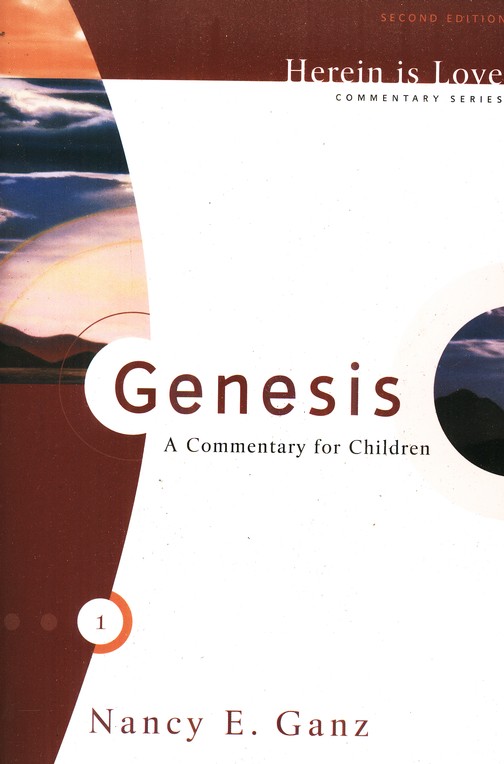
Genesis, A Commentary for Children is part of the Herein is Love series by Nancy E. Ganz. And I really like it! 🙂

Yes, this is a Bible commentary on the whole book of Genesis, From Paradise to Promised Land – Genesis to Joshua, written to children but it isn’t dumbed down in the slightest. Even adults will learn valuable lessons and gain valuable gems from this book. I nearly cried as I read the Introduction as the author tells why and for whom she wrote this book. Even from reading the introduction I knew that this was a book that I needed to read and needed to share with my children.

This mammoth 545 page book includes 68 lessons and includes a teacher’s study guide to correspond with each lesson. The teacher guide is very similar to what I already do as she suggests the use of visual aids, memory work, craft, review questions, prayer, psalms to sing and a field trip.

This book is one part of a 4 book series that covers the four books of the Old Testament. You can see more about this series at ChristianBooks.com. Simply Click here. The promises of God, His promise of a Saviour, His wonderful grace, mercy and love are delightfully and truthfully told while also telling the stories of history with wonderful accuracy. Cultural and historical insight is offered throughout this doctrinally correct yet warmly written and captivating storehouse of God’s truths. It would be able to be used as part of family worship or it could be read daily by an individual student who is accustomed to reading independently.

I cannot wait to finish Genesis so we can start the next book. If you have children from 6 years and older, love the Scriptures and love to teach your children about the Scriptures, then will will want this book. Aussies can purchas at Light Educational Ministries.  Or you can buy the Herein is Love Series at ChristianBook.com

Bless you as you strive to teach the ways of God to your children.

How Many Hours in Bible Study?

John Stott used the following time allocations dedicated to Bible study:

* One hour a day
* One 3 hour period a week
* One day every month
* One week every year

I think this is a good and worthwhile goal to aim for. What do you think?

Our Family Bible study

It is the glory of God to conceal things, but the glory of kings is to search things out.
~Proverbs 25:2

The Bible can be a mystery- we want to read it and study but how? How can we study the Bible for ourselves, and lead our children into a lifetime love of study of the word of God? The Bible isn’t an easy book to read, let’s be honest about it. In fact, it isn’t one book- it’s a whole library containing sixty-six books! However, that shouldn’t deter us from reading and understanding it. It’s good that we desire for our children to read the Bible. This site is an attempt to give you some tools to do just this: read, understand and communicate the word of God. As Christian home educators the question of why should we read the Bible isn’t the biggest question, rather the how should we read it?

Many Christian home-school parents are aware of their own deficiencies in various subject areas so they spend money or time to ensure that their child receives an adequate education in that area. As believers, God’s children, we have been given the awesome task of discipling our children, of hiding God’s Word in their hearts, of leading them to His feet. If we value our Christianity and believe it is something worthwhile, something of value to be passed on, do we impress that upon our children…do they know what is truly important to us? While reading and studying the Bible together, our children will learn what is most important to us…we have to model (live) the behaviour and attitudes we want to instill in our children. In many Christian schools and even some home-schools, Bible, Religion or Christian Faith is tacked onto the school day as though it is an elective. Parents of newborns, teens and new home-schoolers often lament over the lack of an Instruction Manual for parenting and life. But we have one!

It’s the Bible!
If our goal is, as Christian parents, to train and raise our children to the glory of God, then surely study of the word must have a strong focus in our home. Surely we need to be God-focussed with our education. Biblical illiteracy is the front-runner to deception! Don’t let this happen to your child. Don’t let this happen to you!

We hope that this site encourages, informs, edifies and equips as you pursue your study of God and His word.

All scripture is inspired by God and is useful for teaching, for reproof, for correction, and for training in righteousness, so that everyone who belongs to God may be proficient, equipped for every good work.
(2 Tim. 3:16–17)